admin
-
Magnetic Chutes Used in the Many Industries, Including the Spice Trade
 Previously on our blog, we’ve discussed how magnetic chutes are used in animal feeding; however, they’re utilized in many other scenarios as well. For instance, magnetic chutes are also used to trap and separate iron particles mixed with powders, granular materials, or otherwise dry materials. Typically, the material is flowing freely through the chute; that means no sticky substances! Connected to a larger series of ducts, the chutes use magnets to attract iron contamination as it flows. The largest magnet is often placed in a hinged door that can be accessed from the outside, allowing for manual cleaning and particle removal. Continue reading →
-
Tackle Your Next Interior Design Project with a DIY Magnet Stud Finder
 Whether you are ready to craft that custom photo wall you have been dreaming about or turn your kitchen into a culinary paradise straight out of a magazine, opt for a magnet over purchasing expensive equipment. Once you have a design in mind for your space, it’s time to bring your inspiration to life. Continue reading →
-
Increasing Prosthetic Limb Control Through Magnets
 Created to bridge the gap in the advancement of prosthetic technology for amputee patients, MIT’s Media Lab has been working tirelessly to perfect a new alternative approach to increased precision called magnetomicrometry (MM). This revolutionary method theorizes the insertion of magnetic beads into muscle tissue found within the amputated residuum will provide precise muscle length measurements, which can later be relayed to a bionic prosthesis almost instantly. Continue reading →
-
Magnetic Yokes Used for Particle Inspection
 Permanent magnets are commonly used in magnetic yokes. This refers to a handheld magnetic device used to induce a field in an area between two poles. They can also be electromagnetic yokes. Either kind of magnetic yoke can be used for particle inspection outdoors, in hard-to-reach places, or in remote locations. They can also evaluate whether a weld job is of quality, detecting surface and near-surface cracks and defects in ferromagnetic material. Continue reading →
-
First Domestic Rare Earth Metal/Magnet Facility Scheduled to Open in Stillwater, Oklahoma
 As the demand for rare earth metals continues to rise, China remains the top producer of any country worldwide, responsible for roughly 70% of mined production and about 90% of separation and refining. With nearly every developed country today reliant on China’s production of critical rare earth elements, USA Rare Earth LLC, the leading US supplier of critical materials, intends to change this statistic through a “vertically integrated supply chain for rare earth elements," the first of its kind in the Americas. A recent announcement from Gov. Kevin Stitt and the Oklahoma Department of Commerce confirms plans to solidify the United States' place in this monopolized market via a $100 million, state-of-the-art facility to begin construction in 2023. Continue reading →
-
New Cancer Treatment Using Magnets Is Giving Patients Renewed Hope
 Scientists from the University of Sheffield in the UK are currently developing an advanced treatment for breast, prostate, and other cancerous tumors using magnetic particles that carry viruses to tumors. The goal of this ambitious undertaking, to guide specialized anti-tumor viruses through the body to their intended target. This approach builds on oncolytic virus therapy, a class of treatment that includes the FDA-approved T-VEC, a modified herpes simplex virus used against melanoma, to find and destroy cancer cells while largely sparing healthy cells. T-VEC is a genetically modified herpes simplex virus that infects and kills cancer cells, reducing the “scorched-earth” effect of most modern-day cancer treatments. In addition to its ingenious ability to exclusively target cancer cells, the treatment also triggers the body’s natural immunity to fight the source of the virus. Through the combined power of T-VEC and magnet-producing bacteria, this treatment may eventually add to the ways cancer is treated. Continue reading →
-
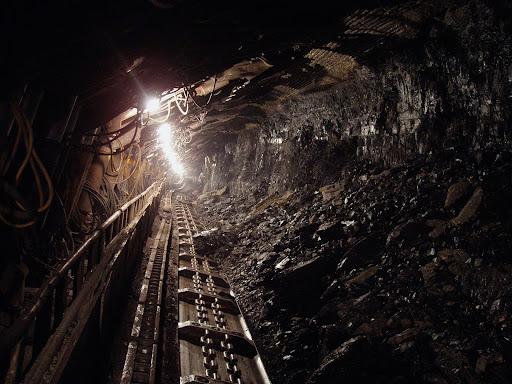
Magnets in the Mining Industry: Improve Quality of Output and Lower Cost of Equipment Upkeep
Magnets are used in a myriad of ways to make mining practices—specifically collection and sorting—seamless, safe, and profitable. More specifically, they are often used to filter out or remove tramp metal, which is the metallic scrap that can end up on conveyor belts or get mixed in with other materials during excavation regardless of whether it's machine or person-led. In the long run, it can cause serious and costly damage. Continue reading → -
Make Your Own DIY Magnetic Ink
Beat the out-of-school boredom with a summer science project using magnets that will keep your kids occupied while promoting valuable learning opportunities. When you think of common uses for magnets, what comes to mind? Many immediately gravitate towards the photo magnets hanging on their fridge, jewelry clasps, cabinet doors, etc. Magnets, however, offer a nearly unlimited variety of applications, both fun and functional. Continue reading → -
Magnetic Trim Fasteners For Custom Car Interiors & Exteriors
Do you own an auto body shop? Do you make custom cars? Then you should know that magnets are a popular choice for custom trim projects and interior builds, and for good reason. Whether you’re working with paneling, tray setups, or consoles, using magnets allows you to snap them into place. More important than that satisfying snap though is their overall effectiveness. Continue reading → -
The Effects of Magnets on Plant Growth
In a way, the Earth itself is a magnet. Its core generates a magnetic field and the Earth’s crust has some permanent magnetization. Strong, permanent magnets like rare-earth magnets are made from alloys of rare-earth elements combined with transition metals such as iron and cobalt, and come in two main types — neodymium and samarium-cobalt. Continue reading →