If you follow us on Twitter and read our blog regularly (who doesn’t?), you’ve probably seen us post a few articles about the hyperloop. If you’re new to this story or need a refresher, the Hyperloop is essentially a super-fast transport system that relies on the power of magnetic levitation. One company, Hyperloop One, recently announced its proposed routes for cities across the globe. Continue reading →
When you imagine the contrast in magnetic strength between the business card magnet on your refrigerator and something like a rattlesnake egg, it’s clear that not all magnets are equal. For an industrial application, choosing the correct magnet is crucial to the proper function and efficacy of that application. Continue reading →
While magnets are capable of remarkable tasks, like the electromagnets that lift cars in scrap yards or the magnets that levitate maglev trains, they typically pose little threat to the average human — when handled properly.
Multiple smaller magnets used in close proximity can still attract each other strongly, and their combined force can pinch skin or cause injury. Handle clustered magnets with the same care as larger ones. Continue reading →
Scientists have been tackling the world’s most difficult problems for centuries. However, one still baffled them—until now, that is. The challenge: stopping fresh, unshaken beer from overflowing once opened. What? That doesn’t sound like a pressing scientific issue? We beg to differ! Especially since the solution involves magnets. Continue reading →
While neodymium magnets are pound-for-pound the strongest magnets available, extreme temperatures can alter the behavior of their atoms. As a result, their overall strength may fluctuate while they’re in use, creating potential hazards. Continue reading →
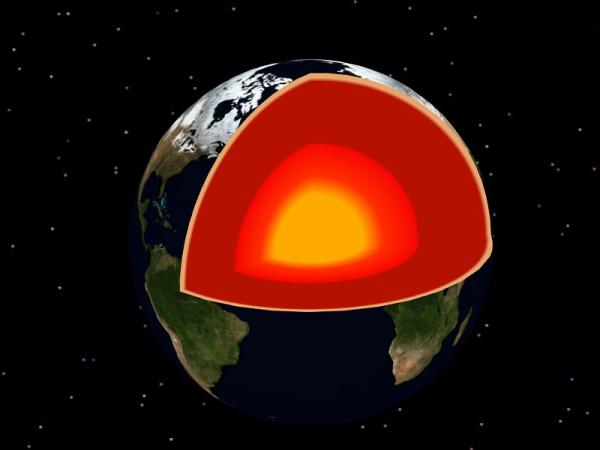
Earth’s core is mostly comprised of iron, with a solid inner core and a molten outer core. Iron is ferromagnetic at ordinary temperatures. However, iron alone does not make for a great magnetic field. It turns out iron gets some pretty crucial help from an old, elementary fried—nickel. Continue reading →
While last month’s solar eclipse was an unforgettable events for many Americans, most didn’t realize the sun had another trick up its sleeve. The first week of September saw a massive geomagnetic storm raging over the northern United States and southern Canada. While the storm caused some radio and navigation disruptions, it did treat many to a rare sighting of the northern lights, or aurora borealis. Continue reading →
It’s hard to believe that summer break is already over. While students reluctantly shuffle back into the classroom after months of rest and relaxation, teachers have been hard at work with lesson planning, supply gathering, and, of course, organizing their classrooms. Setting up a fun learning environment for students is easier said than done and can take a lot of time and effort. Luckily, magnets are here to save you a little of both! Continue reading →
Magnetism is often at the center of scientific discovery and innovation. Continuing this trend, researchers at the University of Buffalo have successfully used our favorite physical phenomenon to influence the behavior of lab mice. If you’re a little put off or creeped out by this technology, you’re probably not alone. Continue reading →
While the rest of us were busy reeling over the solar eclipse, scientists were hard at work breaking the record for the world’s strongest resistive magnet (a record later passed in 2024 by a 42.02-tesla resistive magnet in China, according to the Chinese Academy of Sciences). It’s taken nearly three years and $3.5 million to fund but the National MagLab has achieved it! Continue reading →

 If you follow us on Twitter and read our blog regularly (who doesn’t?), you’ve probably seen us post a few articles about the hyperloop. If you’re new to this story or need a refresher, the Hyperloop is essentially a super-fast transport system that relies on the power of magnetic levitation. One company, Hyperloop One, recently announced its proposed routes for cities across the globe. Continue reading →
 When you imagine the contrast in magnetic strength between the business card magnet on your refrigerator and something like a rattlesnake egg, it’s clear that not all magnets are equal. For an industrial application, choosing the correct magnet is crucial to the proper function and efficacy of that application. Continue reading →
 While magnets are capable of remarkable tasks, like the electromagnets that lift cars in scrap yards or the magnets that levitate maglev trains, they typically pose little threat to the average human — when handled properly. Multiple smaller magnets used in close proximity can still attract each other strongly, and their combined force can pinch skin or cause injury. Handle clustered magnets with the same care as larger ones. Continue reading →
 Scientists have been tackling the world’s most difficult problems for centuries. However, one still baffled them—until now, that is. The challenge: stopping fresh, unshaken beer from overflowing once opened. What? That doesn’t sound like a pressing scientific issue? We beg to differ! Especially since the solution involves magnets. Continue reading →
 While neodymium magnets are pound-for-pound the strongest magnets available, extreme temperatures can alter the behavior of their atoms. As a result, their overall strength may fluctuate while they’re in use, creating potential hazards. Continue reading →
 Earth’s core is mostly comprised of iron, with a solid inner core and a molten outer core. Iron is ferromagnetic at ordinary temperatures. However, iron alone does not make for a great magnetic field. It turns out iron gets some pretty crucial help from an old, elementary fried—nickel. Continue reading →