
Apex Magnets Blog
-
Easy DIY Magnetic Necklace
 Refresh your wardrobe this season with a fun, fall necklace DIY. It’s easy enough to make in a weekend and doesn’t require you to struggle with complicated jewelry hardware — just use neodymium magnets! Not only can you make this necklace your own with different pendant shapes and designs, but magnetic fasteners make it easy to create a variety of different necklaces to wear this autumn. Continue reading →
-
Recycling Computers into Rare-Earth Magnets
 Magnetic hard drives store so much personal information in this day and age. So how do you get rid of them securely when your computer’s time is up? According to Tim McIntyre, program manager at Oak Ridge National Laboratory’s Electrical and Electronics Systems Research Division, 115 million hard drives will reach the end of their use in 2016 alone. Why not put them to good use? Especially when that use does wonders for the world of magnets. Continue reading →
-
Magnetic Engines Help Satellites Achieve Longer Orbit
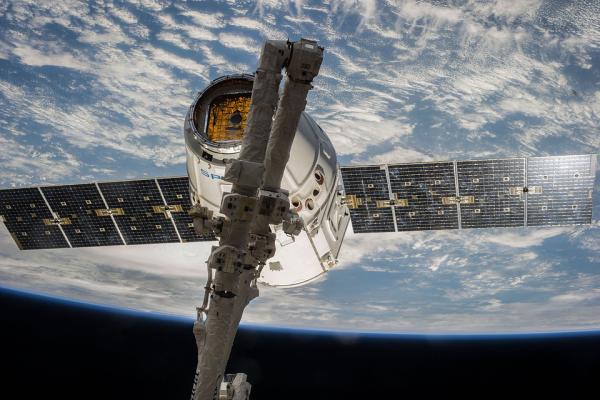 Small satellites may soon use magnetic levitation to stay precisely oriented in orbit, thanks to a new reaction wheel motor. Continue reading →
-
A Quick Guide to Different Types of Magnetism
 We use the word “magnetism” quite a bit. In general, magnetism is thought of as the simple attraction of two metals. However, magnetism is much more nuanced than this. Magnetism is classified in several different ways. It all comes down to the atoms that make up each element or compound. Furthermore, it depends on the spin and orbital motion of those atoms’ electrons and how they react (if at all) to magnetic fields. Physicist Michael Faraday determined that materials respond to magnetic fields in two basic ways: diamagnetic materials are weakly repelled, while paramagnetic materials are weakly attracted. Ferromagnets such as iron are a much stronger, separate case. Continue reading →
-
Our Favorite Magnetic Toys
 Back in 2003, The Toy Industry Association released its Century of Toys List. This comprehensive roll call looks at toys and playthings from nearly 100 years of American history. There are familiar faces for each generation. Continue reading →
-
DIY Magnetic Fishing Game
 This is an easy DIY for a rainy afternoon. These steps will teach you how to make the fish and fishing poles. You don’t need many supplies and you can get as creative as you want! Continue reading →
-
Why Are British Coins Magnetic?
If you’ve ever traveled to the UK, you may have noticed some differences in the currency. Obviously, it looks different and it’s called something else (what we call cents, the British call pence or simply “p”). But there are more contrasts at work. Many British coins are magnetic, while American coins generally aren’t. If you’re like us here at Apex, this is certainly an interesting fact. Continue reading → -
DIY Magnetic Animal Bud Vases
You may be thinking to yourself, “Why on earth would I need a magnetic animal flower bud vase for my home?” Truth be told, you don’t, but that shouldn’t stop you from bringing sincere, child-like joy into your life by way of headless animal toys. And, as delightful as this project itself, is the fact that these adorable things are extremely easy to make! If you’d like accurate photos for visualization and ideas, click here. Continue reading → -
The Legend of Magnes the Shepherd
Origin stories were popular in numerous ancient cultures and it seems like every aspect of human life has a legend associated with it. This is particularly true of the ancient Greeks. Pandora’s Box explains how evil came into the world. Your voice’s echo is really just a mountain nymph responding to you. Even the passing of the seasons is tied up with the story of Demeter and her daughter Persephone. Magnets are no different. The tale of Magnes the shepherd isn’t one of the best-known Greek legends, but it’s one of the most popular stories about how magnets were discovered. Continue reading → -
Could Magnetism Explain Why Bird Flocks Move as One?
Many people know that birds use the earth’s magnetic field to navigate. It’s called magnetoreception. However, birds’ relationship to magnets might run even deeper as a 2016 study suggests. Continue reading →


