Search results for 'nasa'
-
Unique Ways Magnets are Used and a Little Magnet 101
 Magnets are remarkable items that are commonly used in many of our day-to-day activities and technology. While fridge magnets come to mind when thinking about how magnets are used, there are so many ways magnets are used in science and technology! Here are some facts about neodymium magnets that you may not have known before! Continue reading →
-
Using Magnets to Collect Martian Dust
 Space exploration may still seem like science fiction to some, but rest assured, it is very real, and humanity is learning more each year. Our scientists are actually starting to get down to the nitty-gritty of space, meaning Martian rocks and dust. This magnetic material is collected by exploratory rovers so that we can study and reveal any secrets it might hold about Mars’ past, specifically in relation to geologic history. Continue reading →
-
Magnetism in Space
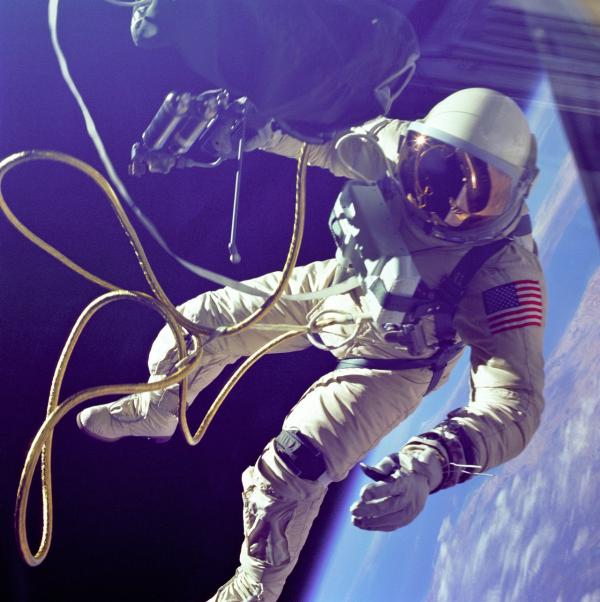 We are constantly learning about new findings of magnetism in space. From space migrations and magnetic levitation to helping astronauts reach faraway planets, magnetism plays a key role in our studies of the galaxy beyond Earth’s atmosphere. Read more about what magnetic knowledge we gained in 2019 relating to space. Continue reading →
-
New Study Suggests The End of the Lunar Dynamo Happened 1B Years Ago
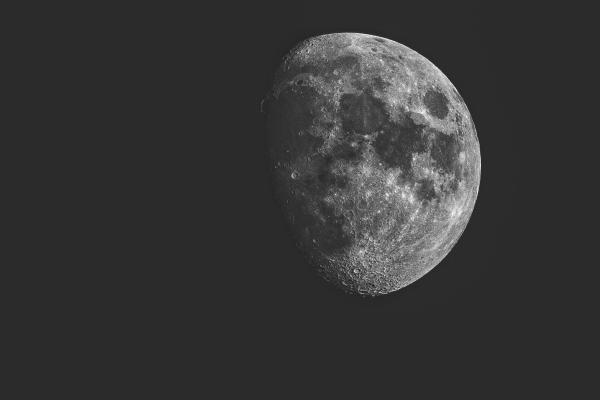 The moon is known to have likely lost its magnetic field after an internal dynamo stopped firing, the question has remained, however, of when. A team led by Saied Mighani from MIT’s Department of Earth, Atmospheric, and Planetary Sciences, and Huapei Wang from the China University of Geosciences, have been studying the moon’s magnetic field for several years, and think they found an answer. Continue reading →
-
Magnetars are the Strongest Magnet in the Universe. Here’s Why.
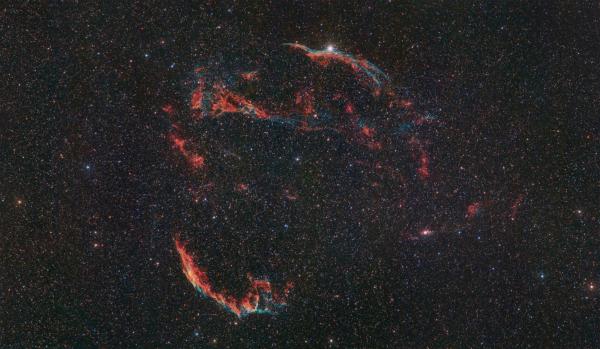 In 1947, the idea that some massive stars could have large-scale magnetic fields near their surface was established, but the origin of these fields has since remained a mystery. Today, it’s known that the strongest magnetic fields ever detected in the Universe come from magnetars, but we still aren’t sure where these magnetars come from or how they get their strong magnetic fields. Though, astrophysicists Sebastian Ohlmann from the Max Planck Society in Germany and Friedrich Röpke from the Heidelberg Institute for Theoretical Studies in Germany may have found out how magnetars form. Continue reading →
-
The University of Iowa Wins a Record Grant to Study Magnetic Fields
 There have been exciting things happening in magnetism. NASA recently awarded the University of Iowa (UI) a significant grant—$115 million—to study the interactions between the Earth and Sun’s magnetic fields. The TRACERS (Tandem Reconnection and Cusp Electrodynamics Reconnaissance Satellites) project, the largest research project in the university’s history, will be part of NASA’s Explorers Program. Why Study the Magnetic Fields...
-
How the Moon Got "Sunburns" - Solar Wind and Magnetic Fields
As we all know, the Sun is powerful. So powerful that any object, person, or planet traveling through space is susceptible to the Sun’s damaging radiation. The latest victim to feel the Sun’s fiery wrath? Earth’s Moon. Researchers, using data from NASA’s ARTEMIS mission, have reported finding “distinctive patterns of darker and lighter swirls” on the Moon’s surface. When looking into it further, they have found that these swirls may actually be “sunburns.” Should we be worried about these sunburns on Earth? Continue reading → -
Incredible Uses of Magnets in Science
We are constantly learning about the capabilities of and research on the uses of magnets, magnetic force, and magnetic fields. From helping moths establish a migration pattern to keeping astronauts safe during interplanetary flights, magnet science is nothing short of impressive. Read more about what magnetic knowledge we gained in 2018 in technology, in space, and in the environment. Magnets... -
Black Holes and Their Coronal Magnetic Field
Did you know that supermassive black holes are the largest type of black hole known to mankind? In fact, they contain a mass that is roughly a million to billions of times more massive than typical stellar black holes. It is believed that the supermassive black holes that lurk at the center of most galaxies are surrounded by coronas, but not much is known about why this occurs or even what coronas look like. Continue reading → -
Jupiter's Moon's Magnetic Field
In December 1996, Dr. Margaret Kivelson, professor emerita of space physics at the University of California, Los Angeles, and her team of physicists discovered, using data from NASA’s Galileo spacecraft, that Europa—one of Jupiter’s moons—had a magnetic field induced by Jupiter’s changing field. Flash forward to today where Dr. Kivelson is now the science team leader for the magnetometer instrument on the Europa Clipper mission. This spacecraft, which launched on October 14, 2024 and is due to reach Jupiter in April 2030, will study the habitability of Europa, Jupiter’s “ocean moon.” Continue reading →