Search results for 'nasa'
-
Create Your Own Backyard Magnetic Planetarium
 As magnet enthusiasts, we read a lot about all things magnetic—from influential people making magnetic discoveries and magnets in technology to how magnetism functions in space! We recently came across a great way to combine our interests: a do-it-yourself backyard magnetic geodesic planetarium. Continue reading →
-
Magnets Protect Astronauts from Solar Wind
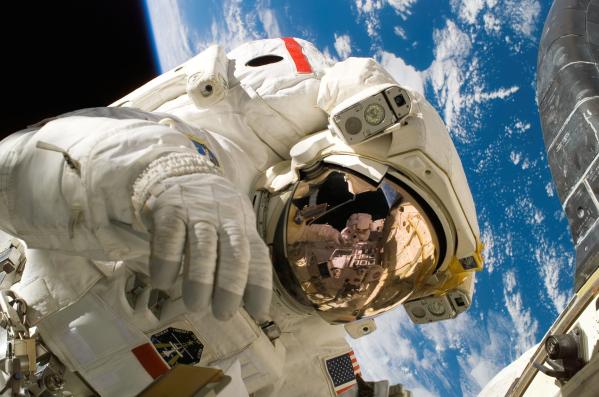 A few years ago, we explored this question about how magnets could potentially protect astronauts: can magnets protect against cosmic radiation? Now, a program between the Information Satellite Systems (ISS)-Reshetnev Company and the Siberian Branch of the Russian Academy of Sciences is conducting research on how a magnetic dipole could protect crew members from galactic and solar cosmic rays while on missions beyond Earth’s boundaries that last more than twelve months. Continue reading →
-
Unveiling Complexity in Jupiter’s Magnetic Equator
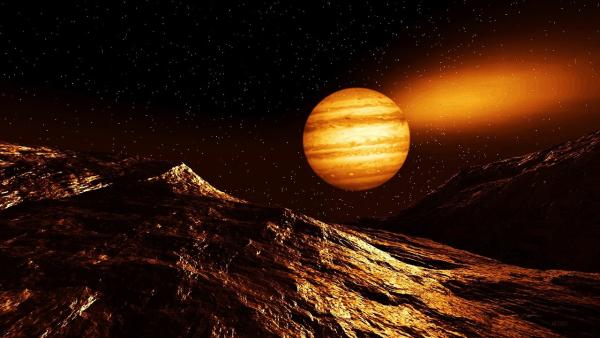 There’s more to Jupiter than what meets the eye. At least, that’s what planetary scientists recently discovered when they stumbled upon a mysterious dark “ribbon” around Jupiter’s magnetic equator. This ribbon, created by interactions between the planet’s magnetic field and ionosphere, was found by a team led by University of Leicester planetary astronomer Tom Stallard. Continue reading →
-
Did You Know That the Sun's Heliosphere is Actually a Magnetic Solar Bubble?
 In its essence, the Sun is considered the heart of our solar system. From Earth’s standpoint, the scorching yellow star of glowing gases directly dictates its seasons, ocean currents, climates and aurorae. If the sun were the size of a front door, Earth would be about the size of a nickel. And without its energy, human life wouldn’t even exist. Crazy to consider, right? However, that example only provides a slight sliver of the Sun’s impact. In actuality, its gravity holds the solar system together, keeping everything from the largest of planets – Jupiter, Saturn, and Uranus – to the smallest particles of debris in orbit within the heliosphere, a bubble of solar wind and embedded magnetic field that extends roughly 120 astronomical units (about 11 billion miles). Continue reading →
-
Superionic Water May Have Given Neptune and Uranus Their Magnetism
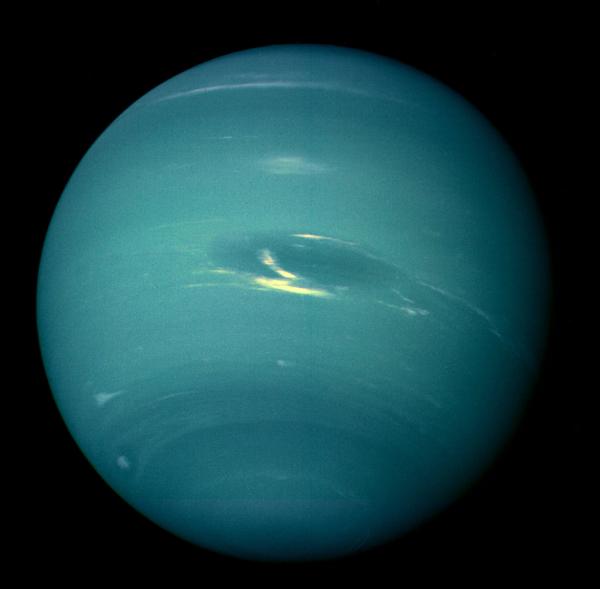 Superionic water is just the latest discovery in a long line of astronomical magnetic anomalies. From the magnetic surface of Mars to the fact that Jupiter’s magnetic field is the largest planetary magnetic field in the solar system, each planet orbiting our sun has a unique magnetic quirk. The two farthest planets from the sun are no different. Neptune and Uranus have some wacky stuff going on with their magnetic fields. Let’s take a closer look. Continue reading →
-
Applications for 'Funky' Ferrofluid: Present and Future Uses
 Even inside the wondrous world of magnets, ferrofluid is especially magical the first time you see it in action. Though it’s a liquid, it behaves like a goopy solid when manipulated by a magnet. Instead of flowing freely, ferrofluid will contour in the shape of the magnetic field acting upon it, letting you manipulate it at will before returning to its original spot within the magnetic field. Continue reading →
-
Meet the Magnetar
October is obviously a spooky time (because of Halloween and all that) so, we’re hoping this blog will give you a little fright. After that, it’s back to your regularly scheduled magnetic news and such. In this blog, we’re discussing one of the scariest celestial bodies in the known universe - the magnetar. Continue reading → -
Exploring The Mars Magnetotail
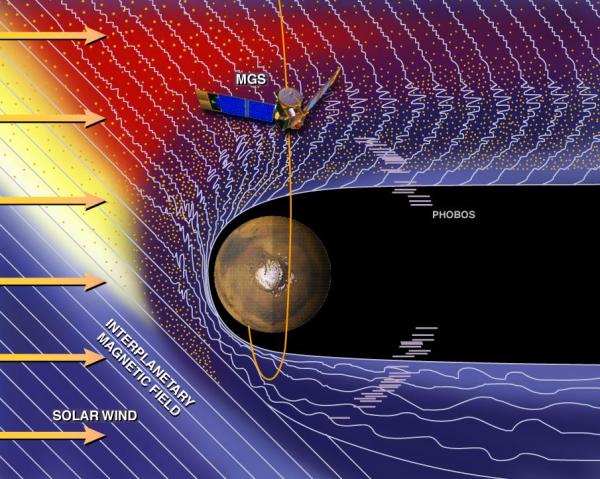
Research presented at the annual meeting of the American Astronomical Society’s Division for Planetary Sciences has drawn our attention to Mars’ unique magnetic tail and the way magnetic fields, both on the planet and from solar winds, are affecting the tail’s movements. The findings may also help scientists better understand how Mars lost much of its atmosphere. Continue reading → -
Super Powered Magnet Goes to 11, Breaks World Record
While the rest of us were busy reeling over the solar eclipse, scientists were hard at work breaking the record for the world’s strongest resistive magnet (a record later passed in 2024 by a 42.02-tesla resistive magnet in China, according to the Chinese Academy of Sciences). It’s taken nearly three years and $3.5 million to fund but the National MagLab has achieved it! Continue reading → -
The Trappist Planets and Magnetic Fields
By now, you’ve probably heard the news that NASA has discovered not 1, not 2, but 7 “Earth-like” planets revolving around nearby dwarf star, Trappist-1. These planets are thought to be in the habitable zone and could maybe, one day, sustain human life. Continue reading →