Search results for 'nasa'
-
NASA Detects Ancient Magnetism on Surface of Mars
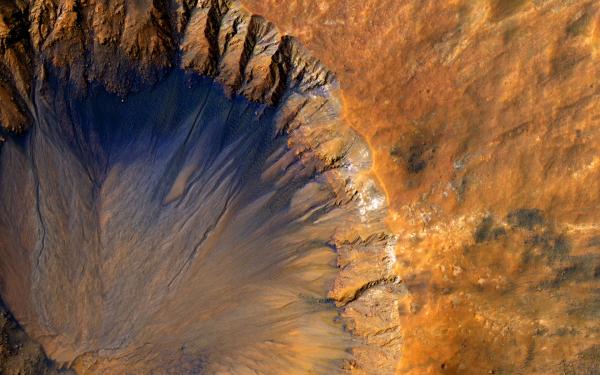 Learning more about Mars has been one of NASA’s top priorities over the last several years. One of their newest discoveries, thanks to NASA’s InSight Lander, indicates that Mars’ magnetism is much stronger than previously anticipated. Continue reading →
-
NASA’s Parker Probe: Adventures to the Sun
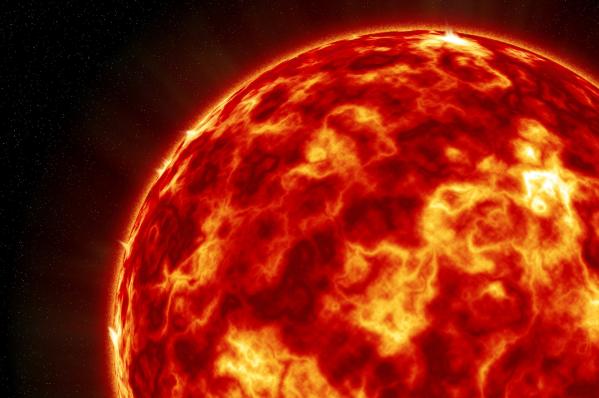 Howard Singer, chief scientist at the Space Weather Prediction Center, considers the three sun-focused missions occurring over the next few years to be transformative. The Parker Probe, the Daniel K. Inouye Solar Telescope (DKIST), and the Solar Orbiter will embark on separate missions to create a better understanding of the star at the center of our system. Continue reading →
-
The NASA SOFIA Observatory
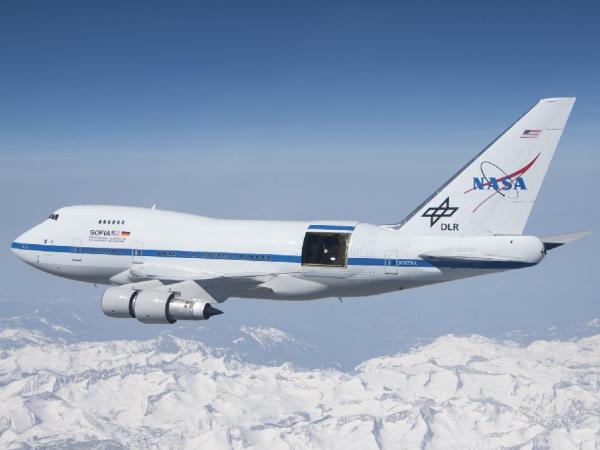 The NASA SOFIA (Stratospheric Observatory for Infrared Astronomy) isn’t just an average observatory. It’s actually the world's largest airborne astronomical observatory and it works hand-in-hand with not only NASA’s space telescopes but also some major land-based telescopes. Continue reading →
-
NASA’s Juno Satellite vs. Jupiter’s Magnetic Field
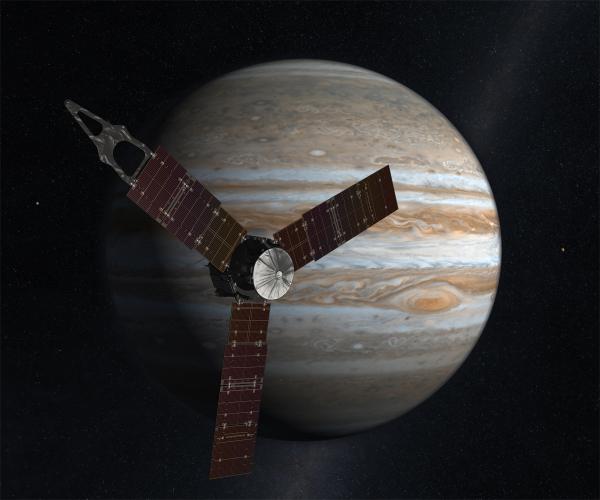 Named for the Roman king of the Gods, Jupiter is the largest planet in the solar system and is known for its giant red spot--a raging storm about 1.3 times as wide as Earth. Jupiter is a gas giant and can be as far as roughly 600 million miles from Earth. Since Galileo first turned a telescope on it in 1610, we’ve learned little about this mysterious planet. That may be about to change. Continue reading →
-
Magnetic Fields Help NASA Learn the Whereabouts of Voyager 1
 In 1977, the Voyager 1 spacecraft was launched into space with the purpose of exploring Jupiter and Saturn, according to NASA.
-
Magnets for the Home Gardener
 When most people think about gardening, magnets aren't exactly the first tool that comes to mind. But as it turns out, a little magnetic know-how can go a long way — whether you're trying to boost seedling growth, keep your backyard chickens safe, or get more out of every drop of water you use on your plants. Here are some...
-
How Meteors Magnetize the Moon
The Moon doesn’t have a global magnetic field like Earth, yet scientists have found magnetized rocks scattered across its surface. So where did that magnetism come from? One of the most compelling answers involves meteors and asteroid impacts. Scientists believe meteors help magnetize the moon. When large objects collide with the Moon, they can create conditions strong enough to magnetize... -
Auroras and Magnets: The Science Behind the Beauty
What do Alaskans, Austrians, and New Zealanders have in common? All three stunning locations are graced with colorful ribbons that light the night sky, known as the Northern and Southern lights. A phenomenon that lights up the night sky with brilliant streaks of green, red, and purple, admirers of these majestic auroras recently noticed the addition of two new mysterious colors, mauve and white, in 2016. Attributed to a reference from a 2006 child’s movie, Over the Hedge, scientists determined these new colors, known as STEVE (Strong Thermal Emission Velocity Enhancement) that often appear in a “picket fence” formation, were interestingly not produced by the same scientific principles as their look-alike counterparts. Continue reading → -
Magnets and The Webb Telescope
If you haven’t heard of the James Webb Space Telescope, you are seriously missing out. It is the most powerful space telescope ever built. It lets scientists (and anyone with a phone or computer) see what our universe looked like about 13 billion years ago, when the universe was only a few hundred million years old. Since July 12, 2022, the telescope has been transmitting images of stars, nebulas, planets, galaxies, cosmic dust clouds, you name it! Continue reading → -
Scientists Are Using Magnets To Produce Oxygen In Space
The Oxygen Conundrum In Space In what was only thought possible in a scene out of The Martian, scientists are harnessing the power of magnets to advance an old idea: turn water into breathable oxygen for astronauts. Utilizing new research on magnetic phase separation in microgravity, a team of international scientists believes they have discovered the next big advancement in space exploration. Continue reading →