Search results for 'nasa'
-
The Van Allen Radiation Belts
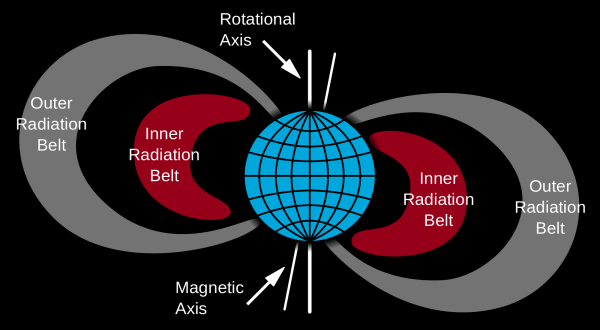 Earth’s magnetic field protects the surface from cosmic radiation and charged particles from the Sun. While it seems like the magnetic field is a giant force field deflecting harmful particles far away into the universe, it’s actually doing both: it deflects many particles away, but it also traps others close to the planet. Magnetized planets like Earth have layers of charged particles trapped by the magnetic field. Earth has two of these layers known as Van Allen radiation belts. Continue reading →
-
Understanding the Milky Way's Magnetic Field
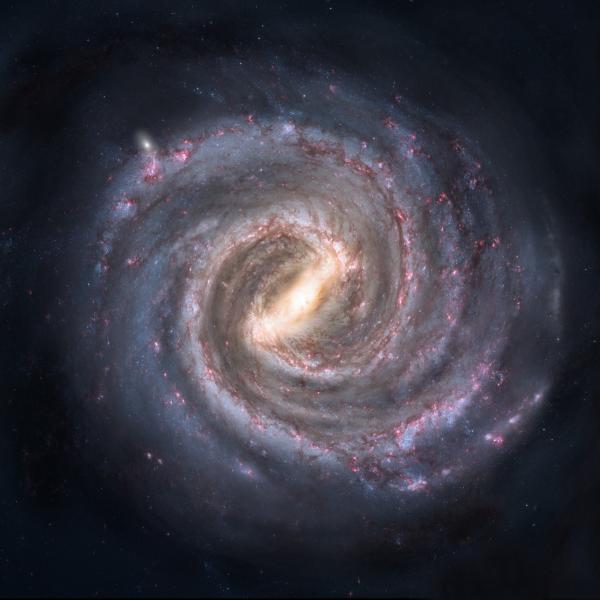 You probably already know that our planet has an intrinsic magnetic field, and you might even know that it’s caused by the earth’s swirling molten core. What you might not know, however, is that plenty of other cosmic objects in the universe have magnetic fields, including our very own Milky Way Galaxy. Scientists think this force plays a supporting role alongside gravity in the galaxy's structure, and it may influence its spiral shape. Magnetic fields also play a part in astronomical events like solar flares and the evolution of stars. Though scientists have conducted research to better understand these important fields created by our galaxy, they still hold many mysteries. Continue reading →
-
Magnetic Propulsion and the Final Frontier
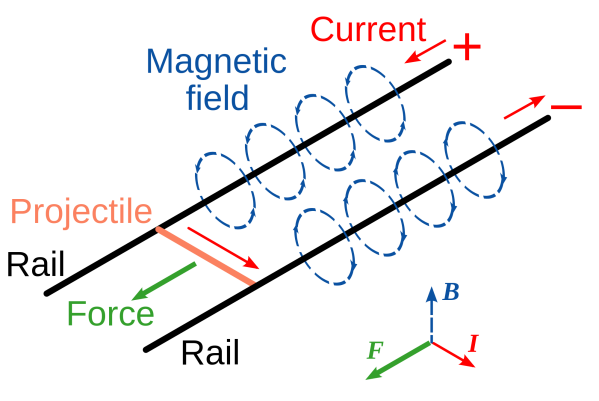
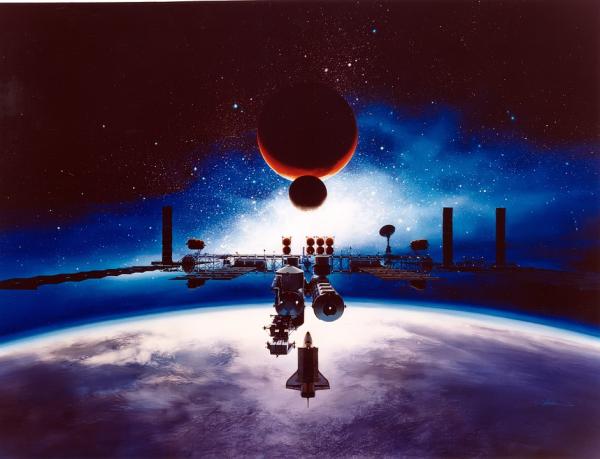 With help from magnets, we may be able to explore farther and deeper into the final frontier than ever before. This may sound like science fiction, but scientists are already experimenting with electromagnetic propulsion as a possible alternative to chemical launches. So, how does electromagnetic propulsion work? Continue reading →
-
Magnetism and Life Beyond Earth
 Conspiracy theories aside, the existence of intelligent lifeforms on other planets has yet to be proven. With that being said, many of those planets may actually be capable of sustaining human life -- if we can somehow travel the distance to inhabit them. Scientists have been searching for other planets that could be conducive to life for quite some time. In fact, NASA's Kepler mission confirmed in 2014 the first Earth-size planet in the “habitable zone” around another star, Kepler-186f, which orbits a red dwarf smaller and cooler than our sun. Planets like this that orbit relatively close to small stars most likely have magnetic fields to protect their surface and any possible life on it from radiation, according to researchers at the University of Washington. But it gets a little more complex than that. Continue reading →
-
Visualizing Magnetism With MIMI: Magnetospheric Imaging Instruments
 Many of us are aware that plasma is one of the fundamental states of matter. What is not always apparent to us earthlings is that plasma is invisible to the naked eye in certain areas of the universe. But with the help of a tool called MIMI (Magnetospheric Imaging Instrument) NASA can view an entirely new world of material. Continue reading →
-
The Science Behind Ferrofluids
 While most rare earth magnets are made from the rock hard materials we’re familiar with, not all appear in that classic solid form. Ferrofluid is a stable colloidal suspension of superparamagnetic iron oxide nanoparticles. So, simply, it is a liquid that contains tiny magnetic particles. It’s magnetic properties comes from the magnetized iron oxide it contains. These particles are known as nanoparticles because of their small size -- the particles are actually so small that they stay suspended under normal conditions! Continue reading →
-
What Is Magnetic Field Architecture?
In the future, not only could you be zooming around on a hoverboard, but your house may also float and your robot assistant at work could levitate to avoid obstacles and maintain a sterile space. This may seem too far-fetched to be happening anytime soon, but a company called Arx Pax is working to change that with magnetic field architecture (MFA). Continue reading → -
What Is A Magnetic ‘Tractor Beam’?
In the news recently, you may have seen a few companies debut their versions of magnetic hoverboards such as Lexus and Arx Pax. While the hoverboards aren’t quite ready for public consumption, they did pique the interests of NASA scientists. NASA partnered with Arx Pax to use their Hendo Hoverboard engine technology to develop a magnetic ‘tractor beam’. So, what is a ‘tractor beam’ and what does it have to do with the Hendo Hoverboard? Continue reading → -
DIY Magnetic Rocket Experiment
Launching a rocket into space is expensive. The current chemical method requires more than 500,000 gallons of liquid propellants. Shuttle launches once cost roughly about $775 million per shuttle (NASA's FY2010 average) launch, which is in addition to the cost of the shuttle itself. The Space Shuttle Endeavour cost $1.7 billion. So, as costs continue to rise some scientists and engineers are trying to come up with an alternative launch method. Continue reading → -
Space Plasma and Magnetic Reconnection
Plasma is the fourth state of matter after solid, liquid, and gas. Essentially, plasma is a gas that’s so hot the atoms are separated into electrons and ions. Because the parts of the atoms can move independently of each other, plasma is electrically conductive and responds to electromagnetic fields and forces. As a result of its magnetization, plasma interacts with the magnetic fields of space in interesting ways. For example, the process of magnetic reconnection explains changes in how the magnetic field lines of plasma are connected and arranged. Continue reading →