Search results for 'solar wind'
-
An Explanation for Why Solar Winds Are Hotter Than Expected
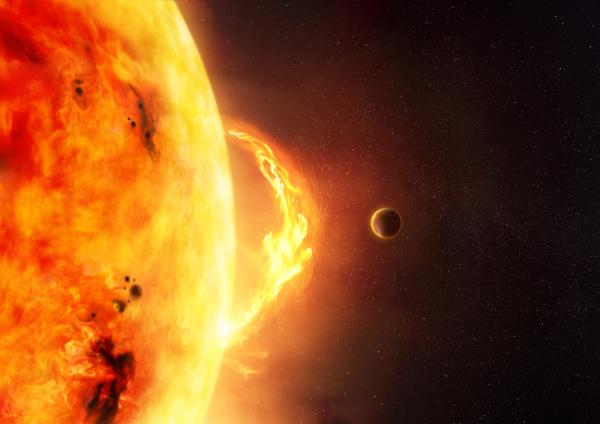 The topic of solar wind has been discussed since it was first detected in 1959, but, there’s still a lot that we don’t know about it. One of solar winds’ mysteries surrounds the fact that when it reaches the Earth, satellite measurements are recording electron temperatures that are higher than simple models of the wind’s cooling would predict. Physicists from the University of Wisconsin - Madison may now know the reason why this is with their study that was published April 14 in the Proceedings of the National Academy of Sciences. Continue reading →
-
How the Moon Got "Sunburns" - Solar Wind and Magnetic Fields
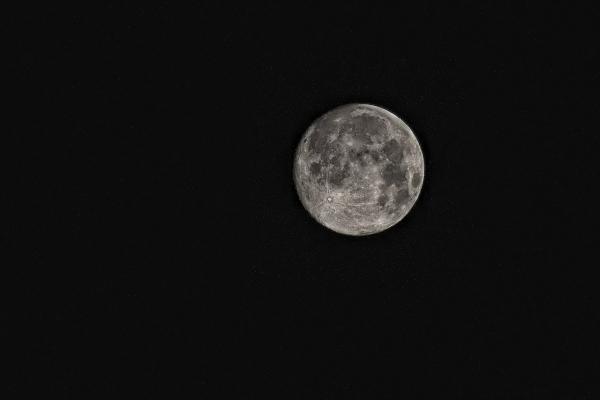 As we all know, the Sun is powerful. So powerful that any object, person, or planet traveling through space is susceptible to the Sun’s damaging radiation. The latest victim to feel the Sun’s fiery wrath? Earth’s Moon. Researchers, using data from NASA’s ARTEMIS mission, have reported finding “distinctive patterns of darker and lighter swirls” on the Moon’s surface. When looking into it further, they have found that these swirls may actually be “sunburns.” Should we be worried about these sunburns on Earth? Continue reading →
-
Magnets Protect Astronauts from Solar Wind
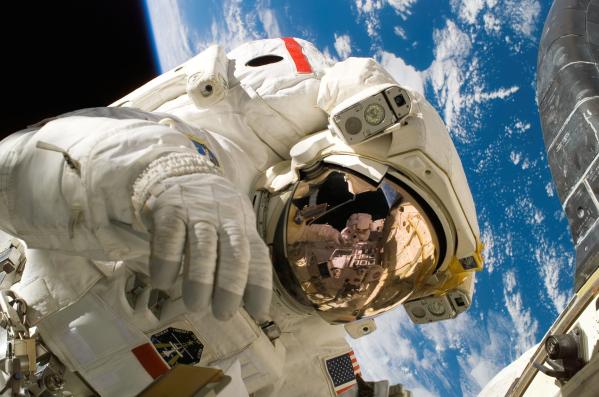 A few years ago, we explored this question about how magnets could potentially protect astronauts: can magnets protect against cosmic radiation? Now, a program between the Information Satellite Systems (ISS)-Reshetnev Company and the Siberian Branch of the Russian Academy of Sciences is conducting research on how a magnetic dipole could protect crew members from galactic and solar cosmic rays while on missions beyond Earth’s boundaries that last more than twelve months. Continue reading →
-
Solar Wind & the Satellite Superhighway
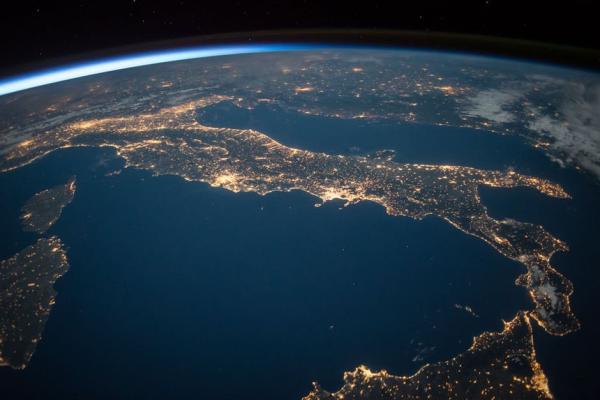 According to a recently developed 3D mathematical model that describes the magnetic field around geosynchronous satellites, solar storms and solar wind disturb that magnetic field, and the model helps researchers map and predict those changes. Continue reading →
-
Earth’s Magnetic Field is Actually a Solar-Wind Shredder
 At one point in time, Mars – arguably the most similar planet to Earth in our solar system – wasn’t the frozen desert we know today. In fact, researchers suggest that oceans and rivers once existed on its surface before solar winds from the Sun stripped away much of the atmosphere that held them. Continue reading →
-
Our Solar System’s Magnetic Bubble Resembles an Interesting Food
 All of the planets in the solar system are encased in a magnetic bubble. For years, scientists tried to figure out what this bubble looked like, but it’s been hard to measure because the closest point is more than ten billion miles from Earth. By using a model developed with data from NASA missions, scientists have developed a new prediction of the shape of the bubble surrounding our solar system — and you might be just as surprised as they were to find it looks a lot like a croissant. Continue reading →
-
Did You Know That the Sun's Heliosphere is Actually a Magnetic Solar Bubble?
In its essence, the Sun is considered the heart of our solar system. From Earth’s standpoint, the scorching yellow star of glowing gases directly dictates its seasons, ocean currents, climates and aurorae. If the sun were the size of a front door, Earth would be about the size of a nickel. And without its energy, human life wouldn’t even exist. Crazy to consider, right? However, that example only provides a slight sliver of the Sun’s impact. In actuality, its gravity holds the solar system together, keeping everything from the largest of planets – Jupiter, Saturn, and Uranus – to the smallest particles of debris in orbit within the heliosphere, a bubble of solar wind and embedded magnetic field that extends roughly 120 astronomical units (about 11 billion miles). Continue reading → -
The Magnetic Fields of Our Solar System
Magnetic fields protect planets and atmospheres from solar particles. The particles from the sun are charged, which means they respond to the magnetic field and move around it. Magnetic fields are generated by the movement of electrically conducting fluid inside the planet, usually in or around the core. Earth’s magnetic field is generated by liquid metal at the core and Earth’s rotation of 24 hours, combined with heat-driven convection of the liquid, produces the movement that sustains a magnetic field. The other planets in our solar system, except for Venus and Mars, all have magnetic fields or traces of magnetism that differ from Earth’s in various ways. So, how are other planetary magnetic fields generated? Continue reading → -
Why September Is a Great Time to Learn About the Northern Lights
Magnets and the Northern Lights have an incredible connection that can turn a colorful night sky into a hands-on STEM lesson. Also known as the aurora borealis, the Northern Lights let us explore Earth's magnetic field, the Sun, our atmosphere, and the science behind those brilliant colors. September is an especially fitting time to explore the topic. According to the... -
How Meteors Magnetize the Moon
The Moon doesn’t have a global magnetic field like Earth, yet scientists have found magnetized rocks scattered across its surface. So where did that magnetism come from? One of the most compelling answers involves meteors and asteroid impacts. Scientists believe meteors help magnetize the moon. When large objects collide with the Moon, they can create conditions strong enough to magnetize...