In an article published in the journal Science Robotics, the world was introduced to a new type of robot, one that can move underwater. Researchers at Northwestern University demonstrated how they used magnetic and light fields to make a robot not only walk underwater, but break dance as well. Continue reading →
Scientists have long been trying to control magnetism — something that would do wonders for advancements in technology. The issue can best be explained by Earnshaw’s Theorem, which states that it's not possible to create a spot of maximum magnetic field strength in an empty space and that, in general, a magnet's field weakens with distance from the magnet. Continue reading →
From using magnets to help social distancing to breakthroughs in magnetic field research— 2020 was an eventful year in the world of magnetic discoveries. In order to celebrate the end of the year, let’s take a look back at some of our favorite magnetic news stories! Continue reading →
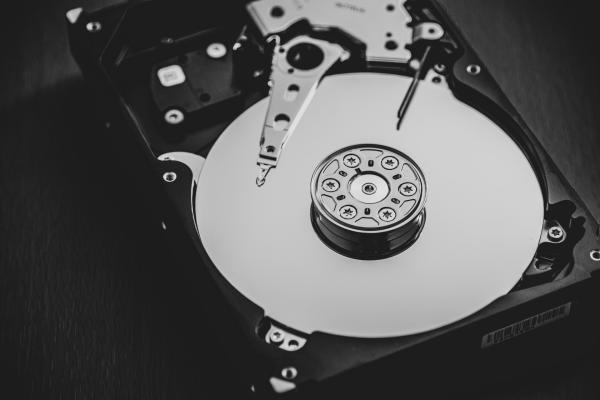
There’s technology around us that wouldn’t be possible without magnets and their forces. One of the most common examples — memory. Thanks to magnetism, and the alignment of electron spins in one direction or the other, most of the information in the world can be encoded in hard disks or stored in memory drives. Continue reading →
Most magnetic fields on Earth, even man-made ones, are actually not that strong. For years, experts have been researching strong magnetic fields created in laboratories. However, the magnetic strength of this research has been weak (relatively speaking). For instance — the geomagnetic field that affects compass needles is between 0.3 and 0.5 gauss while MRI technology used in hospitals generally produces fields of around 1.5 to 3 tesla, or 15,000 to 30,000 gauss. The strongest controlled indoor laboratory field on record is 1,200 tesla, set in 2018 at the University of Tokyo, or just over 1 kilotesla.
That is, until now-- Continue reading →
We talk about magnetism and electricity a lot as the two are linked together in many ways — from power lines generating a magnetic field to how magnets are used to generate electricity (refresh your memory here). Even though it’s a common occurrence for these two to be linked, it’s not uncomplicated as electrical and magnetic properties of certain materials are also coupled with each other. Meaning, the electrical properties can be influenced by a magnetic field and vice versa. Continue reading →
Magnetic information-storage devices, such as floppy disks, credit card stripes, and hard-disk drives, have been getting smaller as the years go on. This size-reduction has been necessary as it allowed for more bits of data to be integrated into smaller devices. As technologists keep pushing the boundaries of just how much they can increase the storage density of these devices while keeping the devices themselves smaller and smaller, the limitations of this practice are being discovered. Continue reading →
A dent is evolving within Earth’s Magnetic Field, and it has scientists watching closely. This isn’t necessarily new news though. Scientists have known about this weak spot for decades now, but it’s of importance right now due to one crucial factor-- it’s apparent growth.
This weak spot phenomenon is called The South Atlantic Anomaly (SAA) and it stretches across the Atlantic Ocean from South Africa into Brazil. In this area, the magnetic field is weaker than normal, resulting in a “dent.” The Earth’s magnetic field, also known as the geomagnetic field, is important as it protects us against solar windー a flow of charged particles that are released from the outer atmosphere (corona) of the Sun.
Continue reading →
When it comes to magnetic materials, magnetic ordering — simply put, the characteristic by which spins of neighboring atoms order themselves to allow magnets to interact — is very important to understand.
Recently, a team of researchers created a way to examine electronic spins within magnets at almost the atomic level, showing promising potential in small-level magnetism, like within data storage devices. Continue reading →
Researcher Suzanne McEnroe is the epitome of a magnetic personality-- you don’t have to just take our word for it though as she received the William Gilbert Award in 2019 for “outstanding and unselfish work in magnetism of Earth materials and of the Earth and planets.” Her leadership in research has been integral in understanding mineral magnetism, paleomagnetic field records, and geomagnetic field anomalies, to name a few. Continue reading →

 In an article published in the journal Science Robotics, the world was introduced to a new type of robot, one that can move underwater. Researchers at Northwestern University demonstrated how they used magnetic and light fields to make a robot not only walk underwater, but break dance as well. Continue reading →
 Scientists have long been trying to control magnetism — something that would do wonders for advancements in technology. The issue can best be explained by Earnshaw’s Theorem, which states that it's not possible to create a spot of maximum magnetic field strength in an empty space and that, in general, a magnet's field weakens with distance from the magnet. Continue reading →
 From using magnets to help social distancing to breakthroughs in magnetic field research— 2020 was an eventful year in the world of magnetic discoveries. In order to celebrate the end of the year, let’s take a look back at some of our favorite magnetic news stories! Continue reading →
 There’s technology around us that wouldn’t be possible without magnets and their forces. One of the most common examples — memory. Thanks to magnetism, and the alignment of electron spins in one direction or the other, most of the information in the world can be encoded in hard disks or stored in memory drives. Continue reading →
 Most magnetic fields on Earth, even man-made ones, are actually not that strong. For years, experts have been researching strong magnetic fields created in laboratories. However, the magnetic strength of this research has been weak (relatively speaking). For instance — the geomagnetic field that affects compass needles is between 0.3 and 0.5 gauss while MRI technology used in hospitals generally produces fields of around 1.5 to 3 tesla, or 15,000 to 30,000 gauss. The strongest controlled indoor laboratory field on record is 1,200 tesla, set in 2018 at the University of Tokyo, or just over 1 kilotesla. That is, until now-- Continue reading →
 We talk about magnetism and electricity a lot as the two are linked together in many ways — from power lines generating a magnetic field to how magnets are used to generate electricity (refresh your memory here). Even though it’s a common occurrence for these two to be linked, it’s not uncomplicated as electrical and magnetic properties of certain materials are also coupled with each other. Meaning, the electrical properties can be influenced by a magnetic field and vice versa. Continue reading →