
magnets in science
-
Magnets Helping with New Robot Technology
 The thought of robots assisting in daily life seemed like a futuristic concept for quite some time. Over the past few years, however, there have been numerous advancements in robotics that could make this concept a reality. Scientists from MIT are finding success by creating robots that can be controlled by a magnetic field. Soon, these robots may be used to transport your packages, help with medical treatments, assist in navigating small spaces, and more. Continue reading →
-
Controlling Anomalous Hall Effect and Berry Curvature For Electronic Advancement
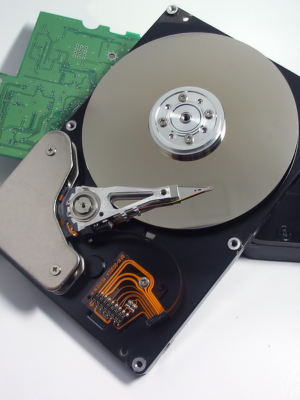 Recently, a group of MIT Plasma Science and Fusion Center (PSFC) research scientists figured out how to manipulate or control the anomalous Hall effect and Berry curvature for advanced use in computers, robotics, and sensors. Hang Chi, Yunbo Ou, Jagadeesh Moodera, and co-authors wrote extensively to explore their discovery and share it with the world. Continue reading →
-
3D Printing of Rare-earth-free Permanent Magnets
 As concerns and awareness grow regarding the world’s rare-earth element supply, other options are starting to attract interest. One potential alternative involves additive manufacturing or 3D printing magnetic ceramics and alloys that aren’t made with rare earth elements. Continue reading →
-
Meteorites & Magnet Manufacturing
 Scientists say there’s a potential new approach to magnet manufacturing that may help Europe and the West lessen (or even eliminate) their reliance on China and its rare earth elements. The researchers framed the work as a possible help for the transition to low-carbon technologies. Continue reading →
-
Magnetic Force vs. Magnetic Field
 Magnet users of all experience levels have likely heard of magnetic force and magnetic fields. While these phrases are used quite often, many might not be aware of the difference between them. Today, we are taking a look at the basics of both concepts. Continue reading →
-
Where Would We Be Without Magnets?
 If we erased magnets from our history and current existence, where would we be? It’s actually a mind-bending thought experiment to consider. Perhaps, at first, you might consider how a few different industries would be altered; however, given enough thought, you would realize that our society would be fundamentally different, and not only would a lack of magnets change certain industries, it would completely eliminate others. If we’re being honest, we simply couldn’t erase magnets, especially because electromagnetism is one of the fundamental forces in nature — the magnetosphere shields life on planet Earth from solar wind. Continue reading →
-
Permanent Magnets Used in Robots
For years, permanent magnets have played a vital role in the ever-expanding robotics industry, specifically in robot manufacturing. The design process pushes boundaries, is highly focused on sensors and motion, and must fulfill specific conditions (e.g, magnetic tolerances, parameters, and assemblies). As the design and manufacturing process continue to evolve and require more precision, there is a need to select more precise magnets and enact more advanced ideas. In many cases, this requires permanent, neodymium magnets. Continue reading → -
Lasers On Magnets: A New Way to Store Big Data
“The mysterious force we use to stick our travel souvenirs to the fridge is the same one used to store our digital data!” What an incredible concept — as explained in an article Kshiti Mishra, magnetism is used to store our digital data. Not only that, but there’s a new way to store data on the horizon. Put simply, this new method involves shooting lasers on magnets. Yes, it sounds like a chapter in an old sci-fi novel, but no, this is real life. Continue reading → -
The Latest Technology And Pacemakers: What Are The Risks?
In a rapidly evolving technical society, it has never been easier to stay active and track your health journey with ease. But before you go out and purchase the newest wearable gadget that promises to make your life easier, those with certain health conditions must consider the interactions of such technology in the presence of implanted medical devices. Continue reading → -
How Permanent Metric Magnets Can be Used in Mini Medical Robots
Magnetically-powered micro robots are being used more and more in the biomedical field, as well as in microfluidics — the science that studies the behavior of fluids in micro-channels, and the technology of manufacturing micro-devices through which fluids flow or are confined. Many robots use electromagnets, which provide a significant degree of freedom control (DOF) or capabilities of movement. Another option, however, involves an array of rotating permanent magnets to sustain the same level of control over “untethered” (i.e., wireless) micro-robotic systems. Continue reading →