admin
-
The Technology Behind the Magnetic Levitation Train
 You may have heard of Japan’s Maglev Train-also known as the fastest floating train in the world, with a test-run record of 375 miles per hour (603 km/h) set in 2015 and a planned passenger speed of about 310 miles per hour. So far, maglev trains carry passengers in only a few countries, including China and Japan (where the high-speed Chuo Shinkansen line is still under construction and has not opened), but 2014 reports suggested that the impressive floating train technology could make its way to the U.S. Continue reading →
-
Mini Magnetic Robots May Revolutionize Manufacturing
These microrobots could be mistaken for tiny insects because they are so small, but don’t let their size fool you. The research organization SRI International has been working on their magnetic mini-robot technology called Diamagnetic Micro Manipulation for DARPA’s Open Manufacturing Program. According to Wired, Darpa’s vision is to use the bots to "lower the cost and speed the delivery of high-quality manufactured goods". Continue reading → -
How A Compass Works
 The compass is one of the oldest navigation tools. It is so old that it’s unclear who is responsible for inventing it, but many believe it originated in China, where lodestone direction-pointers may date back about 2,000 years and written descriptions of compass-like devices appear by the 11th century. Today’s advanced technologies like GPS may make compasses seem pointless or obsolete. However, compasses have a major advantage over most of today’s fancy technologies. Because they use natural properties of magnetism to navigate and don’t require electricity or batteries, you don’t have to worry about them losing power, although nearby steel, strong magnets and electrical currents can throw off a compass needle. A compass is one of the most essential survival tools. However, they do have a few limitations like magnetic declination, the difference between magnetic north and true north. Continue reading →
-
Magnetic Earth Day Facts
 The first Earth Day started on April 22, 1970, with over 20 million people across the United States rallying for increased environmental awareness and protection. Photos from the first Earth Day show some advocates wearing gas masks and others sitting outside city parks, buildings, and other facilities to spread their message. Today, Earth Day is an annual observance that has been celebrated for more than 50 years. Earth Day may happen once a year but there are many reasons why we should appreciate and protect the Earth all year round. Continue reading →
-
DIY Easter Egg Magnets
 Happy Easter! If you have some extra time this weekend amongst the holiday festivities here is a DIY that is low-budget and great for families. These DIY egg magnets make colorful fridge accessories and can be a fun spin on the traditional egg dying activity. While hunting eggs, you can collect a few oval-shaped pebbles too, bring them back and get started! Continue reading →
-
Scientist Wins Millennium Technology Prize for Data Storage Magnetic Innovation
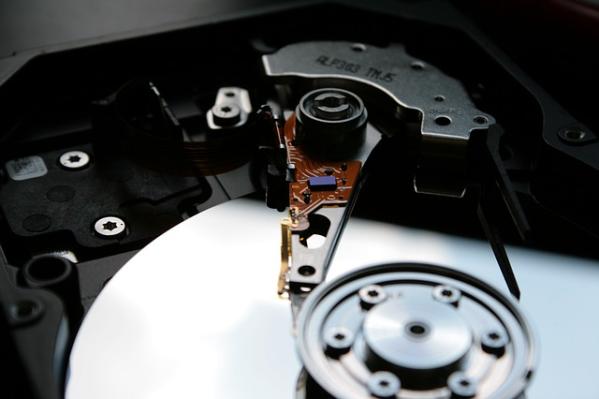 You may not be familiar with Professor Stuart Parkin, but you are probably very familiar with the technologies and online services that he made possible with his magnetic innovations. Professor Parkin is credited with expanding the data storage capabilities of magnetic disk drives and devices and setting the foundation for many technologies we use today. Spintronics, the physics field in which Prof. Parkin is a leading innovator, uses the magnetic spin of electrons, alongside their charge, to store and process data. Continue reading →
-
Experiment: Remove Iron from Cereal
 You may have heard tales of the additives in processed foods, but have you ever actually seen them? Unlike fairy tales, food additives do exist and can be found in many common processed foods. Continue reading →
-
DIY: Magnetic Shoe & Clothes Locker
Replacing and professionally cleaning mud and other stains from your home’s carpet and other flooring can be costly. The good news is you can keep cleaning to minimum with this DIY project: a magnetic shoe and clothes locker. A magnetic shoe locker is a great way to organize and eliminate the frustration of constantly cleaning mud, rain, and other outdoor-to-indoor messes that are tracked into your home. Continue reading → -
Project Ara: A Modular Smartphone Using Electro-Permanent Magnets
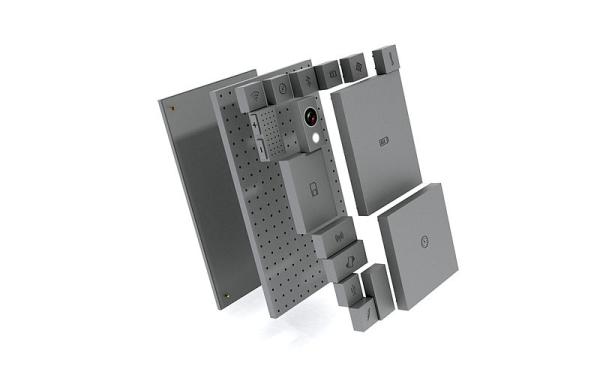
Editor's note: this is a 2014 post kept for the archive. Google suspended Project Ara in September 2016, so the phone was never released. When we first wrote this, one of the hot topics that week was Project Ara. It was a modular smartphone project, announced by Google, that could be customized and updated using electro-permanent magnets. Google discontinued the project in 2016. If you haven’t heard about the project yet, it could entirely change the way we update our smartphones. Instead of buying a phone every few years, Project Ara phone’s modular units allow owners to replace and upgrade parts as needed. The smartphone fosters user customization and could possibly reduce the record 62 million tonnes of e-waste generated worldwide in 2022 (UN Global E-waste Monitor 2024). Continue reading → -
Diamagnetic Levitation Experiment with Cube Magnets
Diamagnetic materials hold properties that repel an applied magnetic field. Because of these properties, it is possible to levitate a magnet when used in conjunction with diamagnetic materials. The principle of diamagnetic levitation has been known since the 1930s but is not the principle behind most practical transport systems, which rely on electromagnetic or superconducting levitation. A diamagnetic levitation experiment like the one below is both fun and educational. Continue reading →