
Apex Magnets Blog
-
Preserve Summer Flowers and Seashells with DIY Magnets
 Now that summer is underway, blooming flowers and trips to the beach are the norm. If you love the warm summer season and hate when fall and cold weather arrives, here’s one way to keep a little piece of summer all year round--DIY magnets. The next time you go outside or stroll along the beach take some souvenirs like seashells, sand or flower petals. Once you have collected all your souvenirs, preserve them with this easy DIY magnet activity. Continue reading →
-
The Magnetic Fields of Our Solar System
 Magnetic fields protect planets and atmospheres from solar particles. The particles from the sun are charged, which means they respond to the magnetic field and move around it. Magnetic fields are generated by the movement of electrically conducting fluid inside the planet, usually in or around the core. Earth’s magnetic field is generated by liquid metal at the core and Earth’s rotation of 24 hours, combined with heat-driven convection of the liquid, produces the movement that sustains a magnetic field. The other planets in our solar system, except for Venus and Mars, all have magnetic fields or traces of magnetism that differ from Earth’s in various ways. So, how are other planetary magnetic fields generated? Continue reading →
-
Electromagnetic Induction and Tesla Coils: How It Works
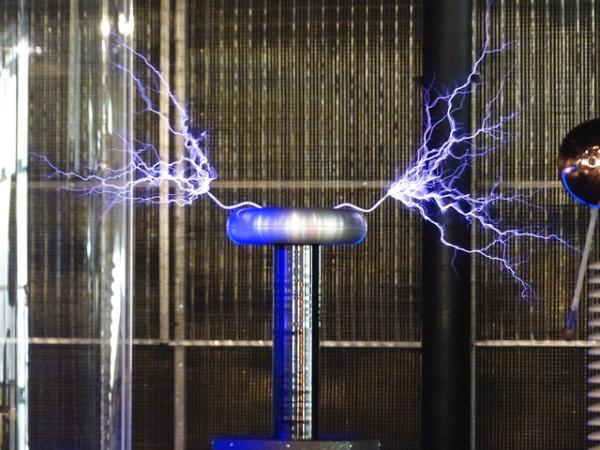 Nikola Tesla is known as one of the greatest minds in science. His experiments helped to further the fields of electricity and magnetism, making many of the gadgets and luxuries we enjoy today possible. One of Tesla’s most well-known inventions is the Tesla coil, a resonant air-core transformer that Tesla used to produce very high voltages and to experiment with wireless transmission of power and signals. The coil was created in 1891. Continue reading →
-
How Do Magnetic Wireless Chargers Work?
 For people who are always on the go, carrying a phone charger in addition to a cell phone is probably a common practice. The battery life of most cell phones just can’t keep up with real life. But instead of searching for a free outlet at a coffee shop, some power companies created wireless chargers that use magnetic fields instead of cords to transfer power. Continue reading →
-
Magnetic Puzzles for Summer Road Trips
 Long road trips can be extremely tedious and dull. Finding things to do in the car other than read can be difficult. If you’re looking for something to help occupy your time so you stop wondering if you’re there yet, here is a DIY project for magnetic puzzles. Continue reading →
-
How Magnetic Levitation Could Help Astronauts Reach Mars
 Levitating frogs and flies might seem like something out of a Harry Potter movie, but researchers believe that they can use magnetic levitation on flies to study the long term effects of weightlessness on humans. Continue reading →
-
DIY Magnet Pins for Clothing
Pins are fashionable accessories that you can wear with clothes, scarves, hats, and bags. They also make great souvenirs for travel, to promote a business, or to support a candidate or cause along the campaign trail. But instead of poking your clothes and accessories full of holes, you can use small magnets instead of metal pins. This simple craft will only take a few minutes and you don’t have to put holes in your clothes anymore! Continue reading → -
Could A New Discovery Change How Rare Earth Magnets Are Made?
Cerium seemed the least likely element to solve the problem of creating cheap rare earth magnets, because it tarnishes easily, reacts with water, and burns when heated. Scientists at the U.S. Department of Energy’s Ames Laboratory, however, found a way to use cerium instead of dysprosium in high-performance magnets. They added small amounts of cerium and cobalt together to create an alloy with performance comparable to the dysprosium-containing alloy commonly used for high-performance permanent magnets, and with higher resistance to demagnetization at high temperatures. Continue reading → -
3 Unusual Items You Can Use to Make Your Own Speakers
Whenever you listen to music, whether it is with your phone, iPod, or computer, you are using magnets. Technically, the speakers that are transmitting the music are using magnets. Many audio speakers and headphones use rare earth magnets, though inexpensive models often use cheaper ferrite magnets. In a speaker, the permanent magnet stays magnetized, and the coil of wire becomes an electromagnet when an electric current flows through it. The two magnetic fields push and pull on each other, which moves the cone and produces sound. You can make your own set of speakers out of virtually anything━as long as you have a magnet and few other small items. Here are some unusual ways that you can fashion your own speakers: Continue reading → -
4 Items You Didn’t Know Are Magnetic
You probably know that fridges and certain metals are attracted to magnets. However, there are some surprising items that you may never have guessed are magnetic. In this blog, we are taking a look at some everyday items that can actually have magnetic properties. Continue reading →