
Apex Magnets Blog
-
What Types Of Magnets Are Used In MRIs
 Some would argue that magnetic resonance imaging (MRI) machines have become as essential to the medical field as blood tests when it comes to diagnosing and treating patients. MRIs allow doctors to see inside the human body non-invasively. A physician named Raymond Damadian and not an engineer is credited with building one of the first full-body MRI scanners in 1977. Paul Lauterbur and Peter Mansfield shared the 2003 Nobel Prize for the imaging techniques MRI relies on. MRI is also used to guide focused ultrasound, and researchers are now testing it in early clinical trials for Alzheimer’s disease, following promising results in mouse models. It is still experimental and not an established treatment. You may already know that magnets are used in magnetic resonance imaging machines, but do you know what types of magnets are used or how it works? In this blog, we are taking a look at how the magnets in MRIs allow us to see inside the human body. Continue reading →
-
DIY Magnets: 4 Easy Easter Basket Stuffers
 Easter will be here in a flash -- or hop. Bunnies may be the mascot of the holiday in the U.S., but baskets are almost as iconic. The tradition of giving baskets filled with goodies during Easter seems to tie to the bunny. In other words, the Easter bunny is to baskets as Santa is to gifts -- the two go hand in hand. If you haven’t put your Easter baskets together yet, we have a few creative ideas for basket stuffers. The following basket stuffers are great for grown-up party favors or teacher gifts. Continue reading →
-
DIY Magnets: Easter Eggs
 Decorating eggs in festive colors and patterns is one of the most well-known Easter traditions of all time. Some experts say that the tradition started as far back as the 13th century. There are several possible reasons why eggs in particular are associated with the holiday. One idea is that since eggs symbolize new life, it could represent the beginning of the spring season or have a more religious connection to Jesus’ resurrection. The practice of decorating them is said to have started because eggs were often forbidden food during Lent, so people would decorate them, then eat them in celebration. Nowadays, they are more a symbol of the Easter holiday and egg hunting. This Easter you can create your own eggs in the form of some DIY magnets. Continue reading →
-
Magnet Experiment: The Levitating PaperClip
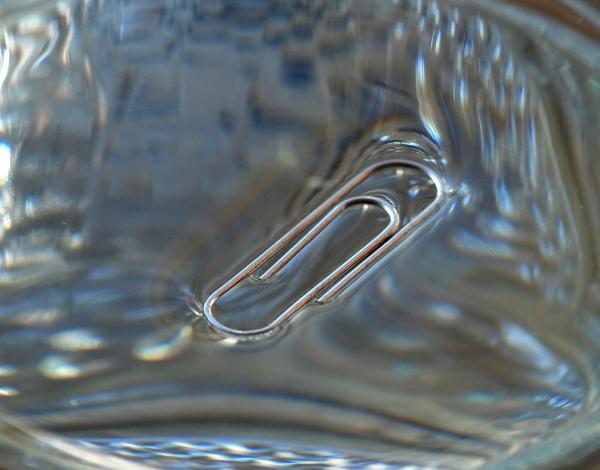 Magnets can do some amazing things -- like levitate and propel a train at speeds up to 375 mph in test runs or generate the strong magnetic field an MRI scanner uses to image the human body. However, sometimes its just fun to conduct experiments with them. One interesting experiment to do is to make a paperclip levitate, or seem to float in midair. The experiment is about as simple as it gets, and you can do it with everyday items that you probably have laying around your house. Here’s how you can do it. Continue reading →
-
8 Strange Facts About Magnets and Magnetism
 Magnets are interesting and strange materials. There are still some mysteries that scientists and researchers have yet to solve when it comes to magnets. However, some mysteries have been solved. In this blog, we have compiled a list of some of the strangest facts about magnets and magnetism. Continue reading →
-
What are Superconducting Magnets?
 Superconducting magnets are used in MRIs, Maglev trains, particle accelerators and other technologies that often use magnetism and high power conditions to operate. What are superconducting magnets? First, in order to understand what superconducting magnets are we should discuss superconductors and electromagnets. Continue reading →
-
Is Sand Magnetic?
Saying all sand is magnetic or non-magnetic would be virtually impossible, or frankly, inaccurate. Most sand is created from a natural process called weathering, which could take anywhere from hundreds or millions of years to occur. This process is essentially when the environmental elements breakdown minerals, rocks, and chemicals together over a certain period of time. Continue reading → -
Repelling Magnets Experiment
Every permanent magnet has a north pole and a south pole. Even if you cut a magnet in half, the two remaining pieces will have a north and south pole. And if you know anything about magnetism, you know that opposites attract. The north pole and south pole of two magnets will pull towards each other, whereas two similar poles will repel each other. Magnetic attraction and repulsion are perhaps the simplest and most well-known properties of magnets. In this experiment, we’re creating a device that shows how magnetic repulsion works and makes learning about it fun. Continue reading → -
What Are Rare Earth Magnets?
Rare earth magnets are magnets that are made from at least one of the seventeen rare earth metals on the periodic table of elements. Mainly it is from one of the fifteen lanthanides that are marked in light orange in the periodic table below. Continue reading → -
What Are Magnetic Metals?
It is common knowledge that magnets attract metals but not all metals. Some metals contain certain properties that make them more magnetic than others. One metal that is highly magnetic is iron. What are the other types of magnetic metals? Continue reading →


