
Choosing the Right Magnet
-
Make the Most of Your Magnets
 We’ve been there: You’re perusing Pinterest or browsing blogs when you catch a project that you absolutely must make. Maybe you even saw it on our magnet blog! You hit the purchase button to get all the supplies you need and a few days later, a box arrives at your door. It’s time to jump right in and make the gorgeous, Instagram-ready project you’ve been dreaming of, right? Hold on there, sailor, because we’ve got some news for you: While your magnets can be useful and educational, they also have a few limitations. If you find yourself making any of these magnet mistakes, you may actually damage your magnets. Continue reading →
-
How We Ship Monster Magnets
 Shipping magnets ordinarily isn’t a problem. With proper packaging and timely delivery, we ship orders received by 3 p.m. ET, Monday–Friday, the same business day. But when it comes to shipping large, powerful magnets, problems can arise as they travel from metal truck to metal truck. Our large neodymium magnets are capable of attracting metal through several layers of ordinary packing material. Instead of forcing your mail carrier to pry the magnetic package off the metal truck with a crowbar, we carefully pack our rare earth magnets such as the 6” x 2” disc magnet so they are more convenient for travel. Here’s how we do it: Continue reading →
-
The Best Adhesives To Use With Neodymium Magnets
 Frequently for DIY projects and crafts you will need to hold magnets in place using an adhesive. But what type of adhesive works best on neodymium magnets? Most types of strong glue or even strong tape will be effective when attaching magnets to various surfaces. As long as you don’t use hot glue, which can be hot enough to partially demagnetize standard-grade or thin neodymium magnets, most adhesives will work well on magnets as long as you prepare the surface properly. Here are a few types of adhesives crafters can use to secure neodymium magnets in place: Continue reading →
-
The Various Shapes of Magnets and Their Uses
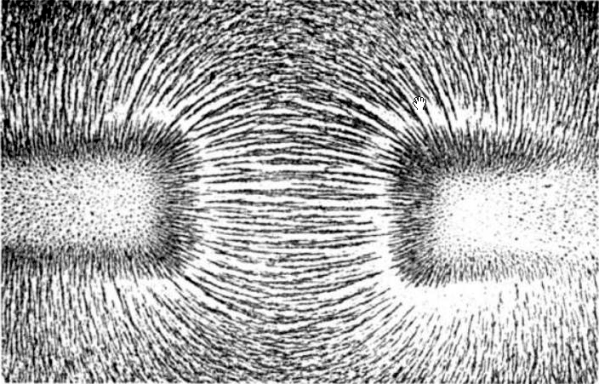
 Magnets come in a variety of shapes and sizes like disc, sphere, horseshoe and a number of other unique forms. Usually, bigger magnets are stronger, but not always. Small magnets can be improved to increase strength by using different materials. The shape of a magnet, however, can tell you a lot more than size. Each magnet’s shape has an influence how it is used. It determines how the magnetic field lines are arranged outside of the magnet as well as the strength of its pull. What are some of the common shapes of magnets and how are they used? If you are choosing a shape for a neodymium project, see our guide to choosing the right neodymium magnet shape and style. Continue reading →
-
What Are Rare Earth Magnets?
 Rare earth magnets are magnets that are made from at least one of the seventeen rare earth metals on the periodic table of elements. Mainly it is from one of the fifteen lanthanides that are marked in light orange in the periodic table below. Continue reading →
-
What are the different types of magnets?
 There are several different types of magnets, each with their own set of characteristics. If you are using magnets in any DIY, home improvement or science project it is important to know the differences to choose the best magnet for the job. First, it is important to mention that there’s also a subset of magnets━permanent and electromagnet. Electromagnets require a source of electricity and can be turned on or off, whereas, permanent magnets retain their magnetism. In this blog, we are focusing on permanent magnets. The main types are: Continue reading →
-
Magnetizing Objects with a Bar Magnet
Is it possible to give objects that are not magnets the power of magnetism? That is the question that we are putting to the test in this magnet experiment! Read on to see how a magnet can turn a regular piece of steel or another iron-based metal into a magnet. Continue reading → -
Tips to Separate High Powered Magnets
Some of our magnets are strong, really strong. If you’ve ever ordered any neodymium magnets from us, or have simply experimented with high powered magnets, you know that once opposite poles attract, it can be tough to separate them. Also, getting in the way of two attracting poles is dangerous and could result in broken glass or bones. When using strong magnets it is important to follow safety rules and tips. Below are some tips that we have compiled for separating strong magnets. Continue reading → -
What is Gauss Rating and How to Use a Gauss Meter
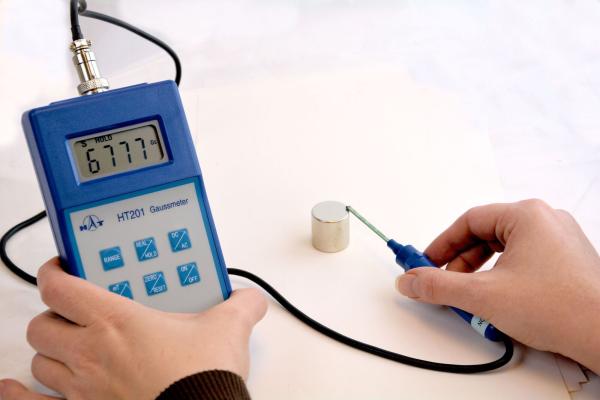
First, to understand what a gaussmeter is, we need to know what gauss rating means. Gauss is the unit that measures magnetic field B, or magnetic flux density. It was named for the German mathematician and physicist known for his work on magnetism, Carl Friedrich Gauss. His version was essentially a bar magnet suspended by some string. Continue reading → -
Magnet Safety: Technology That You Should Never Put Near High Powered Magnets
We love magnets, but we also don’t underestimate their power. With that in mind, there are a few things that you should never place near them. This is especially true with technology. Today’s computers and other devices often contain magnetic storage or magnetic components, meaning that some of them can be damaged when they come face-to-face with high powered magnets. Below we have listed a few tech items that you should keep away from magnets and what may happen if they do come in contact with one. Continue reading → -
Permanent Magnet Strength
There are two primary types of magnets: electromagnets and permanent magnets. Electromagnets are essentially magnets that have an on and off switch. They have magnet power in the presence of an electrical current and lose their power when this current stops. As you may have inferred by their name, permanent magnets can create and perpetually maintain their own magnetic field. However, there are a few things that can affect magnet strength. So, how permanent is their magnetism? Continue reading → -
Apex Magnets Now Offering Tiered Pricing
We’re happy to announce that we are now offering tiered pricing for select magnets! For our customers that need a larger order, a percentage of the cost may be deducted as the order quantity increases. In other words, buying more can save you more. Also, our customers that do not need a large order, can still purchase a smaller quantity of magnets at the same prices as before or they can choose to go with the new tiered pricing. We've just added more price options for our customers with the new tiered pricing model! Continue reading → -
Tips to Determine Magnet Strength
Magnets come in varying sizes, shapes, and levels of strength. This can sometimes be confusing when deciding how strong of a magnet you need for a project. However, there are a few key considerations that may help to guide in the decision-making process. For a more detailed walkthrough, see our guide on how to choose the right magnet strength for your application. Here are 3 ways to help you determine how strong a magnet is: Continue reading → -
What is the Difference Between "Surface Gauss" and "Manufacturer's Gauss"?
Surface Gauss Surface gauss refers to the gauss measurement at the surface of a magnet. Magnets can have vastly different strengths between the center of the magnet and its surface. The surface gauss rating is a useful indicator of the field at the magnet's face, but it does not by itself determine how strong a magnet will be in use... -
How are "Gauss" and "Pull Force" Related?
You've probably heard of the terms "gauss" and "pull force" when describing a magnetic field. These terms are related, but different, which makes it difficult to understand the difference. No need to worry, we've outlined everything you need to know about gauss and pull force in this blog post. Let's dive in! Gauss Gauss is a unit of measurement for... -
Apex Sells Strong Magnets in Many Shapes and Sizes
If the only magnets you've ever known are the ones you keep on your refrigerator, you may not realize how many different shapes and sizes strong magnets come in.





Page
- Page Previous
- Page 1
- Page 2
- Page 3
- Page 4
- You're currently reading page 5