Choosing the Right Magnet
-
Ordering Custom Magnets For Your Business? Start Here!
 Are you responsible for placing a large-scale order for magnets, but can’t find exactly what you need? Purchasing custom magnets is an effective way to find the right product for your unique situation. At Apex, we’re able to modify an order to meet special expectations and fit your company’s needs, and we can do so with a production lead time of approximately 6-8 weeks (up to 12 weeks for larger magnets). Successful customization is all in the details. The more descriptive you can be upfront, the better. Before reaching out to our team about customization, review the requirements of your desired magnetic application. If you’re unsure of what you need for the specific application, we suggest walking through the following steps. Continue reading →
-
A Basic Guide to Packing and Storing Magnets
 Magnets differ in size, strength, and purpose, but those aren’t the only variables to consider. They also have different sensitivities and shelf-lives, some requiring more careful, deliberate storage than others. The length of time a magnet goes unused – like when it's sitting in a warehouse – will cause only negligible loss of strength (well under 1% per decade at room temperature) as long as the magnet stays within its temperature limits and away from strong opposing fields. However, when it comes to packing and storing, you should take a few things into consideration. Following the basic rules outlined in this guide will help you make sure your magnets retain their original power. Continue reading →
-
Measuring the Strength of Magnets
 We all know that there are different kinds of magnets—the magnet holding up your grocery list on your fridge isn’t in the same realm as the one being used to lift cars in the junkyard. So, how do we measure the strength of each of these different kinds of magnets? Continue reading →
-
What Can Demagnetize a Magnet?
 Have you ever picked up a magnet only to find it just won’t do its job? Something must have demagnetized that magnet, rendering it unusable. But what factors can cause a magnet to lose its magnetism? This is important knowledge for folks regularly working with magnets in their work or just in their hobbies. There are a few different ways to demagnetize a magnet and we’re covering 5 of the most effective methods here: Continue reading →
-
Exploring the Shelf Life of Your Magnets: Demagnetization, Packaging, and Storage
 Almost everything has a shelf life. Certainly most food products at the grocery store will “go bad” if you don’t eat them before a certain date, but other products—including electronics, furniture, and even magnets—will weaken, become unsafe, or lose their ability to function as intended if not stored in a standardized setting or used within a certain number of years. If you want to limit damage to your magnets and prolong their shelf life, consider the following factors: net magnetic field strength, proper packaging, and safe storage. Continue reading →
-
Magnet Safety and First-Aid Assistance
 If you’re in an industry that utilizes magnets to improve operations, you have likely experienced the painful pinch of a finger stuck between two magnets. However, there are other potential dangers apart from cuts and blisters. Injuries can range from minor damage to something more significant like a broken bone or bad burn. Regardless of whether your role is hands-on...
-
Magnet Dimensional Tolerances: What to Watch for
As a purchasing manager, your facility and products must meet specific requirements. One such requirement is reliable tools and components — in this case, magnets. Whether you need to hang something from the ceiling or sew a magnetic clasp into a shirt, any magnet you use must fall into a permissible range of dimensions (depending on the shape, grade, and material). Continue reading → -
Custom Magnets: Possibilities from Apex Magnets
When your company’s needs, goals, and processes are completely unique, standard magnets aren’t always the right choice. Each company faces distinct challenges that require custom solutions. For that reason, Apex Magnets will work with you to determine the most suitable option for your application while offering customized products for your specific situation. Continue reading → -
From Bars to Spheres: Which Magnet Shape is Best For Your Application?
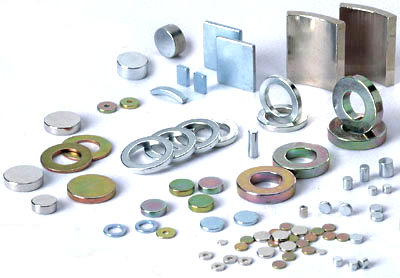
Magnets come in a wide variety of shapes and sizes – Apex alone offers about 670 different sizes and shapes – and each geometric variant has unique benefits. With so many options, it might feel overwhelming to choose. That’s why we created this short guide to help you narrow down your choices. Let’s run through the pros and cons of each common shape: bar, cube, cylinder, disc, block, and sphere. For a more recent look at neodymium shapes, see our guide to choosing the right neodymium magnet shape and style. Continue reading → -
Magnetic Moments: How Magnetizer/Demagnetizers Work
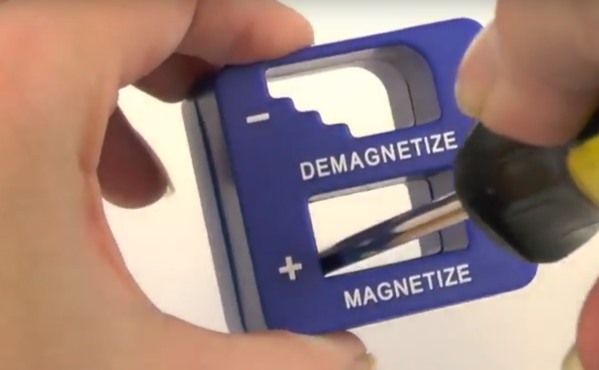
When working with tools, there’s nothing more frustrating than a tiny screw bouncing off the workbench and disappearing into a dark corner. That’s why many tool manufacturers sell magnetic-tipped screwdrivers. While these are wonderful tools, it doesn’t mean you need to go running off to the store for a new set. By using a simple magnetizer/demagnetizer, you can make the regular old screwdrivers you already own magnetic or nonmagnetic any time you’d like. Continue reading → -
Magnets in the Mail: The Ins and Outs of Transportation and Returns
We’ve all received wedding invites or Christmas photos with magnetic backings to attach to our refrigerators. While these magnets can be easily mailed in an envelope without much risk involved, more powerful magnets can do a lot of damage if improperly mailed. Continue reading → -
The Ins and Outs of Gaussmeters and Teslameters: How They Work
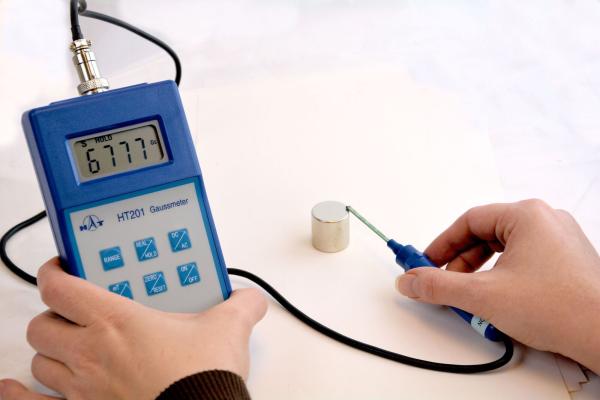
Whether you call it a gaussmeter or a teslameter, any device that can read the invisible strength of a magnet is an exciting product. But before you rip a gaussmeter out of its packaging and begin carrying it from magnet to magnet, it’s good to understand the product’s ins and outs. Continue reading → -
The Differences in N-Ratings for Neodymium Magnets
Every type of permanent magnet, whether neodymium, AlNiCo, or something else, has its own alphanumerical system for classifying strength. Each one is unique, and there’s no simple formula for translating a system from one magnet type into the system for another. Continue reading → -
What a Gaussmeter Can Do for You: Understanding Parts and Features
Because a magnetic field is invisible, obtaining a complete, quantitative representation of it requires measurement of both its strength and its direction. The ability to do that might sound like science fiction, but thanks to a discovery made nearly 140 years ago, we have the gaussmeter—the tool we now use to determine the strength of magnets. Continue reading → -
Modifying Magnets: What’s Possible With Cutting, Drilling, Welding, and Soldering
Because magnets are so versatile, they’re used in many applications. Occasionally, however, customers come to us wondering if they can expand a magnet’s capabilities though cutting, drilling, soldering, or welding. While this is possible under the very best circumstances, it’s extremely difficult to perform correctly. If one isn’t careful, a powerful magnet will quickly crumble or lose its magnetic field. That’s why it’s generally best to go with a custom-ordered magnet instead of modifying a production magnet yourself. Continue reading → -
How Coatings Affect Magnetic Strength
You carefully purchase magnets for your facility to ensure you’re selecting enough strength and the right size without going over budget. You’re doing your best to be diligent, but are you also considering how much the coating will interfere with your magnetic force? Continue reading → -
Gaussmeters: The Difference Between Axial and Transverse Probes
When you have to measure a magnetic field, you’ll need a gaussmeter. But in addition to knowing how to properly use it, you’ll also have to make an important decision: Will you use an axial or transverse probe to get your reading? Continue reading → -
6 Variables that Affect Magnets: What to Watch For
Under ideal conditions, a permanent rare-earth magnet can continue performing for decades. But achieving “ideal conditions” is easier said than done. Because as strong as neodymium and other rare earth magnets are, they do have a sensitive side. Knowing what to watch for helps your magnets perform without any interference for as long as you need them to remain in service. Continue reading → -
The Advantages and Disadvantages of Different Magnets
When you imagine the contrast in magnetic strength between the business card magnet on your refrigerator and something like a rattlesnake egg, it’s clear that not all magnets are equal. For an industrial application, choosing the correct magnet is crucial to the proper function and efficacy of that application. Continue reading → -
Be Attracted to Magnetic Safety: Workplace Best Practices
While magnets are capable of remarkable tasks, like the electromagnets that lift cars in scrap yards or the magnets that levitate maglev trains, they typically pose little threat to the average human — when handled properly. Multiple smaller magnets used in close proximity can still attract each other strongly, and their combined force can pinch skin or cause injury. Handle clustered magnets with the same care as larger ones. Continue reading → -
How Temperatures Affect Neodymium Magnets
While neodymium magnets are pound-for-pound the strongest magnets available, extreme temperatures can alter the behavior of their atoms. As a result, their overall strength may fluctuate while they’re in use, creating potential hazards. Continue reading → -
Please Return Your Magnets to their Full, Upright Position
Air travel can be a real headache. Before even taking off, there are so many steps to complete and account for. Gathering boarding passes, getting through security, finding the right terminal, and waiting at the gate all add up to a rather hectic and draining experience. On top of all this, Earth’s magnetic field is creating a new problem for runways around the world. Continue reading → -
Tips for Handling Ferrofluid
If you’ve ever used ferrofluid for a science experiment or project, you know it can get everywhere. While it’s one of the coolest magnetic products available, it’s extremely messy and difficult to clean. Here are some tips to help you clean ferrofluid residue off your work surface so you’re prepared for your next experiment. Continue reading → -
Stay Safe: Magnet Safety Tips
It’s no secret that we’re big fans of neodymium magnets here. We think they’re pretty great - whether you’re doing a home renovation project, creating a cute seasonal DIY, or running a fun educational project, there are so many ways they’re useful. However, as with anything in life, it’s worth knowing how to handle these powerful, versatile tools safely. Continue reading →