
Apex Magnets Blog
-
Electromagnets Could Track Movement In Virtual Reality
 There are many ways you can use magnets nowadays, from hanging pictures on your fridge to charging your phone. These are commonplace uses for magnets, but a more futuristic application is right around the corner. Soon we might be using magnets not to influence the real world, but a virtual one. Continue reading →
-
DIY Magnetic Cork Planters
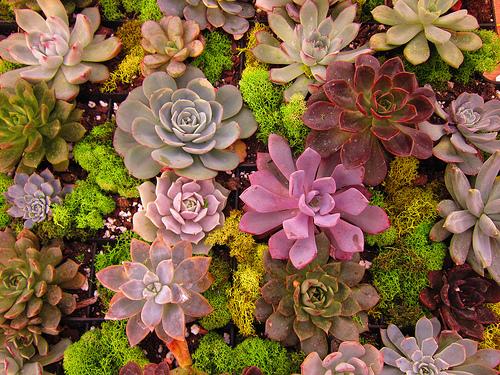 You can never have enough fridge magnets. Not only do they make great reminders and organizational tools, but they can also brighten up your kitchen by adding a little personality to your fridge. If you’re an avid recycler and plant-lover, you can make your fridge reflect your interests with this easy DIY for magnetic cork planters. Continue reading →
-
DIY Post-it Note Speakers
 Music is everywhere whether you’re listening for it or not. Movies, television, and everyday life, from eating at restaurants to shopping at retail stores, wouldn’t be the same without it. Even the birds sing a soundtrack to the non-digital world where speakers don’t exist. We’ve already showed you how to make a speaker out of plastic cup or styrofoam plate, but what about something thinner and less rounded than traditional speakers? Well, using the power of magnets, it’s possible. Today, we’ll teach you how to make a speaker using a Post-it Note. Yes, you read that right, the sticky pieces of paper you use to remind yourself of things. Continue reading →
-
12 Places To Find Magnets At Home
 Magnets are used in a variety of different ways. From holding notes on your refrigerator to powering industrial equipment, magnets have a diverse range of applications. You may be surprised at how often you use magnets without realizing it. Other than the cute magnets holding photos on your fridge, can you find all of the other ways magnets are used in your home? Check out our infographic to get started: Continue reading →
-
DIY Magnetic Tool Holder
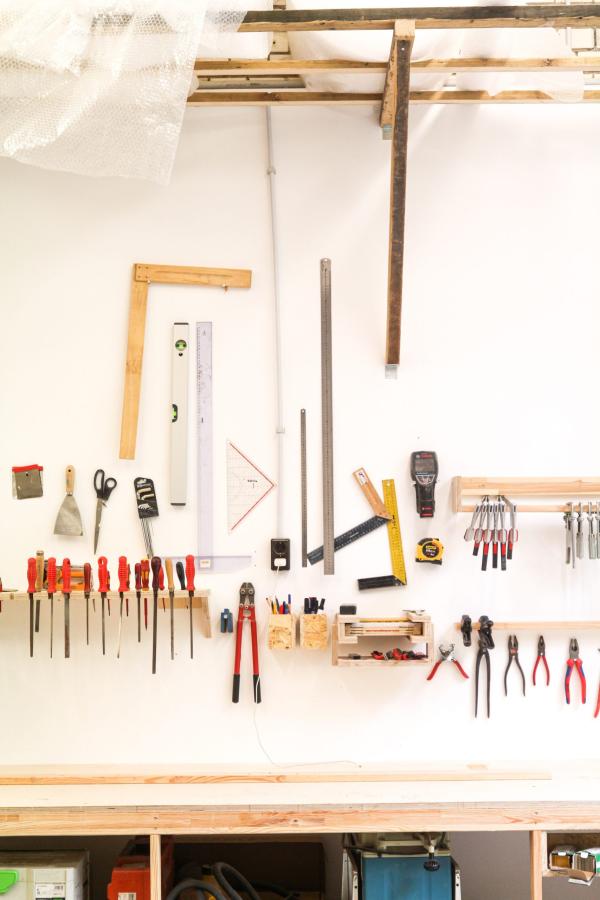 If you have a lot of tools in your garage or shed you’re most likely one of three kinds of people. First, the super-organized type - at any time you could find every single tool you own. Second, the semi-organized - sure, you have a toolbox or tool holder, but do you really know where each particular screwdriver is when you need to put together your newest purchase? Lastly, the very disorganized - your tools are scattered throughout the shed or garage in no particular order whatsoever. Well, if you are one of the two latter types of people, then we have a DIY magnetic tool holder is just for you. The project is a way to organize screwdrivers or small tools using a strong magnet. Follow the steps below to create a bracket that will house a magnet, and make finding that small Phillips head easier than ever. Continue reading →
-
How To Create A Magnetic Poster
 As you know, you can use magnets to decorate your home in many unique ways. You can also use the power of magnetism to make an already existing piece of art a more functional item in your home. If you’re looking for a creative way to hang notes, art, or display CDs, a poster magnet board is a great way to do it. This fun, interactive piece of art is perfect to hang in a game room, a music room, or even at the office to organize in a decorative fashion. Follow the steps below to create your own! Continue reading →
-
DIY Magnetic Scrabble Game
The word game Scrabble has been around since 1938 when the first version was invented by architect Alfred Mosher Butts. It didn’t become a household item until 1952 when, according to legend, the president of Macy’s discovered the game while on vacation and ordered it for his store. Now, the game can be found in roughly one in three American homes (a figure Hasbro cited around 2008) and is even available electronically. With this simple magnetic diy tutorial, you can repurpose an old Scrabble game and make a magnetized version so you never lose a piece again! Continue reading → -
How To Make Your Own Compass
Compasses have been around for centuries, but the earliest findings date back to China during the Han dynasty (2nd century BC-1st century AD.) Compasses were used for navigation by Chinese sailors, including a man named Zheng He, who used it for navigating the oceans from 1405 to 1433. Today, you can find compasses anywhere from the dollar store to your smartphone. In order to demonstrate how compasses work, you can make your own compass using simple household materials that you probably already have lying around the house. Your homemade compass could also come in handy if you ever find yourself lost in the woods on a hiking trip with no power to your cell phone and no other way to escape! Continue reading → -
8 Things You Can Do With Ring Magnets
How are you welcoming in the New Year? At Apex Magnets, we’re ringing in 2016 with a look at ring magnets. So, if your New Year’s resolution doesn't include incorporating more magnets into your life, here are eight things that will change your mind: Continue reading → -
DIY Diamagnetism Experiment
Diamagnetism is a magnetic property first discovered in 1778 by Dutch scientist Sebald Justinus Brugmans. He discovered the property while using bismuth and antimony and realized they were repelled by magnetic fields. It wasn’t until 1845 that English scientist Michael Faraday named the property diamagnetism while studying elements and compounds that exhibited negative magnetism, meaning they were pushing away from the magnet. In layman's terms, diamagnetism is a property that every element possesses, which causes a weak repulsion from a magnetic field. In contrast, some elements also possess ferromagnetism and paramagnetism, which causes them to be attracted to the magnetic field, weakly for paramagnetism and strongly for ferromagnetism. To show diamagnetism, you can use a DIY magnet experiment with a common everyday food, grapes, to show small repulsion when exposed to a strong rare earth magnet. This experiment works best with a strong rare earth magnet, such as neodymium, because of the strong magnetic field it produces. Continue reading →