Apex Magnets Blog
-
Video Guide to Magnets
 When it comes to magnets and magnetism, most people have a general sense of what the two are. However, many don’t know or are just really intrigued by the overall process needed to create these items. Whether you know nothing about magnet creation or you want to know as much as possible (we like you) we’re exploring how magnets are...
-
How to Determine Which Pull Force is Right For Your Project
 While changing size is one way to affect a magnet’s strength, shopping for larger magnets can get expensive if you’re using a lot of them. That’s why it’s important to understand what you’re actually buying, as choosing the right pull force can get you the best bang for your buck when it comes to magnet shopping! What Is Pull Force? ...
-
Inducing Magnetism in Graphene
 While graphene has mechanical, electronic, and optical properties it hasn’t been good for magnetic purposes. Empa researchers and international partners have succeeded in synthesizing nanographene which shows that carbon in very specific forms can have magnetic properties. What We’ve Known Graphene is usually described as a semimetal rather than a true metal, thanks to its 2-D structure made of carbon...
-
Tips For Using Adhesive Magnets Throughout the Home
 When it comes to ways to use adhesive magnets around the house, the only thing limiting yourself is your own creativity. Adhesive magnets have various purposes, and we’ll explore some examples of their usage below. Continue reading →
-
Today's World Without Magnets
 Magnets are a common item that many of us take for granted. Below, we’re highlighting a few common ways magnets are utilized and sharing what it would look like if these magnetic fields and inventions were to disappear. Hint: It’s not a world we want to live in! Continue reading →
-
Schooling at Home With Magnets
 Running out of ideas for how to lead science class? We’ve got you covered with these magnetic DIYs and blogs full of magnetic information to make your job of “teacher” a little easier! Continue reading →
-
Magnetism in Animals
Birds, amphibians & reptiles, and marine animals navigate by sensing changes in Earth’s magnetic field. We already know life on Earth is dependent on its magnetic field thanks to the powerful electrical currents that generate it, and scientists have proven that some animals use magnetic sense, but we wanted to dig deeper into the why and how magnetic fields are so important to keep animals going where they need to go. Continue reading → -
The Three S’s of Industrial Magnets: Sweepers, Sorters, and Separators
When it comes to industrial uses for magnets, there are three pillars –– sweepers, sorters, and separators. These three categories, and the magnets that fall under them, are vital to the operation of warehouses, loading docks, construction zones, conveyor belts and more, and in all sorts of industries. Without them, there would be more accidents, lower quality control, and overspent budgets. Let’s dig into their individual strengths and specifications! Continue reading → -
Carl Friedrich Gauss: Contributions to Magnetism
In addition to being a brilliant mathematician, astronomer, and physicist, Carl Friedrich Gauss was also a pioneer in the fields of magnetism and electricity. His contributions over his lifetime of knowledge have even led him to be honored as one of the most influential mathematicians to this day. Below, we’ll cover a few of his accomplishments in relation to magnetism (as we can’t cover all his accomplishments in one blog post!): Continue reading → -
An Explanation for Why Solar Winds Are Hotter Than Expected
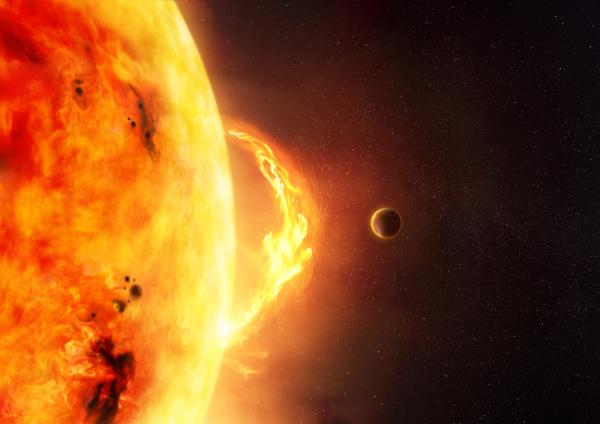
The topic of solar wind has been discussed since it was first detected in 1959, but, there’s still a lot that we don’t know about it. One of solar winds’ mysteries surrounds the fact that when it reaches the Earth, satellite measurements are recording electron temperatures that are higher than simple models of the wind’s cooling would predict. Physicists from the University of Wisconsin - Madison may now know the reason why this is with their study that was published April 14 in the Proceedings of the National Academy of Sciences. Continue reading →