Home, Shop & Industry Uses
-
Magnetic Solutions for Surveying & Mapping
 Land surveying is an age-old career that has evolved and remained current through the years. These individuals are hired to give comprehensive and precise boundary information on parcels of land, as well as provide geospatial data — what is on the land and what may be underneath? Surveyors have long been consulted for construction projects, settlements for property disputes, or even map-making. Other similar professions with potential overlap in responsibility include land planners, civil engineers, and developers. Continue reading →
-
Magnets for Fusion Energy
 Could smaller magnetic components help researchers pursue one of science’s biggest energy goals? Research into magnets for fusion energy shows how better engineering could support more compact experimental devices. In July 2022, researchers at the U.S. Department of Energy’s Princeton Plasma Physics Laboratory (PPPL) reported an approach to building smaller, stronger superconducting components. Their work could help improve machines designed...
-
Magnet Fishers Fined
 What They Found Left Them In Hot Water Magnet fishing is becoming increasingly popular due to its exposure on platforms such as TikTok, YouTube, and Instagram. If you are unfamiliar with the term, it is as literal as it sounds. People hook up a magnet to a rope and cast it into the water to see what they can discover. Continue reading →
-
Permanent Magnets Allow ‘Sky Train’ To Float Without Power
 Maglev trains are known for their fast speeds and utilization of magnetic levitation. In exciting news, more breakthroughs could soon be on the horizon. Continue reading →
-
Halbach Array for Electric Motors
 Let’s talk about the Halbach Array. A phenomenon that was initially discovered in 1973, this arrangement of permanent magnets functions to make the magnetic field one side stronger while negating the opposite field to nearly zero. For comparison, with a single magnet, you will have equal strength on either end. It wasn’t until the 1980s that a physicist applied the Halbach array as a means to focus particle beams and electrons, and later to build undulators for free-electron lasers. Continue reading →
-
Permanent Magnets for Different Kinds of Sensors
 Permanent magnets are used in a variety of sensor applications; but what exactly is a sensor? A sensor measures input from its environment and converts it into data. That data might be collected and interpreted visually by a person (e.g., glass thermometer), or electronically by a machine. Sensors measure all sorts of things, including distance, weight, temperature, proximity, position, velocity, direction, etc. Continue reading →
-
Three Ways To Use Industrial Magnets On Cruise Ships
In a recent blog post, we shared three magnetic hacks to upgrade your cabin, such as using hook magnets to hang items or clip magnets to organize your stateroom. Similar to these hacks, there are many cruise ship hacks on an industrial level. Because magnets can have a strong pull force, are durable, and (when properly coated) resist weather and corrosion, they are well suited to many uses on cruise ships. This is largely because many ship structures, such as steel hulls and bulkheads, are magnetic, though many cabin walls are not. Continue reading → -
Magnetic Locks: How they Work and Their Uses
More and more, we are seeing properties gravitate to the use of electromagnetic locks in their buildings. With their ease of installation, security, and fast building access, it’s no question why these types of locks are becoming a popular option. Continue reading → -
Magnets and Chicken Nuggets — The Crossover You Never Knew You Needed
Magnets and chicken nuggets — What could be more well-loved? But do you know the connection? Magnets have long been critical in the food industry, helping with sorting and separating any metal scrap away from product, but they’re also involved in research and testing related to food quality and consistency. We’re not just talking about any food, but chicken nuggets specifically. Continue reading → -
Recycling & the Importance of Separating Ferrous from Nonferrous Metals
If you have kids, then you’ve probably seen Toy Story 3. In a fun twist, it actually includes a little bit of magnet education. Near the end, the toys are trapped on a conveyor belt in a scrapyard. They escape the shredder by hanging onto bits of ferrous metal and getting pulled up and out by the magnetic separator. While there are certainly some finer points they glossed over, it’s a fun way to introduce kids to how magnets are used in the recycling industry. Continue reading → -
Magnetic Yokes Used for Particle Inspection
Permanent magnets are commonly used in magnetic yokes. This refers to a handheld magnetic device used to induce a field in an area between two poles. They can also be electromagnetic yokes. Either kind of magnetic yoke can be used for particle inspection outdoors and in hard-to-reach places, while permanent yokes, which need no electrical source, are also well suited to remote locations. They can also evaluate whether a weld job is of quality, detecting surface and near-surface cracks and defects in ferromagnetic material. Continue reading → -
Magnetic Chutes Used in the Many Industries, Including the Spice Trade
Previously on our blog, we’ve discussed how magnetic chutes are used in animal feeding; however, they’re utilized in many other scenarios as well. For instance, magnetic chutes are also used to trap and separate iron particles mixed with powders, granular materials, or otherwise dry materials. Typically, the material is flowing freely through the chute; that means no sticky substances! Connected to a larger series of ducts, the chutes use magnets to attract iron contamination as it flows. The largest magnet is often placed in a hinged door that can be accessed from the outside, allowing for manual cleaning and particle removal. Continue reading → -
Increasing Prosthetic Limb Control Through Magnets
Created to bridge the gap in the advancement of prosthetic technology for amputee patients, MIT’s Media Lab has been working tirelessly to perfect a new alternative approach to increased precision called magnetomicrometry (MM). This revolutionary method theorizes the insertion of magnetic beads into muscle tissue found within the amputated residuum will provide precise muscle length measurements, which can later be relayed to a bionic prosthesis almost instantly. Continue reading → -
Magnetic Yokes Used for Particle Inspection
Permanent magnets are commonly used in magnetic yokes. This refers to a handheld magnetic device used to induce a field in an area between two poles. They can also be electromagnetic yokes. Either kind of magnetic yoke can be used for particle inspection outdoors, in hard-to-reach places, or in remote locations. They can also evaluate whether a weld job is of quality, detecting surface and near-surface cracks and defects in ferromagnetic material. Continue reading → -
Magnets in the Mining Industry: Improve Quality of Output and Lower Cost of Equipment Upkeep
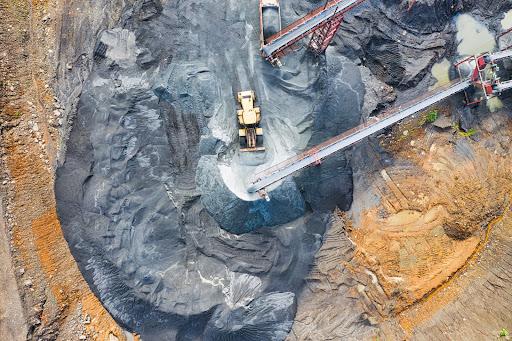
Magnets are used in a myriad of ways to make mining practices—specifically collection and sorting—seamless, safe, and profitable. More specifically, they are often used to filter out or remove tramp metal, which is the metallic scrap that can end up on conveyor belts or get mixed in with other materials during excavation regardless of whether it's machine or person-led. In the long run, it can cause serious and costly damage. Continue reading → -
Magnetic Trim Fasteners For Custom Car Interiors & Exteriors
Do you own an auto body shop? Do you make custom cars? Then you should know that magnets are a popular choice for custom trim projects and interior builds, and for good reason. Whether you’re working with paneling, tray setups, or consoles, using magnets allows you to snap them into place. More important than that satisfying snap though is their overall effectiveness. Continue reading → -
Magnets Used in Baby Clothes: How They Work & Why They’re Popular
DIY and home magnet projects are popular because they make life easier, with tons of storage ideas, equipment, and crafts available to suit just about any need. We don’t typically associate magnets with clothing though. Furthermore, infants and small children are probably not the first audience we would consider. That’s something companies like E=MC2 and Magnetic Me want to change. Continue reading → -
How the UK is Leading Rare-Earth Magnet Recycling
In our "rare" Earth Day roundup, we discussed how important it is to recycle rare-earth magnets in order to keep them affordable and accessible. Some universities in the U.S. have made progress on how to safely and effectively recycle rare earth elements (REE) from electronics and reuse the materials in new equipment. Recently, competition from across the pond is putting the United Kingdom at the forefront of rare-earth magnet recycling efforts. Continue reading → -
Anti-lock Brake Systems: The Rule, Not the Exception
Anti-lock braking systems (ABS) in vehicles, including motorcycles and aircraft, haven’t just become more popular, they’ve become the standard in vehicle safety. Since the 90s, it has become a baseline feature in cars instead of a premium one. Studies generally associate ABS with fewer crashes and injuries, though the benefit varies with vehicle type and road conditions Anti-lock Brake Systems Continue reading → -
Separating Stainless Steel in PVC Window Frame Recycling
Each year, the UK fenestration industry estimates that about 7 million window frames are replaced, 80% of which are UPVC window frames. Many perceive UPVC window frames as non-recyclable, and as a result, they end up in landfills. However, UPVC frames can actually be recycled and reused to manufacture new frames. Their lifespan can be significantly extended to help reduce waste, and they can be recycled up to ten times without losing performance, according to manufacturer VEKA. UPVC window frames contain handles, hinges, and locks, typically made of steel, stainless steel, aluminum, or brass. Because steel and some stainless steels are magnetic, magnetic separators make recycling these window frames much easier, although aluminum and brass are not attracted to magnets. Not only is magnetic separation useful for recycling, but it also prevents costly damages to equipment if metal materials are not removed. Continue reading → -
Using Magnets to Pull Dents Out of Cars
If you work at a body shop, you probably know that removing dents from cars can be costly, and that a careless repair can scratch the car or chip the paint. It is tempting to think a magnet could solve the problem: hold it near the dent and let the magnetic force pull the metal back out. Unfortunately, a handheld permanent magnet can't do that. Here is why, and where magnets are actually useful in a body shop. A dent is metal that has been permanently bent. Straightening it takes far more force, applied in a controlled way, than the attraction of a handheld magnet can supply, whether the magnet is touching the panel or held an inch away. Continue reading → -
Magnetostrictive Sensors in High Stake Environments
In specific high-stakes environments, such as manufacturing, where there are high operating temperatures, magnetostrictive linear position sensors play an important role in factory automation. They are cost-effective and simple to install, making them ideal for many industrial applications. Continue reading → -
Earth Day: Rare Earth Magnet Recycling
Have you purchased rare earth magnets or bought items containing magnets and questioned how to dispose of them when you’re finished? We’ve covered the topic of recycling and reusing rare earth magnets in blogs before, so to celebrate Earth Day, we’ve rounded some key topics to keep you up-to-date on this important topic. Today, recycling remains a critical issue in environmental discussions, but plastic and glass are not the only materials with an environmental impact. After all, it is estimated that only one percent of rare earth elements (REE) are recycled from end products for modern technologies. For example, magnets are in many of the devices we discard, but they are often forgotten. Continue reading → -
Roundup: Magnets For Safety
Magnets are integral to the workplace. They not only streamline processes but provide safety in high-risk applications. Magnets can help address common work hazards and meet industry safety practices because of their durability, reliability, and pull force. They are particularly useful for safety in metalworking and fabrication, automobile workshops, production facilities, construction sites, warehouses, and more. Considering implementing one of the following types of magnets to improve safety processes: Continue reading →