Home, Shop & Industry Uses
-
Hotel Owners: How to Decide on Hotel Key Cards
 Do you own a hotel? While the job may not be quite as dramatic as depicted on The White Lotus (we hope), there is certainly a lot that goes into hotel management. Yes, you may have to deal with conflict among the staff or between surly customers, but the job doesn’t end there. There’s also the “silent” work, including budgeting and updating technological systems. For instance, traditional key cards use technology fueled by magnets. There may, however, come a time when you have to choose between specific magnetic technologies, so it’s important to know their pros and cons. Continue reading →
-
Magnet Uses For Meat Smokers
 While it may be hard to imagine summer gatherings with family and friends, we promise the enjoyable weather will be back in no time! One of the best parts of these summertime get-togethers is the fantastic food options. Whether you bring your own dish or make something on the grill/in a smoker, the choices are always tasty! Continue reading →
-
How Permanent Metric Magnets Can be Used in Mini Medical Robots
 Magnetically-powered micro robots are being used more and more in the biomedical field, as well as in microfluidics — the science that studies the behavior of fluids in micro-channels, and the technology of manufacturing micro-devices through which fluids flow or are confined. Many robots use electromagnets, which provide a significant degree of freedom control (DOF) or capabilities of movement. Another option, however, involves an array of rotating permanent magnets to sustain the same level of control over “untethered” (i.e., wireless) micro-robotic systems. Continue reading →
-
Magnets Used to De-ice Aircrafts
 Have you ever been in a plane, ready to take to the skies, and they tell you there’s been a delay? That’s right, they have to de-ice the plane. It may be annoying, but if you have a window seat near a wing, it can be an interesting process to observe. You may also be interested to know that magnets are involved in some de-icing systems. Most commercial de-icing, however, sprays heated glycol fluid. Continue reading →
-
Cement & Lime Industry Magnetic Separation
 Cement and lime production are a significant part of the economy due to their usefulness for construction and civil engineering. Lime specifically is used in the steel industry, but it is also used in construction materials, certain paints, plastics, and rubber. In the conveying process, in order to extract and separate tramp metal from cement and lime before it makes its way to the crushers, pulverizers, grinders, etc., magnetic separation equipment is commonly used. Of course, it keeps unwanted tramp out of the final product, but it also protects machinery down the conveying line from costly damage. Continue reading →
-
How Magnets Are Used in Speakers
 Music is an integral part of a lot of people's lives. From listening to your favorite songs during your commute to and from work to enjoying an album while sitting on your back porch, there is never a bad time to have music filling the air. The next time you hook up your speaker, consider what is inside of it. Today, we are taking a deeper look at how magnets allow the device to create sound. Continue reading →
-
Military Weapons & Rare Earth Magnets Used In Defense Applications
The United States military considers rare earth magnets, namely samarium cobalt and neodymium magnets, to be a key resource for defense and attack applications. That means it invests heavily in these materials to maintain its technological edge in defense performance. Continue reading → -
Hump Magnets & Half-hump Magnets For Vertical Flow
For industries that move high volumes of product, specifically mining operations that separate ferrous tramp metal in a free-falling conveyor system, you’re likely to use hump magnets and half-hump magnets; however, magnetic humps are also used in the food industry and are particularly useful with products and material that clump or aggregate easily. How Does it Work? Both designs, full... -
Industry Round-up, Part 2: That Can & Do Use Magnets: Recycling, Food Processing, and Mining
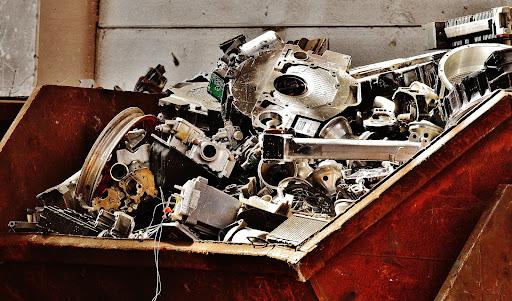
And, we’re back! Welcome to part 2 of our industry round up. Last week, we delved into some of the industries that make use of the power of magnets, including the automotive industry, construction, and packaging. This week, we’re talking about another trio of industries — recycling, food processing, and mining. It turns out, they actually have quite a bit in common. Continue reading → -
Using Magnetic Pulses For Meat Production
In a 2022 breakthrough at the National University of Singapore (NUS), scientists have discovered a new way to grow cell-based meat by treating animal cells with magnetic pulses. Intended to reduce the world’s dependence on animal products, this revolutionary technique offers a cleaner, greener, and safer alternative to methods currently being utilized. A few advantages of cultured meat include reducing our carbon footprint, decreasing the risk of animal-transmitted diseases, and reducing our reliance on antibiotics often used in industrial farming practices. Continue reading → -
Magnets Could Improve the Future of Flooring
Throughout the years, a number of popularized flooring trends have come and gone. Now, however, people are turning to magnets to attain stylish floors while also avoiding all of the complexity of laying down traditional flooring. Continue reading → -
Wave Magnets Produce Affordable, Clean Energy
Researchers from Sea Wave Energy Ltd. (SWEL) say they have developed the technology to create clean energy using sea waves. The team also claims their device will be the cheapest form of renewable energy due to the low maintenance requirements of the magnetic spine used to produce the electricity. Continue reading → -
Magnets vs. Motors
Your kitchen is getting an upgrade, but not in the way that you think! Fresh to the market of appliances, a new compact blender that claims to be the first of its kind uses a magnetic field generator in its base, rather than a traditional motor, to turn magnets in its lid. Reported to be almost silent due to its internal makeup, the millo blender claims the only sound you can hear comes from the blades chopping whatever you placed inside the chamber. Appropriately named, the blender uses Magnetic Air Drive technology (MAD), a powerful but efficient magnetic field generator, which employs the use of a spinning magnetic disk. According to millo, the spinning magnetic disk inside the lid is hermetically sealed, so you can barely hear it. Continue reading → -
Industrial Magnet Applications: Automotive, Construction, and Packaging
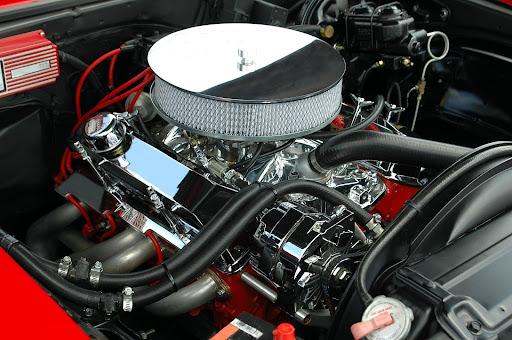
Industrial magnet applications help businesses move parts, secure materials, and create easier-to-use products. In this first installment of our industry roundup, we’re exploring three sectors where magnetic solutions support everyday performance: automotive, construction, and packaging. Automotive: Supporting Motion and Sensing From manufacturing equipment to components inside the finished vehicle, magnetic technology plays several roles in the automotive industry. Permanent magnet... -
MRI Technology Could Become Portable
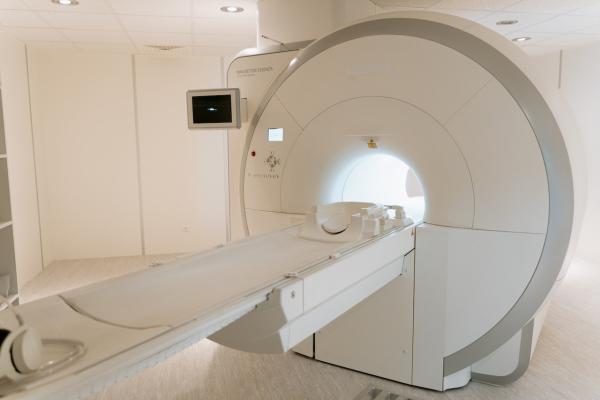
For hospitals, magnetic resonance imaging (MRI) is essential when it comes to accurately diagnosing patients with injuries or diseases. While the technology sets the standard for hospital imaging, the machines are large and expensive. That’s why researchers in Spain are looking to make MRI technology more accessible by creating a smaller and more affordable machine. Continue reading → -
Maglev Car Tests Underway in China
Just two months after they conducted tests on a ‘floating train’ that used rare earth magnets, researchers from Southwest Jiaotong University in China have completed another successful test involving magnetic levitation. This time, researchers turned their attention to the road and tested cars. Continue reading → -
Magnetic Resonance Therapy in Chiropractic
A common misconception in the field of chiropractic, doctors not only rely on their traditional skills of spinal manipulation, rather they employ a variety of techniques and methods to treat patients depending on their specific needs and condition(s). These supplemental treatments often include electrical muscle stimulation and ultrasound. Primarily utilized in the fields of orthopedics and mental health, magnetic therapy, otherwise known as Pulsed Electromagnetic Field Therapy (PEMF), has been used for some bone-healing applications, while evidence for treating wounds and depression is limited and mixed. Given its established uses in some areas of medicine, researchers and chiropractors are recognizing the immense potential magnetic therapy has in their own field, particularly when treating cases of acute and chronic pain. Continue reading → -
Magnets Used for Lifting Manhole Covers
Ever wondered what it takes to lift a manhole cover? Well, if you’re not a Teenage Mutant Ninja Turtle, and you don’t want a serious injury, then it takes a certain amount of leverage or magnets. In this blog, we’re going to cover two different methods used to lift manhole covers, what kinds of magnets are used to make the second, and a low-budget option to retrieve lost tools that slip down, down, down into the sewer. Continue reading → -
Wind Turbines Work With Help From Magnets
Have you ever passed a group of enormous wind turbines and wondered how they work? Aside from wind to turn their fan blades, turbines don’t require a lot; however, they’re highly complex. Many modern designs, especially direct-drive turbines, use strong, permanent magnets like neodymium magnets. Continue reading → -
Aircraft Systems That Rely On Permanent Magnets
Permanent magnets are a staple of the aerospace industry. They’re used in many aircraft systems, including electric actuation systems. In other words, permanent magnets — namely neodymium magnets — are used in the motors of some of these driving systems, such as braking, flight control, environmental control, oxygen production, and fuel. Continue reading → -
Magnetic Drive Pump — Magnets in an Industry of Moving Fluids
Magnetic drive pumps are used to move fluids in all sorts of industries. They are a reliable option for many fluids, though suitability depends on what you’re pumping. As a seal-less technology, they include a drive magnet and inner magnet connected to an impeller to push various fluids through the pump. Magnetic drive pumps prevent leakage, saving you the loss of costly liquids. On a more serious note, if you’re pumping more dangerous liquids, pumps help you prevent damage and injuries. This is especially helpful for businesses because environmental regulations, including EPA rules, limit fugitive emissions and equipment leaks. These pumps can nearly eliminate fugitive emissions. They may even save time on maintenance and replacement due to leaks. Continue reading → -
Using Magnets for Your Next Marketing Campaign
No matter the size of your business, magnets can be a powerful tool in your marketing strategy. You can use them to promote products and services in target areas, offer them as merchandise, or provide them as a free gift with purchases. Continue reading → -
Magnets for a Green Economy: Motors and More!
Extensive improvements have been made to electric motors and generators over the years, but for anyone who is imagining a carbon-free future, there’s a long way to go. Continue reading → -
The Role of Magnets and Magnetic Technology in Hydrographic Surveying
In an earlier blog, we talked about the role of magnets in land surveying and mapping; this week, we’re covering the fascinating world of hydrographic surveying. Similar to land surveying, the goal of hydrographic surveying is to determine the depth of the water and the topography of the bottom of say, a lake or ocean. The civil engineers who partake in these surveys use similar tools as they would above ground — in this case, a magnetometer with a magnetic sensor. Continue reading →