Magnet Science, Research & History
-
Tiny Magnets Could Be the Key to Quantum Technology
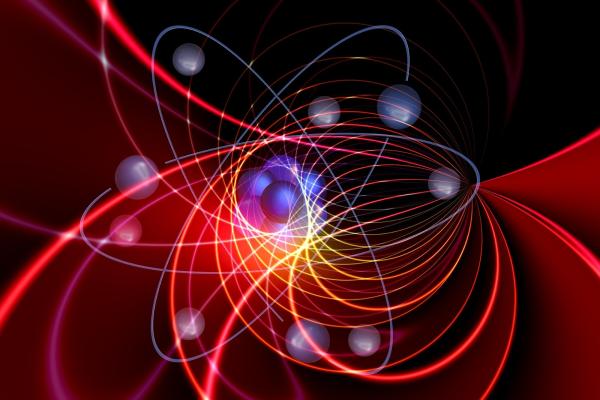 Did you know that magnetism could potentially play a role in relaying quantum information? Well, the U.S. Department of Energy’s Argonne National Laboratory has performed extensive research that has, according to their scientists, achieved efficient quantum coupling between two distant magnetic devices, which can “host a certain type of magnetic excitations called magnons.” Continue reading →
-
Queen Elizabeth Prize for Engineering Recognizes a Magnetic Discovery
 The Queen Elizabeth Prize for Engineering — called the “Nobel for engineering” — recognized the importance and ubiquitousness of magnets by naming Japanese scientist Masato Sagawa the 2022 laureate. Sagawa invented the neodymium-iron-boron (Nd-Fe-B) magnet, which is the strongest permanent magnet in widespread use today. They’re everywhere around us in the products we use every day, like cars, cellphones, and computers. It’s relevant to note that America’s Dr. John Croat simultaneously came up with the same material solution when working with General Motors. Sagawa’s manufacturing process, however, gave him the upper hand. Continue reading →
-
Mysterious Magnetic Space Object
 We love seeing headlines about mysterious magnetic space objects “unlike anything astronomers have seen before.” In general, we tend to gravitate toward magnet-related news, but this story is particularly intriguing and attractive, so we wanted to share it! Essentially, a research team responsible for mapping radio waves out in space discovered an object that releases a huge burst of energy three times per hour. It sends out a beam of radiation, crossing our line of sight, and for roughly 60 seconds every 18 minutes, it shines as one of the brightest radio sources in our sky. Continue reading →
-
Alaskan Scientist Discovers the Reason for Lost Magnetism at Meteorite Site
 Gunter Kletetschka, a research scientist from the University of Alaska Fairbanks’ (UAF) Geophysical Institute, discovered a way to locate and define meteorite impact sites that no longer have craters due to erosion. In addition to helping geologists study Earth, this discovery could teach us more about other planets in our solar system. Kletetschka says that the key to this discovery was in “the significantly reduced level of natural remanent magnetization of rock that has been subjected to the intense forces from a meteor as it nears and then strikes the surface.” Continue reading →
-
Heat Flow Controls The Movement Of Skyrmions In An Insulating Magnet
 Physicists at RIKEN, a Japanese scientific research institute, recently found a way to show how extremely small amounts of heat can be manipulated to control magnetic whirlpools, otherwise known as skyrmions. This could be a stepping stone to creating more energy-efficient forms of computing. Skyrmions, which are information-carriers, develop when the magnetic moments of atoms arrange into specific swirling patterns inside a material. Under some conditions, they organize into what’s called a skyrmion lattice. Continue reading →
-
How Magnets And 3D Printers Can Make Materials for Hypersonic Planes
 Randall Erb, professor (an associate professor at the time of the 2021 announcement) and director of the DAPS Lab at Northeastern, uses magnets and a 3D printer to create and maintain control over a ceramic material that can withstand extreme heat. The resulting product can be used in a wide array of applications from circuit boards to hypersonic planes. For context, hypersonic flight (generally defined as speeds above Mach 5) leads to extremely high heat loads. Continue reading →
-
YouTube Channels to Follow
If you keep up with our blog, you probably know there are many industrial magnetic applications. In addition to staying up-to-date on Apex blog posts, YouTube is a great resource to learn about all things magnetic. We’ve compiled a list of some of our favorite YouTube channels — these channels cover engineering, science, technology and industry news that can be useful background for your business. Some occasionally touch on magnets and magnet-driven technologies, though most cover broader topics. They also feature a variety of industries, including engineering, space, technology, and aviation. Continue reading → -
Researchers Discover a Way to Manipulate Magnetic Fields in Ferrimagnets
If you’re familiar with our products, you likely know that a majority of our magnets are made of ferromagnetic materials. This includes substances such as iron, cobalt, nickel, and compounds of rare earth metals. Ceramic (ferrite) magnets are an exception, since they are ferrimagnetic. In these materials, the atomic fields align themselves parallel with externally applied fields, creating a total magnetic field much greater than the applied field. On the other hand, you may not be familiar with ferrimagnetic materials. The atoms in these materials are not aligned in just one direction — while some atoms align in one direction, others point in the opposite direction. The magnetic field of ferrimagnetic materials depends on the balance between these opposing atomic fields. This also means they could potentially enable faster data storage or logic circuits than today’s ferromagnets. Researchers have now discovered a way to switch the orientation of ferrimagnets to accomplish that. Continue reading → -
In the News: A Potential Method of Magnetizing Without External Magnetic Fields
Researchers from São Paulo State University have developed a potential method to magnetize a material without applying an external magnetic field. In the study, researchers propose that it could be produced by something called “adiabatic compression, without any exchange of heat with the environment.” Essentially, the process aligns the spins of the material’s particles and magnetizes the system. Continue reading → -
3D Magnetic Nanonetwork Discovery Could Lead to a New Generation of 3D Storage Technologies
Exciting new discoveries just keep on coming! This latest one, while a bit confusing, is ultimately in keeping with that tradition. Like many magnetic discoveries in recent years, it points to the possibility of better, faster technology. Let’s break it down: Researchers have discovered something referred to as a 3D magnetic nanonetwork or a “3D artificial spin ice lattice.” In... -
Why Are Rare Earth Magnets Important to the Global Economy?
From powering electric vehicles to creating wind turbines, rare earth magnets are integral to the global economy. Thanks to their magnetic strength and energy-producing capabilities, they are ideal for products that require a high energy-to-weight ratio. This also means that rare earth magnets are important to the global supply chain. These processed minerals can be used all over the world to create revolutionary outputs. Due to these reasons, the rare earth magnet industry is important to the global economy, but it can also pose a risk. Continue reading → -
Magnets in the News: Crystals Exhibit Exotic Spiral Magnetism
Since the discovery of magnetism, there have been all sorts of upwardly mobile discoveries made by scientists, enthusiasts, and intellectuals. Recently, scientists from Johns Hopkins University and the National Institute of Standards and Technology (NIST) made yet another interesting discovery — “semi-metal” crystals that exhibit an exotic spiral magnetism, presenting an opportunity to create better information storage devices. Continue reading → -
Fighting Microplastic Pollution in the Ocean with Magnets
Humans produce more than 400 million tons of plastic annually. Millions of tons of that waste ends up in the oceans each year. People experience it, first-hand, every single day. Irish inventor Fionn Ferreira, for example, loved the coastline where he grew up in southwest Ireland, but he hated the plastic that littered the beach and the sea. To make matters worse, the issue goes beyond the plastic we can see with our own two eyes. Continue reading → -
Scientists Use Pottery and Flint to Detect Magnetic Fields
There’s a lot to learn about Earth’s magnetic field — did you know that it’s dented or that unpredictable geometric jerks can occur? You might know that the strength and direction of Earth’s magnetic field have changed over time — it has flipped numerous times in the history of our planet! Scientists want to study the pattern of this change to help make predictions about how the planet’s magnetic field will behave in the future. Instruments for measuring Earth’s magnetic field have only been around for a few hundred years, but scientists have figured out other ways to analyze Earth’s magnetic field. This includes a new study using artifacts recovered in Jordan from the Neolithic period or the New Stone Age. Read on to learn more about this discovery and how it’ll impact the future of magnetic field research. Continue reading → -
Magnetic Personalities: Amy Watterson
As a young female engineer, MIT’s Amy Watterson is paving the way for future female scientists to play a role in important scientific research. Learn more about Watterson and her work in fusion research in our latest magnetic personalities piece! Continue reading → -
Scientists Work to Create the World’s Thinnest Magnet
For years, researchers have been trying to make thinner, smaller two-dimensional magnets. Doing so would allow us to store data at a much higher density. Now, in an exciting reveal, Scientists from the Department of Energy’s Lawrence Berkeley National Laboratory (Berkeley Lab) and UC Berkeley have discovered an ultrathin magnet that operates at room temperature. This development could lead to all sorts of advancements in computing and electronics, including high-density, next-generation memory devices and tools for quantum physics. Continue reading → -
Addressing Rare Earth Metal Supply Shortages with Recycled Hard Drives
Recycling rare earth magnets is an ongoing conversation in the permanent magnet industry. Over the years, the Apex Magnets team has compiled information about rare earth metal recycling to share with our community, including the future of urban mining. We’ve also shared information about various hard drive recycling projects and studies, such as Critical Materials Institute’s hard drive recycling process and Oak Ridge National Laboratory’s research on making rare earth magnet recovery more economically feasible. In 2019, Google ran a pilot with Seagate to reuse magnet assemblies from hard drives retired from one of its data centers. Continue reading → -
Magnetic Personalities: Heinrich Friedrich Emil Lenz
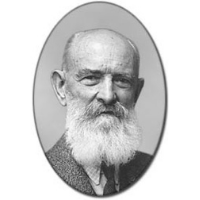
In the early 19th century, scientists understood very little about concepts and ideas like electricity and magnetism. Truth be told, they knew even less about the relationship between the two! But they were starting to study, explore, experiment, and dig, so to speak, into this mystery of the universe. Soon enough, German physicist Heinrich Lenz made an enduring contribution to physics — Lenz’s law — and in doing so, he made his mark on magnetic history. Continue reading → -
Fast and Furious 9: Far-fetched Concepts of Electromagnetism
The ninth installment of the Fast and Furious franchise — Fast and Furious 9 — takes its reputation for daring (unrealistic) action scenes and really kicks it up a notch. It’s no longer “just” jumping from skyscraper to skyscraper in a car or cars parachuting from planes, now it’s space launches and an electromagnet attached to a plane that can literally pick a plummeting car right out of a free fall. But, hey — that’s the fun of movies, right? Go big or go home. We’re here for it, but we need to clear a few things up. Continue reading → -
Global Industry Analysis of Rare Earth Magnets
Back in 2018, we wrote a blog post analyzing the global industry of rare earth magnets. Now that it's been a few years, we thought it was time to do an updated industry analysis. The rare earth magnet industry is still rapidly growing in size and complexity like it was in 2018, and, as of this 2021 update, was expected to keep expanding. That growth was attributed to the shift toward electric vehicles, technological innovations, artificial intelligence, and autonomous vehicles, to name a few. Continue reading → -
Magnetic Nanopowder For 6G Technology
While carriers are still in the process of rolling out 5G communication in certain areas an even faster network technology, known as 6G (sixth generation), is taking shape. It really is humanity’s way — progress, progress, progress. Progress is never without its challenges, and there are still hurdles between 5G and 6G. Historically, one of the materials used in its production — epsilon iron oxide — has been difficult to produce in large quantities, making industrial application a challenge. But, as one might have predicted, scientists have come up with a potential answer, developing and publishing a method for producing the rare form of iron oxide (III) at an accelerated rate, and demonstrating its use for 6G wireless communication. Continue reading → -
Magnetic Fields Help Form Planets
Have you ever wondered how planets form? So have scientists! Until now, scientists haven’t been able to figure out a solid reasoning for the creation of our solar system. In a recent study, a computer simulation shows that magnetism may be the "missing ingredient" in the recipe to make a planet that scientists have been searching for. Continue reading → -
Magnetic Personalities: Robert Bosch
Along with founding the Robert Bosch GmbH, which you may recognize from your kitchen appliances, Robert Bosch made major contributions in the electrical engineering field in the early 1900s. In the scientific community, he’s best known for his adaptation of magnetos to vehicle engines, which became an important development for the automotive industry. It’s safe to say Bosch had a big influence on the magnetic world — keep reading to see how his discoveries relate to modern magnets today! Continue reading → -
Your Smartphone as a Space Weather Vane
Smartphones can seemingly do everything these days — calling and texting, streaming movies and live TV, not to mention the photography that today’s smartphones can produce — but what if we told you that you have the power to sense the weather in space from the device in your pocket? According to some NASA research, your smartphone may be able to detect space weather, more specifically, you may be able to know firsthand when there’s a geomagnetic storm brewing. Continue reading →