Magnet Science, Research & History
-
Mountain Pass Rare Earth Mine
 Have you ever heard of California’s Mountain Pass Mine? This American town started out as a bit of a disappointment, but ended up being highly attractive to miners. It all began in the 1940s when prospectors went looking for uranium. Continue reading →
-
Magnetic Force vs. Magnetic Field
 Magnet users of all experience levels have likely heard of magnetic force and magnetic fields. While these phrases are used quite often, many might not be aware of the difference between them. Today, we are taking a look at the basics of both concepts. Continue reading →
-
Where Would We Be Without Magnets?
 If we erased magnets from our history and current existence, where would we be? It’s actually a mind-bending thought experiment to consider. Perhaps, at first, you might consider how a few different industries would be altered; however, given enough thought, you would realize that our society would be fundamentally different, and not only would a lack of magnets change certain industries, it would completely eliminate others. If we’re being honest, we simply couldn’t erase magnets, especially because electromagnetism is one of the fundamental forces in nature — the magnetosphere shields life on planet Earth from solar wind. Continue reading →
-
Lasers On Magnets: A New Way to Store Big Data
 “The mysterious force we use to stick our travel souvenirs to the fridge is the same one used to store our digital data!” What an incredible concept — as explained in an article Kshiti Mishra, magnetism is used to store our digital data. Not only that, but there’s a new way to store data on the horizon. Put simply, this new method involves shooting lasers on magnets. Yes, it sounds like a chapter in an old sci-fi novel, but no, this is real life. Continue reading →
-
Magnet Factory to Help Production of EV Motors
 The rising popularity of electric vehicles is leading to an increase in demand for rare earth magnets. Those interested in purchasing an electric vehicle have likely heard of the dreaded supply chain issues impacting their availability. Thanks to a recent agreement, however, the road ahead may be smoothed out. Continue reading →
-
How The Magnetosphere Affects Migrating Birds
 If you have ever looked up during the spring and fall months, odds are you have probably noticed that familiar v-shaped flock of feathered friends soaring through the sky to their summer or winter destinations. And while it is quite common to see flocks of birds painting the sky, you may begin seeing fewer and fewer due to recent research on birds and the earth’s magnetic field. Continue reading →
-
Super Magnet Tested in Particle Accelerator
Researchers from the Science and Technology Facilities Council have designed a zero-power tuneable optics magnet (ZEPTO) that requires no electrical power. The magnet is now being put to the test in a particle accelerator, and if everything works as planned, the future of energy research could be changed in a number of ways. Continue reading → -
Magnets Attracted to New Polymer Material
Researchers at the Chalker Research Lab at Flinders University in Australia have created a new material that could be used on a number of products at home, in the classroom, and beyond. Thanks to the makeup of the material, magnets also play a pivotal role in terms of how the substance can be morphed over time. Continue reading → -
Scientists Are Using Magnets To Produce Oxygen In Space
The Oxygen Conundrum In Space In what was only thought possible in a scene out of The Martian, scientists are harnessing the power of magnets to advance an old idea: turn water into breathable oxygen for astronauts. Utilizing new research on magnetic phase separation in microgravity, a team of international scientists believes they have discovered the next big advancement in space exploration. Continue reading → -
New Magnet Test Brings Fusion Closer to Commercialization
We recently published a piece on fusion that focused on how smaller, more powerful magnets could harvest power from the sun and help the environment at the same time. Now, fusion has taken another step forward when it comes to its potential commercialization. Continue reading → -
Unique Spin States Found In Quantum Magnets
A group of researchers from Harvard, Stanford, and the Massachusetts Institute of Technology recently observed unique helical spin states in Heisenberg quantum magnets. After making the discovery, the team posted a paper on their findings and elaborated on the impact it could have on spin-related physical processes and dynamics in quantum systems. Continue reading → -
Teen’s Invention Could Change The Electric Car Industry
The electric car industry is continuing to blossom, with growing sales across the globe. While business is expanding, researchers are trying to find out how electric car technology can become even more environmentally friendly. One engineer from Florida thinks he may have discovered a breakthrough. What is even more impressive is the fact that he is just 17 years old. Continue reading → -
Magnetic Phase Transitions Through Temperature Change
In a 2022 study published in Nature Physics, the Paul Scherrer Institute (PSI) says they’ve observed “how tiny magnets in a special layout align themselves solely as a result of temperature changes.” It was something that had been theoretically predicted but never seen. The process itself occurs in “artificial spin ice,” which could ultimately have implications for better-performing computers. Continue reading → -
Giant Magnet to Remove Meteor Fragments From Ocean
In January of 2014, an interstellar meteorite named CNEOS 2014-01-08 plummeted into the earth’s atmosphere before landing in the Pacific Ocean. Now, some eight years later, a group of scientists from Harvard are preparing to remove the rock by using a large magnet in an effort known as the Galileo Project. Continue reading → -
How Magnets Help The Brain After A Stroke
New Equipment Shows Promising Data Magnets have been instrumental in healthcare for some time now, but their newest use could play a significant factor in the treatment of stroke patients. Continue reading → -
Robo-arms, Harpoons, and Revolving Magnets: The Race to Clean up Space Junk
It’s sad but true—these days, we even have litter in space. That’s right, there’s been a rise in space junk that directly coincides with the number of private companies that are now capable of putting satellites in orbit. The US space agency says there are more than 100 million pieces of space junk and debris smaller than 1 centimeter currently in orbit. Aside from being a somewhat shameful introduction to the final frontier, space junk also presents a series of perils to astronauts and even us back on Earth. Continue reading → -
Solving Earth’s Space Debris Crisis With Magnets
Similar to waste management concerns here on earth is the space debris crisis currently happening above our atmosphere. Traveling at speeds in excess of 17,500 mph, NASA reports more than 25,000 pieces of space debris larger than 10 cm (about 4 inches) currently orbiting earth. These and other smaller pieces of space debris are direct threats to satellite and spacecraft operations, given the intense speed they are traveling. Continue reading → -
The Impacts of Solar Explosions On Earth’s Magnetic Field
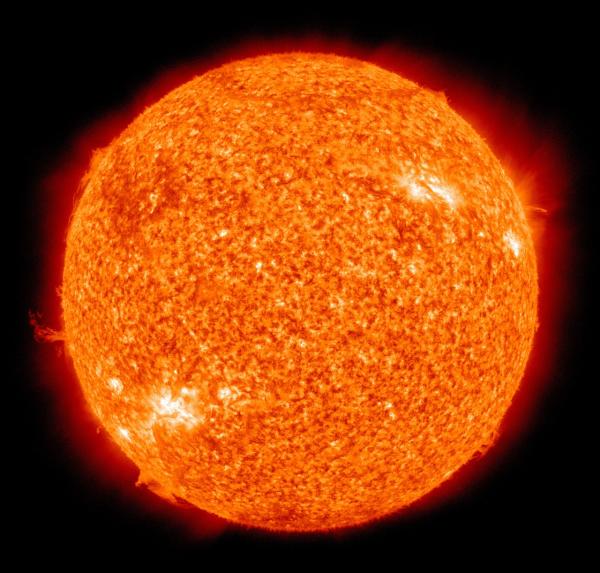
Otherwise known as CMEs, coronal mass ejections are a solar phenomenon where the sun’s outer layer (the corona), expels a large amount of plasma and magnetic field into outer space. CMEs occur when the sun’s constant stream of plasma churns and twists around itself, leading to the formation of magnetic knots. As these magnetic knots develop, they build up massive amounts of energy, forcing them to break off and hurl into space, potentially toward earth. So, why don’t we typically notice such an event? If you remember back to our blog discussing the magnetic fields of our solar system, earth’s magnetic field protects our planet from harmful particles, similar to the concept of how an umbrella protects its user from rain. Earth’s magnetic field deflects the blast of CMEs and other solar events, funneling the charged particles toward the North and South poles, which leads to brilliant aurora light displays. Continue reading → -
First Domestic Rare Earth Metal/Magnet Facility Scheduled to Open in Stillwater, Oklahoma
As the demand for rare earth metals continues to rise, China remains the top producer of any country worldwide, responsible for roughly 70% of mined production and about 90% of separation and refining. With nearly every developed country today reliant on China’s production of critical rare earth elements, USA Rare Earth LLC, the leading US supplier of critical materials, intends to change this statistic through a “vertically integrated supply chain for rare earth elements," the first of its kind in the Americas. A recent announcement from Gov. Kevin Stitt and the Oklahoma Department of Commerce confirms plans to solidify the United States' place in this monopolized market via a $100 million, state-of-the-art facility to begin construction in 2023. Continue reading → -
New Cancer Treatment Using Magnets Is Giving Patients Renewed Hope
Scientists from the University of Sheffield in the UK are currently developing an advanced treatment for breast, prostate, and other cancerous tumors using magnetic particles that carry viruses to tumors. The goal of this ambitious undertaking, to guide specialized anti-tumor viruses through the body to their intended target. This approach builds on oncolytic virus therapy, a class of treatment that includes the FDA-approved T-VEC, a modified herpes simplex virus used against melanoma, to find and destroy cancer cells while largely sparing healthy cells. T-VEC is a genetically modified herpes simplex virus that infects and kills cancer cells, reducing the “scorched-earth” effect of most modern-day cancer treatments. In addition to its ingenious ability to exclusively target cancer cells, the treatment also triggers the body’s natural immunity to fight the source of the virus. Through the combined power of T-VEC and magnet-producing bacteria, this treatment may eventually add to the ways cancer is treated. Continue reading → -
The Effects of Magnets on Plant Growth
In a way, the Earth itself is a magnet. Its core generates a magnetic field and the Earth’s crust has some permanent magnetization. Strong, permanent magnets like rare-earth magnets are made from alloys of rare-earth elements combined with transition metals such as iron and cobalt, and come in two main types — neodymium and samarium-cobalt. Continue reading → -
New Aurora From Magnetic Fields Discovered on Saturn
Scientists are always asking questions. In the pursuit of answering them, they often encounter riddles that only serve up a side of more questions. Other times, they discover something new… but even those answers come with questions. Such was the case when scientists asked themselves, “Why can’t we figure out how long a day lasts on Saturn?” Continue reading → -
The Story Behind The Horseshoe Magnet
When you imagine a magnet, does the iconic horseshoe magnet come to mind? For many, it does! This U-shaped magnet has remained a popular depiction of magnets and has an interesting story behind it. Continue reading → -
Scientists Develop a New Permanent Magnet Material Technology For Industrial Magnets
A group of scientists from the Korea Institute of Materials Science (KIMS), led by Dr. Jung-Goo Lee and Dr. Tae-Hoon Kim, developed a new rare earth element-reduced permanent magnet material that can reduce the use of the element neodymium by about 30% in industrial magnets. Because rare earths can be difficult to obtain and many countries experience supply shortages (most production takes place outside of the US and there are limitations and regulations to export), the scientists aimed to find an alternative solution to reduce neodymium without impacting its magnetic properties. Prior to this new development the cerium content was increased, but it negatively impacted magnetic properties. Continue reading →