Magnet Science, Research & History
-
Super Strong Magnet Blows the Door Off a Laboratory
 In a secure room at the University of Tokyo's Institute for Solid State Physics in Kashiwa, Chiba, near Tokyo, an electromagnet, when powered with an electrical current, generates a magnetic field capable of blowing open the heavy doors of the facility. This magnet has already created one of the most powerful magnetic fields on Earth and it only keeps getting stronger. In 2018, the magnetic field reached a strength of 1,200 teslas, a record for an indoor pulsed field (for reference, typical clinical MRI scanners run at only 1.5 to 3 teslas). Continue reading →
-
Tectonic Plate Movement Could Cause Pole Reversals
 Around 800,000 years ago, if you had been navigating via compass your compass’ point would have aimed at Antarctica rather than the Arctic. That may sound like an insane phenomenon to experience, but pole reversals have happened many times over our planet’s history. Many a’ doomsday prepper have suggested that a pole reversal is the signaling of the end of days. However, pole reversals are the norm and paleomagnetic records show reversals have happened at least several hundred times over the past 160 million years. Continue reading →
-
The Human Brain and Its Magnetism
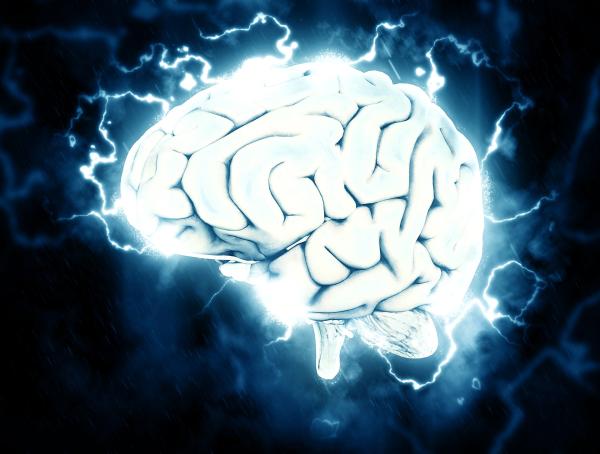 Since the early 1990s, scientists have known that the human brain contains magnetic particles deep within the organ’s tissue. The problem: we still don’t know what they’re for. In a lab located in the remote forests near Munich, Germany, scientists are deep diving into the folds of the human brain to uncover the purpose of these magnetic particles. What could be the function of these mysterious particles? Some scientists considered that the particles served some biological function in the past while others suggest that the buildup of particles may have just come from pollution from our environment. Now, German scientists are leaning towards the first explanation. Continue reading →
-
Magnetic Sense Helps Moths in Migration
 To escape the inevitable summer heat, Bogong moths migrate every spring from Queensland, New South Wales and Victoria to the Australian Alps. Once their journey is complete, they congregate in caves and go dormant for summer (a state called aestivation), similar to hibernation. Upon Autumn’s arrival, these insects return to their birthplaces, mate, lay eggs, and die. The eggs turn into caterpillars that develop underground throughout the winter, and the cycle continues indefinitely. Continue reading →
-
Compasses: The World’s Earliest Magnetic Invention
 We often discuss the way modern technology relies on the power of magnets, but in truth, society’s reliance on magnets started a long time ago – roughly 2,000 years in the past. One of history’s most significant magnetic inventions, and possibly its first, the compass is believed to have been used for fortune-telling and divination in ancient China. Sometime between the 11th and 12th century though, the compass became a navigational tool. It changed the way we travel and allowed us to, quite literally, orient ourselves. For the first time, we could consider our position in the world in relation to others and navigate the real possibility of getting from here to there. Continue reading →
-
A Rare-Earth Magnet Recycling Process Wins the 2018 Notable Technology Development Award
 We all know how important recycling is when it comes to protecting the earth. But did you know that recycling also has an economic component? To put it into perspective, think about rare earth metals. While you may not realize it, rare earth metals are a significant part of the technology we use on a daily basis: touchscreen phones, rechargeable batteries, and even computer hard drives. Continue reading →
-
Super-magnets: What They Are and How to Build Them
Did you know there are magnets over 2,000 times stronger than the ones currently on your refrigerator? It's certainly a crazy concept, but the invention of SuperConductor (LTS) magnet technology in combination with advancements in high-temperature superconducting materials has dramatically increased the power of magnets today. After intense engineering efforts over the last decade, the National High Magnetic Field Laboratory successfully demonstrated a new 32 T all-superconducting magnet in December 2017, a magnet that will help scientists break new ground in studies of nuclear magnetic resonance, electron magnetic resonance, molecular solids and quantum oscillation studies of complex metals. Continue reading → -
Pyramid of Giza and Its Electromagnetism
Ah, the Great Pyramid of Giza. The oldest and last remaining Wonder of the Ancient Worlds. Just when we thought that we were perplexed enough about this structure, its engineering and construction, and its size and proportions, scientists in 2018 married physics and pyramid research to discover a connection between the pyramid’s structure and electromagnetism. Continue reading → -
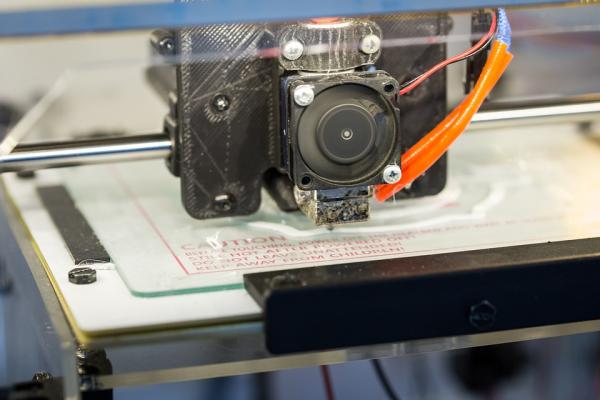
Is 3D Printing the Future of Magnet Production?
Engineers at the Ames Laboratory’s Critical Materials Institute have used laser 3D metal printing to speed up the search for a cerium-based magnet alloy that may become a more affordable alternative to expensive rare-earth neodymium iron boron magnets in some applications. Continue reading → -
Magnetic Navigation in Fish
When fish are born in coral reefs, they are often tiny and poor swimmers. Because of this, they are pushed away from the corals from which they are born weeks before they learn to swim effectively. Remarkably, up to 60% of the larvae that survive manage to make it back to their first homes despite their unfavorable beginnings. Continue reading → -
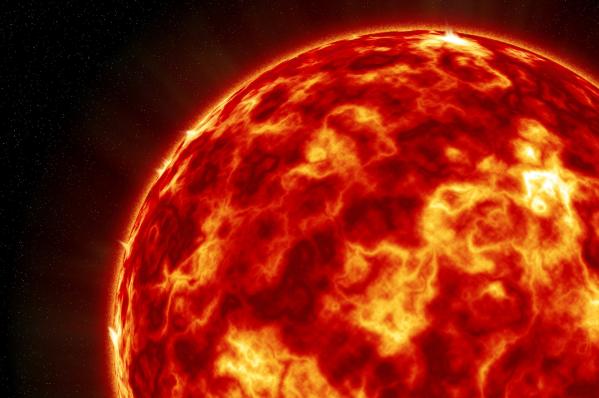
NASA’s Parker Probe: Adventures to the Sun
Howard Singer, chief scientist at the Space Weather Prediction Center, considers the three sun-focused missions occurring over the next few years to be transformative. The Parker Probe, the Daniel K. Inouye Solar Telescope (DKIST), and the Solar Orbiter will embark on separate missions to create a better understanding of the star at the center of our system. Continue reading → -
Global Industry Analysis of Rare Earth Magnets
Rare earth magnets are part of a massive, multi-billion dollar industry that is only growing in size and complexity. A recent study by Grand View Research Firm, Inc. predicted in 2016 that the global permanent magnet market would reach $38.53 billion by 2024, with rare earth magnets the fastest-growing segment at a 9.3% compound annual growth rate. Grand View Research's... -
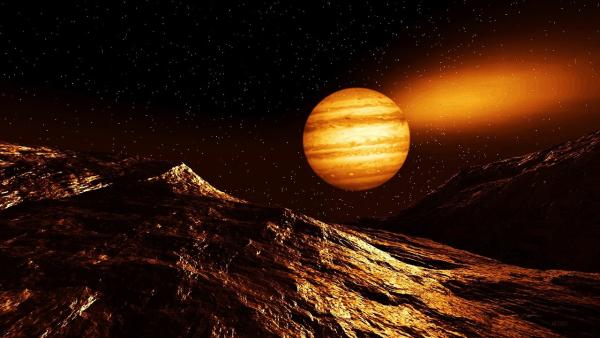
Unveiling Complexity in Jupiter’s Magnetic Equator
There’s more to Jupiter than what meets the eye. At least, that’s what planetary scientists recently discovered when they stumbled upon a mysterious dark “ribbon” around Jupiter’s magnetic equator. This ribbon, created by interactions between the planet’s magnetic field and ionosphere, was found by a team led by University of Leicester planetary astronomer Tom Stallard. Continue reading → -
The Human Magnetic Field: Is It Real?
You’ve heard the phrase “magnetic personalities” before, but are there actually magnetic people? You’ve probably seen videos circulating on the internet of people claiming to be magnetic. They place objects on their bodies only for them to hold their place rather than fall to the ground as one would expect. Are these “magnetic people” truly magnetic? Continue reading → -
Magnetic Personalities: William Gilbert
Acknowledged by many as being the father of electricity and magnetism, William Gilbert is probably best known for his work on magnetism and studying the earth’s magnetic forces. Gilbert is credited as one of the first people to use the term “electricity” and was one of the first to find evidence supporting Copernicus’s assertion that the earth isn’t a fixed point at the center of the universe. Read more about this fascinating and, dare we say, magnetic scientist here: Continue reading → -
Magnets Could Be the Key to Stopping Fishermen’s Shark Problem
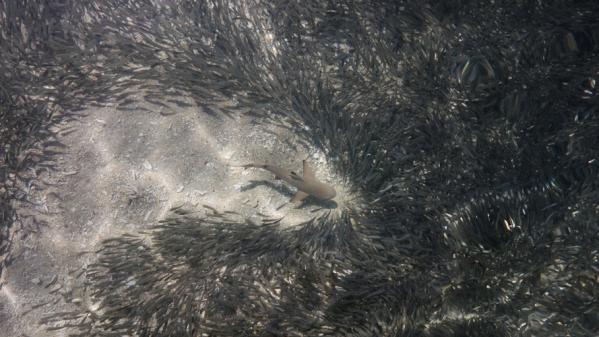
There are more than 465 species of sharks roaming the world’s oceans and most of them are considered an apex predator (Get it?) at the top of their food chains. Most shark species subsist on a diet consisting of fish, crustaceans and mollusks, while a few filter-feeding species eat plankton. This can become a problem for fishermen who sometimes find enormous sharks trapped in their nets while trying to sneak a bite of the day’s catches. While many sharks can be removed from the traps and released, the handling is stressful for the animals and it can be a really difficult process. How can commercial fishermen keep sharks from getting caught in their nets? Continue reading → -
3D Printed Material Controlled by Magnets
Just when you think 3D printing couldn’t get any more interesting, a team of engineers from MIT’s Department of Mechanical Engineering and Department of Civil and Environmental Engineering joined forces with New Jersey Institute of Technology to create 3D-printed structures that can be manipulated by magnets to move and shift shapes. Continue reading → -
Lightsabers: The Magnetic Truth
Star Wars fans rejoice! Scientists are theorizing how to make fictional lightsabers a reality. Jedis throughout the sci-fi series wield a lightsaber, complex weapon comprised of a focusing ring, main hilt, blade emitter, pommel cap, hand grip, controls, energy core, and, most importantly, a blue or red kyber crystal. Continue reading → -
Saturn's Poles Produce Their Own Auroras
If you haven’t seen the Earth’s aurora borealis in person, you’ve seen pictures – majestic colors that light up the night sky. Planet Earth has so many unique features, like our surface water and abundance of constantly evolving life. But the lights of an aurora? We aren’t the only planet that can boast about them. Did you know that Saturn also produces the phenomenon? However, there’s something different about them. But before we get into that, how does this kind of light show occur in the first place? Here’s a clue: it involves magnets. Continue reading → -
Earth’s Magnetic Field is Actually a Solar-Wind Shredder
At one point in time, Mars – arguably the most similar planet to Earth in our solar system – wasn’t the frozen desert we know today. In fact, researchers suggest that oceans and rivers once existed on its surface before solar winds from the Sun stripped away much of the atmosphere that held them. Continue reading → -
Did You Know That the Sun's Heliosphere is Actually a Magnetic Solar Bubble?
In its essence, the Sun is considered the heart of our solar system. From Earth’s standpoint, the scorching yellow star of glowing gases directly dictates its seasons, ocean currents, climates and aurorae. If the sun were the size of a front door, Earth would be about the size of a nickel. And without its energy, human life wouldn’t even exist. Crazy to consider, right? However, that example only provides a slight sliver of the Sun’s impact. In actuality, its gravity holds the solar system together, keeping everything from the largest of planets – Jupiter, Saturn, and Uranus – to the smallest particles of debris in orbit within the heliosphere, a bubble of solar wind and embedded magnetic field that extends roughly 120 astronomical units (about 11 billion miles). Continue reading → -
Mars' Missing Magnetic Field
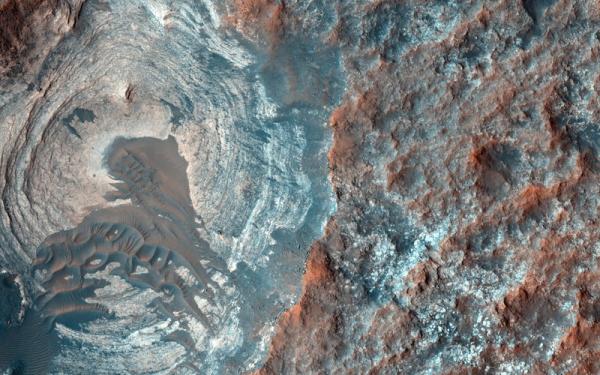
Mars may just be the best magician yet. We know that Mars doesn’t possess a magnetic field comparable to Earth’s, but scientists have been researching for years to determine what caused the magnetic field’s’ disappearance. A recent study may have given us insight on how Mars’ magnetic field vanished over four billion years ago. But there’s a plot twist: this theory includes self-sabotage. Continue reading → -
Oceanic Magnetism and Earth's Magnetic Field
The ocean is a terrifying place (exhibit A), but it sure is fascinating. With so many mysteries hidden in its depths, it’s sometimes surprising that we know anything about this mass that covers 71% of our planet. For instance, have you ever heard of oceanic magnetism? Well, read on! Continue reading → -
Laser-Generated Magnets: A Third Option to Permanent Magnets and Electromagnets
Permanent magnets are wonderful tools, but they have an inherent drawback depending on the application: you can’t turn their magnetism “on” and “off” with ease. Unless the magnet becomes too hot or is demagnetized by a nearby force, it will generate a magnetic force indefinitely. Continue reading →