Magnet Science, Research & History
-
Funding Granted for New Rare Earth Magnet Facility
 Late last year, we told you about a new magnet facility coming to the United States. Now, another facility has just received a major financial boost just before it is set to open. Let’s take a look at the goals of this plant, what the additional funding means, and how it can help consumers get what they are looking for. Continue reading →
-
The Latest News: Chirality of Spiral Magnets to Downscale Storage Devices
 A research team recently proposed a new magnetic concept! Nature Communications published its findings on March 7th, 2024, saying this magnet-based memory device, a type of spintronic device, could revolutionize information storage, basing their confidence and excitement on their large-scale integration, non-volatility, and high durability. Continue reading →
-
New Magnetic Material Finds Balance Between Soft & Strong for More High-frequency Future
 If you’ve read our blog before, you’re probably already aware that tiny magnets power the interconnected nature of our lives, silently energizing cell phones, cars, and power grids. However, as the world and devices become more efficient, these soft magnetic materials are beginning to struggle at the high frequencies needed. Fortunately, there is a new material on the horizon — amorphous soft magnetic composites, or ASMCs. Continue reading →
-
A New Kind of Magnetism: Altermagnets
 Have you heard of altermagnets, a new kind of magnet and magnetism that is distinct from both ferromagnets and antiferromagnets? As is progressively more important in our modern world, they could be used to make high-capacity and fast memory devices, as well as new types of magnetic computers. Continue reading →
-
Magnet Man: Making a Positive Change
 While superheroes are a significant part of pop culture, they are just fictional beings. In Atlanta, however, one man has become a real-life superhero by using magnets to rid local roads of sharp objects that could puncture tires. See how he is helping commuters around the region by keeping them safe from this dangerous (and costly!) nuisance. Continue reading →
-
The Heart of Dayton Contributes to Magnetic History
 In the heart of Dayton, Ohio, lies a legacy of innovation that has shaped the modern world's understanding of magnetism. While magnets have been part of human knowledge since ancient times, it was the groundbreaking work of researchers like Dr. Karl Strnat and Dr. Alden Ray that propelled magnetic materials into the forefront of scientific exploration. Continue reading →
-
New Horizons: Sensor Unlocks Terbium Detection Potential, Revolutionizing Rare Earth Element Sourcing
The horizon of rare earth element detection has been illuminated by the groundbreaking work of researchers backed by the U.S. National Science Foundation. Their innovation? A luminescent sensor capable of pinpointing and quantifying the elusive terbium, a prized component in manufacturing various devices such as electric vehicle motors, consumer electronics, energy-efficient lighting, and crucial medical equipment like X-ray machines. Continue reading → -
Auroras and Magnets: The Science Behind the Beauty
What do Alaskans, Austrians, and New Zealanders have in common? All three stunning locations are graced with colorful ribbons that light the night sky, known as the Northern and Southern lights. A phenomenon that lights up the night sky with brilliant streaks of green, red, and purple, admirers of these majestic auroras recently noticed the addition of two new mysterious colors, mauve and white, in 2016. Attributed to a reference from a 2006 child’s movie, Over the Hedge, scientists determined these new colors, known as STEVE (Strong Thermal Emission Velocity Enhancement) that often appear in a “picket fence” formation, were interestingly not produced by the same scientific principles as their look-alike counterparts. Continue reading → -
Magnetic News: First U.S.- built Focusing Magnet for LHC Upgrade Arrives in Switzerland
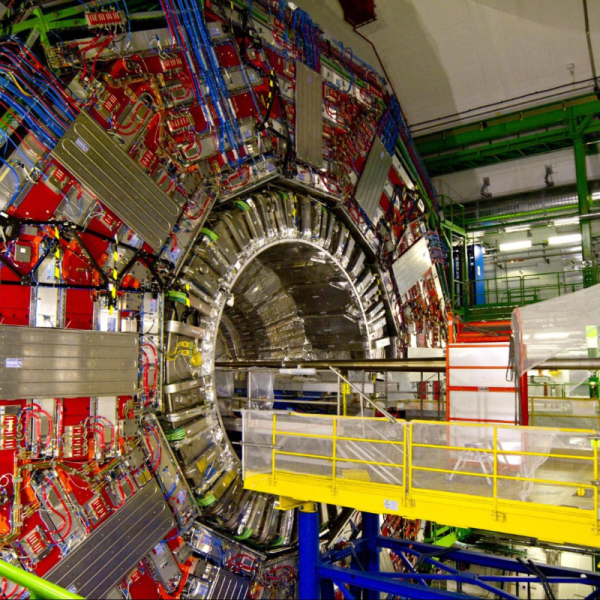
Recently in Geneva, Switzerland, the renowned physics laboratory, CERN, welcomed a significant delivery all the way from the US. It contained a colossal 13-meter-long package housing two magnets, each equipped with 4.2-meter-long coils. These specialized magnets mark a groundbreaking milestone as the inaugural U.S.-crafted components for the high-luminosity upgrade of the Large Hadron Collider (LHC), which is the world’s largest and most powerful particle accelerator. Continue reading → -
Permanent Magnet Facility Coming to the United States
Topics like the expansion of electric vehicles and the increasing number of rare earth facilities are commonplace in the world of magnets. Such plans are usually slated to take place overseas, in the United Kingdom or other parts of Europe. This time, a long-time magnet manufacturer has announced a massive project that will bring jobs, increased availability of EVs, and more to the United States. Continue reading → -
Neutron Scattering to Unravel the Mysteries of Neodymium Magnets
Neutron scattering, a powerful technique, serves as a formidable asset in spectroscopy, enabling scientists to delve into the intricate physical and chemical traits of diverse materials. One area where this technique shines is in the investigation of dense and intricate structures within lanthanide-iron intermetallic compounds, notably the renowned neodymium magnet. Despite its prowess, this method has yet to unlock the secrets of probing the magnetic essence of this material. Continue reading → -
Magnet Myth: The Existence of Monopole Magnets
If you have ever visited our FAQs page, you may have come across this question: Do you sell single pole or monopole magnets? Answer: They do not exist. By definition, all magnets have two poles. Continue reading → -
Ford Partnership Brings Rare Earth Magnet Facility to Belfast
The popularity of electric vehicles is reaching record highs, and the climb is expected to continue through the rest of the decade. As more consumers flock to EVs due to climate concerns, some people are still skeptical about making the switch due to availability and upfront costs. One new partnership may help address these red flags, as Ford is set to begin working with Ionic Rare Earths to create a new rare earth magnet recycling facility. Continue reading → -
How Far Will a Magnet “Jump”?
This week, we are continuing to look at magnetic science experiments that you can use at home or in the classroom. During this project, thanks to magnetism, a ferrous object will “jump” toward your magnet. You can explain what a magnetic field is and spark your child’s interest in science as they watch the objects zip toward the magnet. Let’s take a detailed look at how you can perform your research. Continue reading → -
Light Trapped Inside Magnets
The ability to control quantum materials with light… It sounds incredible because it is! It also has extremely important technological implications. In recent studies, by utilizing the strong coupling of light and matter in optical cavities, researchers were actually able to change some of the defining features of quantum materials. More specifically, a research group from City College of New York showed that trapping light inside magnetic materials may “dramatically enhance [the magnetic materials] intrinsic properties.” Continue reading → -
Controlling Anomalous Hall Effect and Berry Curvature For Electronic Advancement
Recently, a group of MIT Plasma Science and Fusion Center (PSFC) research scientists figured out how to manipulate or control the anomalous Hall effect and Berry curvature for advanced use in computers, robotics, and sensors. Hang Chi, Yunbo Ou, Jagadeesh Moodera, and co-authors wrote extensively to explore their discovery and share it with the world. Continue reading → -
Magnets and The Webb Telescope
If you haven’t heard of the James Webb Space Telescope, you are seriously missing out. It is the most powerful space telescope ever built. It lets scientists (and anyone with a phone or computer) see what our universe looked like about 13 billion years ago, when the universe was only a few hundred million years old. Since July 12, 2022, the telescope has been transmitting images of stars, nebulas, planets, galaxies, cosmic dust clouds, you name it! Continue reading → -
3D Printing of Rare-earth-free Permanent Magnets
As concerns and awareness grow regarding the world’s rare-earth element supply, other options are starting to attract interest. One potential alternative involves additive manufacturing or 3D printing magnetic ceramics and alloys that aren’t made with rare earth elements. Continue reading → -
Europe's First Rare Earth Facility
Over the past few years, supply chain issues have plagued consumers when it comes to getting everything from groceries to new cars. Now, a new rare earth magnet manufacturing facility that Neo calls Europe’s first is looking to help with production in hopes of helping people find what they need. Continue reading → -
Dayton Contributes to History of Magnetic Material
Did you know the first rare earth permanent magnets (samarium cobalt) were developed in Dayton, Ohio, by researchers at the Air Force Materials Laboratory and the University of Dayton? It all started during the 1940s, when advances in chemical separation techniques developed for the Manhattan Project (1942-1946) accelerated the study of rare earth metals. Later, in the 1960s, Dr. Karl Strnat of the U.S. Air Force Materials Laboratory at Wright-Patterson Air Force Base and Dr. Alden Ray of the University of Dayton began a study to try and better understand the origin story of magnetic properties. Continue reading → -
Texas Startup Targets Rare Earth Magnet Production
Noveon Magnetics Inc., a startup in Texas, is on the brink of changing the way we see decarbonization, and they say recycling rare earth magnets is the key. In addition to helping with the country’s efforts to decarbonize, Noveon is focused on the geopolitical and supply chain risks associated with rare earth magnets, hoping to lessen our dependence on China's rare earth metals. Scott Dunn, Noveon’s co-founder and chief executive said, “We don’t want China to just deliver us our quality of living and not have control of our destiny.” Continue reading → -
Meteorites & Magnet Manufacturing
Scientists say there’s a potential new approach to magnet manufacturing that may help Europe and the West lessen (or even eliminate) their reliance on China and its rare earth elements. The researchers framed the work as a possible help for the transition to low-carbon technologies. Continue reading → -
The Advancements of Nanomedicine & Cancer Research
According to Science Direct, “Magnetic nanoparticles (MNPs) are a class of nanomaterials composed of metals such as cobalt, nickel, and iron, with paramagnetic, ferromagnetic, or superparamagnetic properties.” MNPs are being used in more and more biological and medical applications — “nanomedicine” — from therapeutic treatments and magnetic targeting to cardiovascular imaging, tissue engineering, targeted drug delivery, and disease detection. Continue reading → -
A Closer Look At Magnetic Poles
One of the first concepts you will learn about in relation to magnets is their poles. We know that lining up the south and north poles will cause your magnets to attract, while lining up two of the same poles will lead to repulsion. The north-seeking pole of a magnet points toward the North Pole of the Earth when it...