To say chemist and physicist Michael Faraday had an impact on our understanding of electromagnetism would be an understatement. In fact, he basically established the field of electromagnetic research. You don’t get a scientific law and a unit of measurement named after you for nothing! In our latest installment of the Magnetic Personalities series, we’re taking a look at this great scientist’s amazing life. Continue reading →
Poor magnetic fields. They tend to get overshadowed by bigger, more powerful celestial bodies and phenomena like black holes, colliding galaxies, and the Big Bang. However, this force helps hold the galaxy together. Magnetic fields are the true heroes of the galaxy and it’s about time they get the recognition that they deserve. Continue reading →
October is obviously a spooky time (because of Halloween and all that) so, we’re hoping this blog will give you a little fright. After that, it’s back to your regularly scheduled magnetic news and such. In this blog, we’re discussing one of the scariest celestial bodies in the known universe - the magnetar. Continue reading →
Research presented at the annual meeting of the American Astronomical Society’s Division for Planetary Sciences has drawn our attention to Mars’ unique magnetic tail and the way magnetic fields, both on the planet and from solar winds, are affecting the tail’s movements. The findings may also help scientists better understand how Mars lost much of its atmosphere. Continue reading →
While this Apex blogger is certainly not a fan of spiders, we have to agree that they are fascinating creatures. The eight-legged arthropods spin their silk webs and perch, waiting for their prey to fall at their doorstep. You probably assume that a spider’s prey lands in a web by happenstance, but research published in 2013 showed that spiders have a few hidden electrical tricks for trapping their prey. Continue reading →
The future of magnets is something we care a lot about. In the 1980s, neodymium became the go-to element for magnets. Mined primarily from China, neodymium revolutionized mechanical equipment such as engine motors. However, researchers at the Lawrence Livermore National Laboratory have recently discovered something to turn the magnet community (That’s us!) on its head. But first let’s do a little refresher on the basics. Continue reading →
James Clerk Maxwell (1831-1879) was a Scottish physicist often referred to as “The Father of Electromagnetic Radiation.” Born in the Scottish capital of Edinburgh, Maxwell was born into a landowning family. His family moved to a country estate when he was young and his mother ensured he had a proper education. Before the age of ten, Maxwell could recite Bible verses and long passages of English poetry, demonstrating his knack for understanding and a thirst for learning. Continue reading →
Occasionally, curious customers ask us, “Are there materials that can be used to block a magnet?” The short answer: Yes and no. While there’s little you can do to stop a magnet from being a magnet (besides heating it well past its maximum operating temperature), there are a few ways you can contain its magnetic field. Continue reading →
“Be it known that I, NIKOLA TESLA... in the county and State of New York, have invented certain new and useful Improvements in Electromagnetic Motors.” This is the opening line of Nikola Tesla’s application at the US Patent Office filed October 12, 1887. Considered to be one of the most significant discoveries of our lifetimes, Tesla’s AC induction motor changed the world. Continue reading →
Scientists have been tackling the world’s most difficult problems for centuries. However, one still baffled them—until now, that is. The challenge: stopping fresh, unshaken beer from overflowing once opened. What? That doesn’t sound like a pressing scientific issue? We beg to differ! Especially since the solution involves magnets. Continue reading →
Earth’s core is mostly comprised of iron, with a solid inner core and a molten outer core. Iron is ferromagnetic at ordinary temperatures. However, iron alone does not make for a great magnetic field. It turns out iron gets some pretty crucial help from an old, elementary fried—nickel. Continue reading →
While last month’s solar eclipse was an unforgettable events for many Americans, most didn’t realize the sun had another trick up its sleeve. The first week of September saw a massive geomagnetic storm raging over the northern United States and southern Canada. While the storm caused some radio and navigation disruptions, it did treat many to a rare sighting of the northern lights, or aurora borealis. Continue reading →
Magnetism is often at the center of scientific discovery and innovation. Continuing this trend, researchers at the University of Buffalo have successfully used our favorite physical phenomenon to influence the behavior of lab mice. If you’re a little put off or creeped out by this technology, you’re probably not alone. Continue reading →
While the rest of us were busy reeling over the solar eclipse, scientists were hard at work breaking the record for the world’s strongest resistive magnet (a record later passed in 2024 by a 42.02-tesla resistive magnet in China, according to the Chinese Academy of Sciences). It’s taken nearly three years and $3.5 million to fund but the National MagLab has achieved it! Continue reading →
Ever since the dawn of our species, humans have gazed up at the sky in wonder. What secrets do stars and moons and planets hold? What could they tell us about our own planet? What could they tell us about the universe at large? This general search for meaning is the driving force behind any of the sciences, astronomy notwithstanding. Continue reading →
Dangerous as it may be, the ocean has served as an important tool for mankind throughout history. Up until recently, the compass was our main ally in the fight against… getting lost. The compass has guided sailors across wide open expanses of briny waves as they search for new lands or known continents. It has been an indispensible tool that we fall rely on even today. Continue reading →
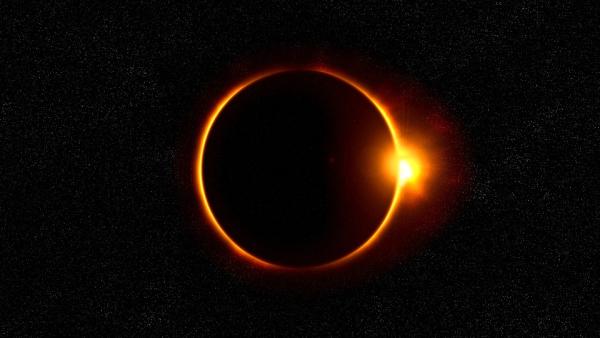
Editor’s note: this post was written ahead of the total solar eclipse of Monday, August 21, 2017, and has been left in its original voice. The Great American Eclipse will be viewable across the country at different times depending on your location. You can see a full map and times of full obscurity here. But what exactly happens during a full eclipse? Continue reading →
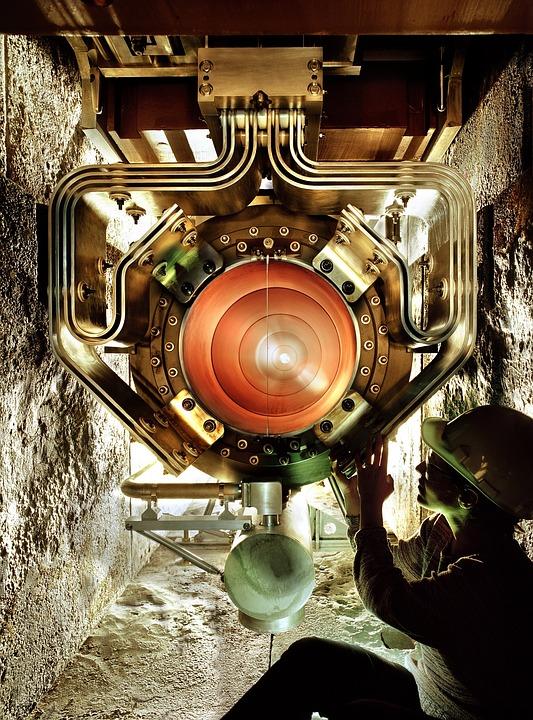
We love learning about new and exciting magnet-related findings and we hope you do, too! Always on the search for new information and discoveries, we keep a close eye on the leading magnetic research facilities to see what they’re up to. Today on our blog, we’ve rounded up a few of the most significant magnetic research institutions in America and highlighted some of their findings to give you a little sample of what these labs do and what their contributions to science have been. Continue reading →
One of the greatest things about our solar system is that every single planet is unique. From Saturn’s magnificent rings to sulfuric acid of Venus’s atmosphere to Earth’s ability to sustain life. In addition, some planets offer fascinating magnetism. Our own magnetic field keeps us safe from harmful radiation and creates stunning aurorae. Jupiter’s magnetic field has the largest magnetosphere of any planet in the solar system! Continue reading →
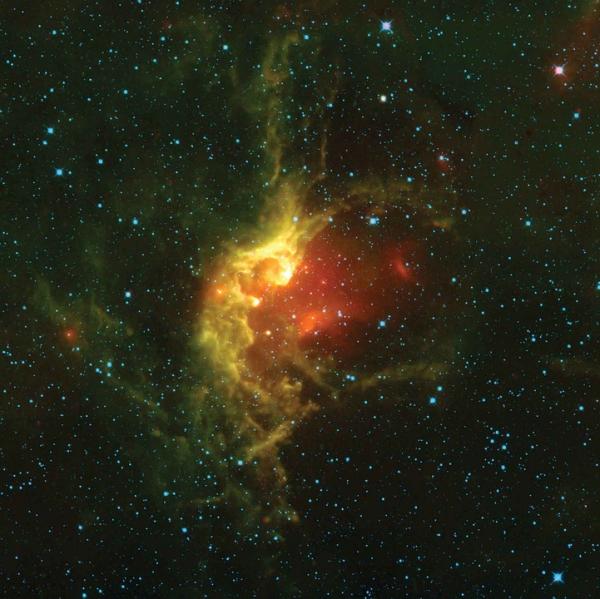
Stars begin as clouds of gas in space. The gravitational collapse that will form the star begins because of the cold temperatures and high density of these clouds. Before reaching star status, this ball of gas’s core must be hot enough for the fusion that powers it to take place. Until then, it’s just a protostar. Continue reading →
Think about all the aspects of our daily life that you take for granted—objects and activities we don’t even notice anymore. Microwaves, cars, television, even the light bulbs we use were all once revolutionary scientific concepts brought about through the scientific method of trial and error. Magnetism is no different and it’s common acceptance is largely due to the “Father of Magnetism,” William Gilbert. Continue reading →
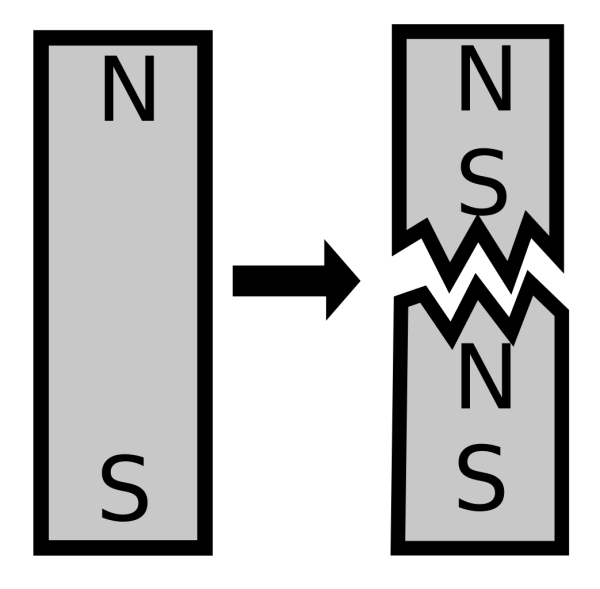
If you cut a magnet in half, you won’t end up with a north piece and a south piece. You’ll end up with two pieces, both of which have a north and a south pole. Even if you cut it down to the size of an atom, the resulting magnet would still be a dipole—having two opposite poles. Why hasn’t a monopole, or a single pole magnet, been discovered yet? Continue reading →
The Bermuda Triangle is notorious for strange phenomena and mysteries. While it’s probably more myth than fact, this peculiar part of the globe has captivated our imaginations for years. Well, those of us in the magnet biz have our own version—Russia’s Kursk Magnetic Anomaly. Continue reading →
The Falklands, an archipelago off the coast of Argentina, are hiding a pretty big secret. Northwest of West Falkland Island and possibly dating back to the late Paleozoic Era, perhaps around the time of the extinction of more than 90% of life on the planet, an event known as The Great Dying or the Permian Extinction. Continue reading →

 To say chemist and physicist Michael Faraday had an impact on our understanding of electromagnetism would be an understatement. In fact, he basically established the field of electromagnetic research. You don’t get a scientific law and a unit of measurement named after you for nothing! In our latest installment of the Magnetic Personalities series, we’re taking a look at this great scientist’s amazing life. Continue reading →
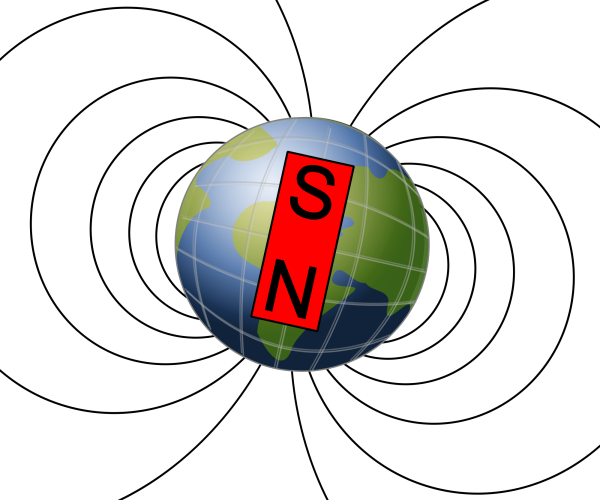 Poor magnetic fields. They tend to get overshadowed by bigger, more powerful celestial bodies and phenomena like black holes, colliding galaxies, and the Big Bang. However, this force helps hold the galaxy together. Magnetic fields are the true heroes of the galaxy and it’s about time they get the recognition that they deserve. Continue reading →
 October is obviously a spooky time (because of Halloween and all that) so, we’re hoping this blog will give you a little fright. After that, it’s back to your regularly scheduled magnetic news and such. In this blog, we’re discussing one of the scariest celestial bodies in the known universe - the magnetar. Continue reading →
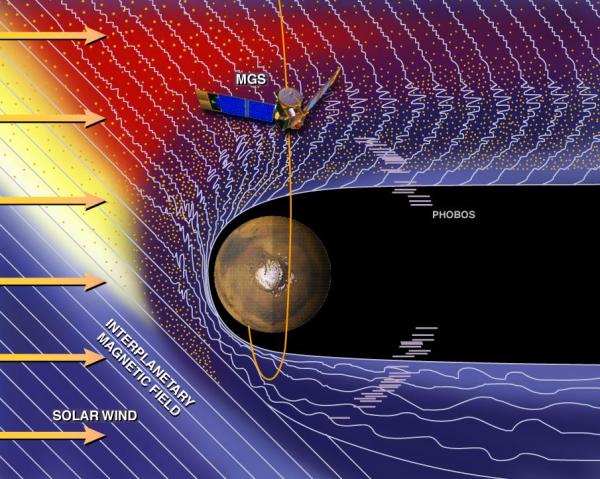 Research presented at the annual meeting of the American Astronomical Society’s Division for Planetary Sciences has drawn our attention to Mars’ unique magnetic tail and the way magnetic fields, both on the planet and from solar winds, are affecting the tail’s movements. The findings may also help scientists better understand how Mars lost much of its atmosphere. Continue reading →
 While this Apex blogger is certainly not a fan of spiders, we have to agree that they are fascinating creatures. The eight-legged arthropods spin their silk webs and perch, waiting for their prey to fall at their doorstep. You probably assume that a spider’s prey lands in a web by happenstance, but research published in 2013 showed that spiders have a few hidden electrical tricks for trapping their prey. Continue reading →
 The future of magnets is something we care a lot about. In the 1980s, neodymium became the go-to element for magnets. Mined primarily from China, neodymium revolutionized mechanical equipment such as engine motors. However, researchers at the Lawrence Livermore National Laboratory have recently discovered something to turn the magnet community (That’s us!) on its head. But first let’s do a little refresher on the basics. Continue reading →