Magnet Science, Research & History
-
Magnetosonic Waves: The Voice of the Universe
 They say in space, no one can hear you scream, or sing, or even talk. That’s because outer space is a vacuum. In order for sound to travel, it needs to pass through something. In Earth’s case, sounds travels through air molecules. However, deep space lacks anything through which sound can travel, thus there is no sound in the way we normally experience it. Continue reading →
-
Why Do Black Holes Inhabit the Center of Galaxies?
 Since Karl Schwarzschild’s 1916 solution to Einstein’s field equations first described black holes, many details of these massive forces of nature have remained a mystery. Since the identification of the first strong black hole candidate, Cygnus X-1, in 1971, scientists have dedicated entire careers to the study of these regions of spacetime. But because they exhibit such strong gravitational force, not even light can escape their pull, making them nearly impossible to observe. Continue reading →
-
Understanding the Meissner Effect
 The world of magnetism is downright vast. From astrophysics to arts and crafts, it plays a large role in many areas of life. What we don’t always hear about is the science behind magnetism—the ins and outs of what makes it work and how these theories can be applied. Continue reading →
-
Solar Flares and Earth’s Magnetic Field
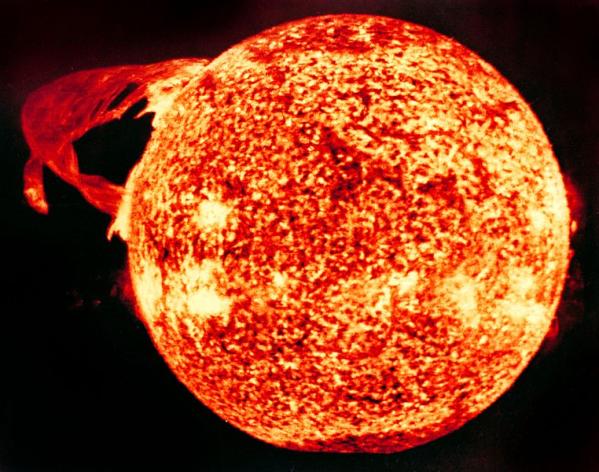 A few weeks ago, the sun produced a simply massive solar flare. This solar flare turned out to be so powerful that it left our home planet’s magnetic field less than intact. Continue reading →
-
Stranger Things and Magnetic Fields
 Warning! This post may contain spoilers! Last July, Netflix released the first season of the instantly popular Stranger Things. Set in 1983, the eight-part show features a number of odd occurrences in the town of Hawkins, Indiana. There are plant monsters from other dimensions, telepathic tweens, and a menacing government agency bent on keeping it all under wraps. Continue reading →
-
The Magnetic Surface of Mars
 Mars has been a popular source of intrigue over the past ten years. Thoughts of colonizing, or at the very least visiting, the red planet have been all over the news. However, one major hurdle to overcome is the martian magnetic field. Unlike other planets such as Earth, Mars does not have single-source magnetic field, but rather, it pulls from many smaller sources to generate a much weaker magnetic field. Continue reading →
-
Earth's Magnetic Oceans
You might hear a lot about the ocean’s magnetism, in a metaphorical sense that is. But, while people love flocking to the beach or setting sail, other forces are at work. It turns out the ocean’s magnetism might be much more literal than we think! Researchers now believe that Earth’s oceans make a tiny but measurable contribution to the planet’s magnetic field. Continue reading → -
Subatomic Particles that Make Magnets...Magnetic
In the 1930s, Nobel Laureate Paul Dirac hypothesized that particles existed that only had a positive or negative charge. According to his theory, these particles would explain why electric charge comes in fixed units. The particles that theoretically would carry a positive or negative charge are called magnetic monopoles. Currently, magnetism is understood to arise from moving electric charges and electron spins, so that magnets have two poles. For example, if you cut a standard bar magnet in half, you’d wind up with two magnets that each have a north and a south pole - not smaller pieces that each have a single pole. However, if magnetic monopoles are discovered, it would require new physics beyond the Standard Model. Continue reading → -
Saturn's Magnetosphere and Titan
In another blog, we discussed the various magnetic fields emitted by planets in our solar system. This time, we’re going to take a closer look at Saturn. Specifically, its magnetosphere and its effect on Titan, Saturn’s largest moon. Continue reading → -
True North vs. Magnetic North
In 1909, US Navy engineer Robert Peary claimed to be the first person to reach the North Pole. Equipped only with wooden sleds and dogs, Peary and his team trekked across the frozen waters of the Arctic Ocean, arriving at the point in early April. However, Peary’s claim has been met with much skepticism. Many critics say the team was not equipped with enough navigational instruments, others say Peary was simply lying. Continue reading → -
A World without Magnets
Just in time for Halloween, we bring you one of the scariest scenarios we can imagine: a world without magnets! It’s easy to take magnets for granted, but the truth is that without them and other magnetic forces, life on Earth would be pretty different and frankly, pretty terrible. Here are just a few things that would definitely change. Continue reading → -
Magnets Are Cool: 3 Magnetic Moments from Doctor Who
If you’re unfamiliar with the ultra-popular BBC scifi show, Doctor Who, the series follows the unnamed Doctor travelling through space and time in his blue box (TARDIS) and saving the universe time and time again. Like many science fiction series, Doctor Who employs a lot of imaginative, if not inconceivable, technology. There’s the TARDIS itself, which any Whovian will tell you is bigger on the inside; the Doctor’s trusty sonic screwdriver that’s capable of unlocking almost any door; and psychic paper that shows the reader exactly what they want to see. Yes, the tech in Doctor Who is what you’d expect from a show about time travel and aliens. This piqued our interest. Surely there had to be some instances of magnetism in its historic 50 years on air! We’ve searched space and time to bring you our favorite magnets from Doctor Who: Continue reading → -
What Proxima Centauri’s Magnetic Field Means for Proxima B
You may have heard that a new exoplanet was discovered orbiting the red dwarf Proxima Centauri. It’s a mere 4 light years from Earth, though current spacecraft would take tens of thousands of years to travel there. Scientists are quick to point out that this new planet, dubbed Proxima B, is in what they call the “habitable zone.” Basically, Proxima B’s distance from its respective star suggests the planet could contain liquid water and maybe even sustain life! Continue reading → -
James Bond's Magnetic Gadgets
Since 1962, James Bond has marvelled audiences with his debonair charm, world-saving feats, and of course, his amazing gadgets! While the list of gadgets is certainly extensive, one very devoted blogger examined all 24 films released at the time (the series has since grown to 25 with No Time to Die) for any magnetic tech .007 has used on Her Majesty’s secret service. Continue reading → -
Magnetic Engines Help Satellites Achieve Longer Orbit
Small satellites may soon use magnetic levitation to stay precisely oriented in orbit, thanks to a new reaction wheel motor. Continue reading → -
A Quick Guide to Different Types of Magnetism
We use the word “magnetism” quite a bit. In general, magnetism is thought of as the simple attraction of two metals. However, magnetism is much more nuanced than this. Magnetism is classified in several different ways. It all comes down to the atoms that make up each element or compound. Furthermore, it depends on the spin and orbital motion of those atoms’ electrons and how they react (if at all) to magnetic fields. Physicist Michael Faraday determined that materials respond to magnetic fields in two basic ways: diamagnetic materials are weakly repelled, while paramagnetic materials are weakly attracted. Ferromagnets such as iron are a much stronger, separate case. Continue reading → -
The Legend of Magnes the Shepherd
Origin stories were popular in numerous ancient cultures and it seems like every aspect of human life has a legend associated with it. This is particularly true of the ancient Greeks. Pandora’s Box explains how evil came into the world. Your voice’s echo is really just a mountain nymph responding to you. Even the passing of the seasons is tied up with the story of Demeter and her daughter Persephone. Magnets are no different. The tale of Magnes the shepherd isn’t one of the best-known Greek legends, but it’s one of the most popular stories about how magnets were discovered. Continue reading → -
Could Magnetism Explain Why Bird Flocks Move as One?
Many people know that birds use the earth’s magnetic field to navigate. It’s called magnetoreception. However, birds’ relationship to magnets might run even deeper as a 2016 study suggests. Continue reading → -
NASA’s Juno Satellite vs. Jupiter’s Magnetic Field
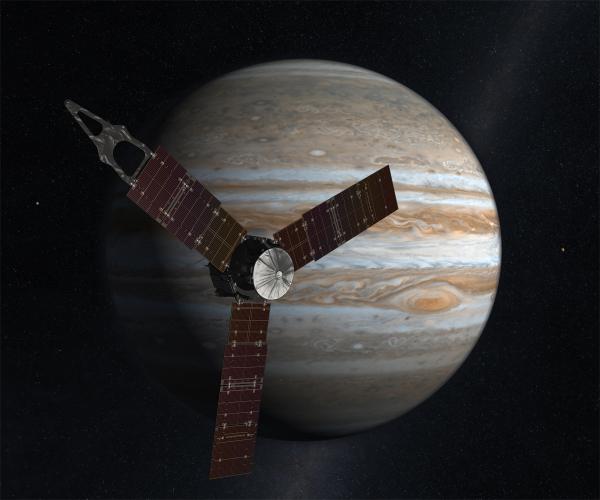
Named for the Roman king of the Gods, Jupiter is the largest planet in the solar system and is known for its giant red spot--a raging storm about 1.3 times as wide as Earth. Jupiter is a gas giant and can be as far as roughly 600 million miles from Earth. Since Galileo first turned a telescope on it in 1610, we’ve learned little about this mysterious planet. That may be about to change. Continue reading → -
Saving Rare Earth Metals with Magnets
Hybrid cars are helping save our planet from greenhouse gases, but did you know that their motors use magnets containing rare earth metals? Rare earth elements can be found directly below the earth’s surface in many different parts of the world, including China, North America and Australia. Although labeled “rare” they are usually spread thinly inside other minerals rather than concentrated in deposits. Because of this, they are difficult to mine and the process is not cost efficient. Magnets are used in hybrid cars engine’s rotor. The magnets are arranged with alternating poles so the rotor can spin in the motor's changing magnetic field. Without these magnets, the electric motor in the hybrid system would not work as designed. Continue reading → -
Rock n’ Roll: Brought to You by Magnets
Part 2: Speakers and Amps In Part 1 of this post we discussed how magnets are used in guitar pickups to bring the sounds of rock alive. In part 2 we’re going to talk about how magnets are involved in the other end of the experience: hearing the music. Whether you’re listening to live rock or jamming out to your favorite album at home, magnets are involved. Speakers use magnets to turn electrical signals into the vibrations that make musical tones. These sounds are then magnified, allowing you to rock out. But how does it really work? Continue reading → -
Magnetically Controlled Microbots
Remember those old movies where they use a shrink ray on a team of scientists to go inside a person’s body? Safely inside their microscopic submarine, they enter the patient in order to unclog an artery or destroy some deadly germ. There’s usually one guy trying to sabotage the whole operation. While science has yet to perfect shrink ray technology, new advances in microbiology may soon have a way of controlling microscopic robots capable of following magnetic directions to ailing parts of the body. This advent could be used for minimally invasive exploratory surgery or even to deliver medicine to the exact spot the body needs it. Continue reading → -
Magnets & Ferrofluids Co-Star in New Short Film
Through the power of magnetism, a new animated short film takes its viewers to a snowy Norwegian wood. Instead of ink and paper or even computer graphics, this film uses iron filings as its medium. The film, appropriately titled “Ferro” (derived from the Latin word ferrum, meaning iron), was made by Norte Estudio and employs both familiar and revolutionary technology to craft this 75-second film. You can view the it on Norte’s Vimeo page here. Continue reading → -
4 Informational Magnet Videos
As you buy and use neodymium magnets for different crafts and home improvement projects, you may develop some questions. For example, what’s the difference between axial and diametric magnetization? Or, how do you separate really strong magnets? Fortunately, the Apex Magnets YouTube Channel has all the answers. Continue reading →