Magnet Science, Research & History
-
New Magnetic Materials Discovered In Ireland
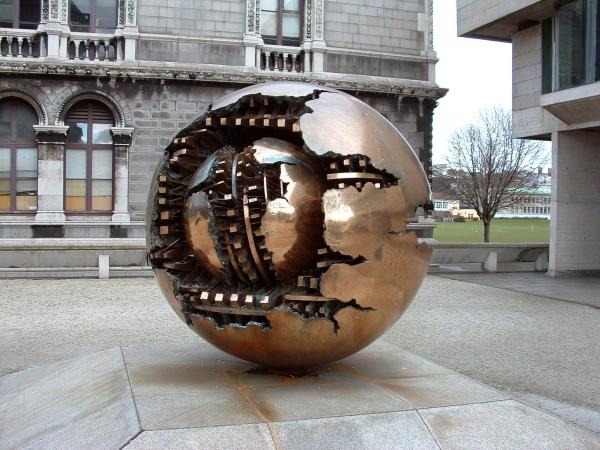 While the majority of our magnets are made of neodymium, samarium, and cobalt, there are plenty more materials possessing magnetic properties. Furthermore, the scientific community has recently discovered a whole new batch! Researchers in Ireland announced in April 2017 that they had unearthed 22 new materials able to play host to the properties of magnetism. Continue reading →
-
Uncharted Territory on Two Wheels
 Earth is pretty much mapped out, so you’d think there’s not much else left to do, right? Not exactly. Magnetic surveying is a geophysical method of mapping out the terrain, used both on land and in marine archaeology. These surveys detect spatial variations in the Earth’s magnetic field. Typically, this is accomplished on foot while carrying the necessary magnetic sensors in a backpack. Covering large areas on foot is slow and tiring, which limits how much ground a surveyor can map. Sounds time-consuming, right? Continue reading →
-
Eels Have A Sense For Magnetic Fields
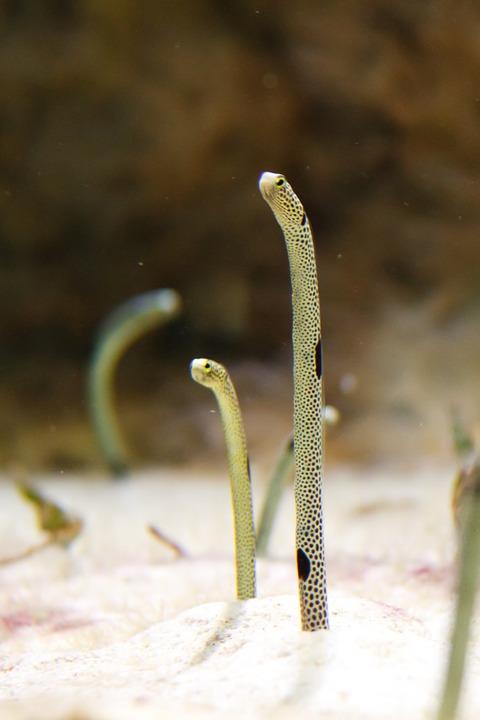 When humans give birth, most of us go to a nearby hospital. Fish, however, migrate long distances, sometimes thousands of miles, to reproduce. Sounds crazy, right? Some fish are anadromous, traveling from the sea into freshwater and others are catadromous, moving from rivers into saltwater. Continue reading →
-
There’s a New Kind of Aurora, and his Name is Steve
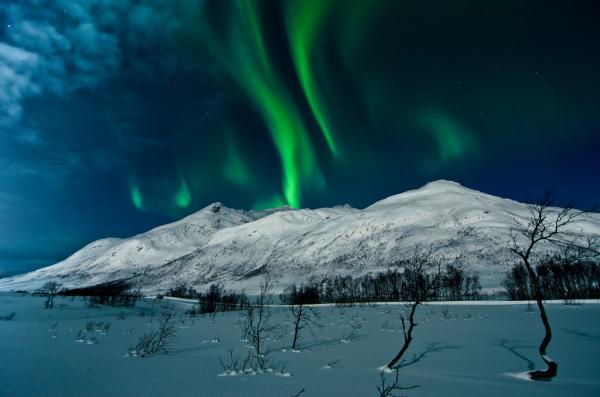 One of the most beautiful phenomena on planet Earth has to be the aurora. Occurring near the planet’s north and south poles, the aurora borealis and aurora australis have been dazzling and mystifying human beings since antiquity. The aurora, brilliant bands of colorful light dancing across the sky, are the result of charged particles from the sun meeting Earth’s magnetic field. The magnetic field is strongest near the poles, hence why this color show is typically only viewed at higher latitudes. Continue reading →
-
The Moon Once Had Its Own Magnetic Field
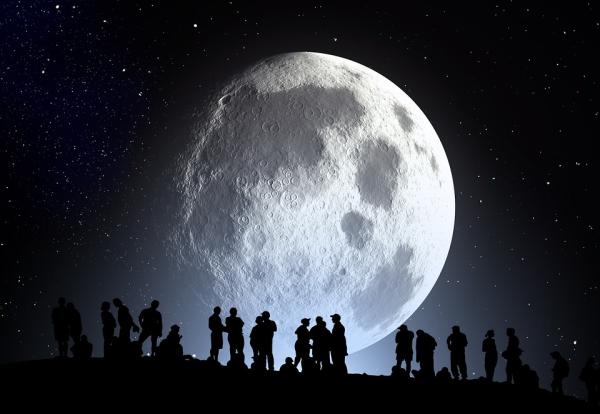 Devotees of this blog surely know how much we love Earth’s magnetic field. Indeed, it’s a pretty important component for sustaining life on our planet, shielding us from the harmful radiation hurled out by the sun. Other planets have them, too. Jupiter’s magnetosphere is the largest structure of any planet in our solar system! Continue reading →
-
The Compass Protein Theory
 As much as we love magnets, we recognize there are still plenty of mysteries surrounding them. One such mystery that has plagued scientists for decades is the role Earth’s magnetic field plays in helping numerous animals navigate—from caribou herds to flocks of birds. Even humans might be able to pick up on this magnetism. Continue reading →
-
Non-Metallic Magnets: We’ll Take Ours Room Temperature
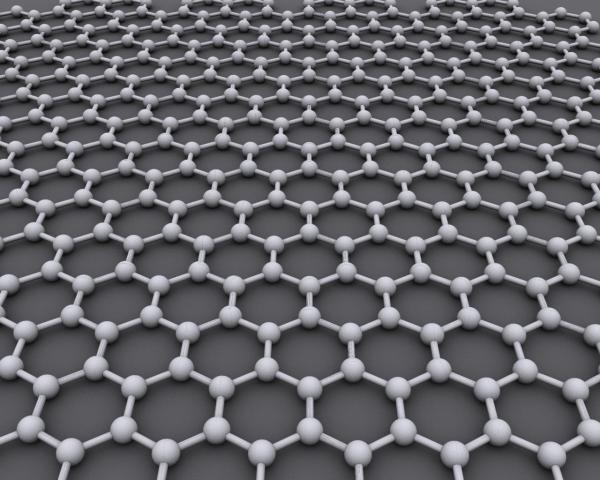
Researchers who previously reported the world’s tiniest magnet at the Regional Centre of Advanced Technologies and Materials (RCATM) have also found a way to create what they describe as the first non-metallic magnet to keep its magnetic ordering up to room temperature (an antiferromagnetic graphene derivative). Continue reading → -
The World’s Smallest Magnet & Storage System
If you think your USB storage drive is difficult to keep track of now, imagine if you had one the size of a single atom! An international team of researchers at IBM Research Almaden and École Polytechnique Fédérale de Lausanne in Switzerland have found a way to create not only the world’s smallest magnet, but also the world’s smallest storage device. Continue reading → -
The Trappist Planets and Magnetic Fields
By now, you’ve probably heard the news that NASA has discovered not 1, not 2, but 7 “Earth-like” planets revolving around nearby dwarf star, Trappist-1. These planets are thought to be in the habitable zone and could maybe, one day, sustain human life. Continue reading → -
Metallic Hydrogen: The Force of the Future
When you think of hydrogen, the humble little element with a singular electron, it’s probably in its gaseous state. In fact, hydrogen is most the abundant element in the entire universe and makes up around 75% of its entire mass! It’s most recognizable when paired with oxygen to create H20, or water. Hydrogen is also a source of nuclear energy and its capabilities have been explored for centuries. Continue reading → -
A New Atmosphere for Mars? A New Home For Us?
From February 27 to March 1, 2017, NASA's Planetary Science Division hosted its Planetary Science Vision 2050 community workshop at their headquarters in Washington DC. The world’s greatest minds in science and technology descended upon the workshop to participate in panel discussions and presentations regarding the future of space exploration. Continue reading → -
Pole Reversal: What Happens When Our Magnetic Shield Loses Strength?
Extending roughly 40,000 miles toward the sun and far beyond the Moon on the side facing away from it, the magnetic layer known as the magnetosphere protects the planet from the charged particles of solar wind and cosmic rays that could otherwise strip away our upper atmosphere over time. That might seem like a permanent feature of the planet, and for the most part, it is. Continue reading → -
Delicate Sound of Thunder: Exploring Electromagnetic Whistlers
When we think of lightning storms, we usually associate them with scary, booming claps of thunder. These audible bursts are caused by a sonic shockwave as lightning discharges. However, thunder is not the only sound of the storm. High above the clouds, in the farthest reaches of our atmosphere, another symphony is taking place. This is the concert hall of the electromagnetic wave, also known as a whistler. Continue reading → -
Ancient Magnetic Pottery
Evidence of Earth’s magnetic field is all around us. Animals use it to navigate, the spectacular display of the Aurora Borealis is generated by it, even your compass pointing north—all possible because of this mysterious force. However, while we experience the benefits of the magnetic field on a daily basis (it also helps shield our atmosphere from the solar wind), its effects are nothing new. The magnetic field has quietly been at work for billions of years. Continue reading → -
A Whale of a Magnetic Field
In previous posts, we’ve talked about the connection between animals and magnetism. Sharks, dogs, birds, and plenty of others all have pretty direct links to Earth’s magnetic field. However, there is one group of animals wherein the relationship is not as clear—some scientists don’t even think it exists. Continue reading → -
Electromagnetic Levitation
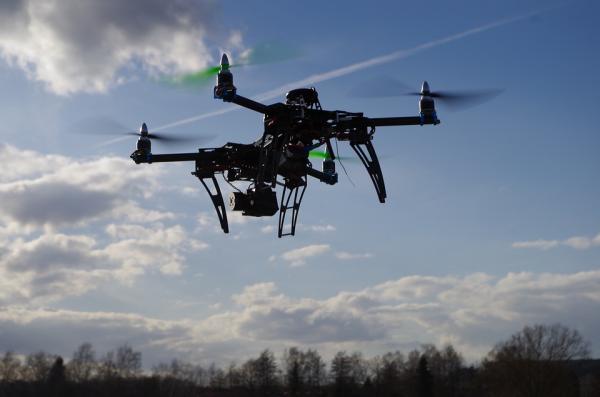
Drones are taking over the skies—even during Lady Gaga’s dazzling halftime show. When you think of a drone, you probably imagine a quadcopter with four rotors or even balloons keeping the drone aloft. There’s another, less obvious method of getting off the ground, however: spinning magnets. Continue reading → -
The Magnetic Molten River
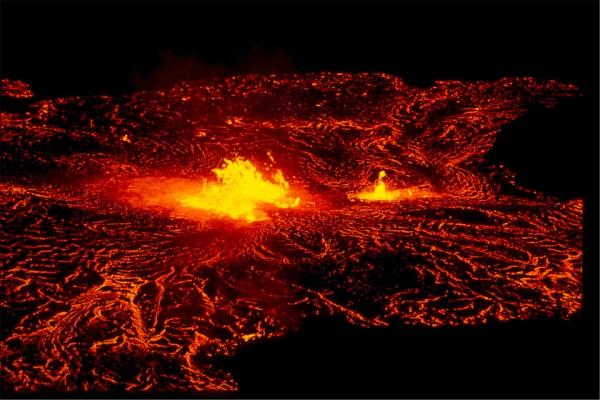
In December 2016, scientists discovered a river of molten iron, coursing at astounding speeds underneath Canada, Alaska and Russia. What is more surprising is how long the river went completely unnoticed. By studying Earth’s magnetic field, geologists were able to detect this phenomenon and assess what it means for the entire planet. Continue reading → -
Twinkle, Twinkle Little...Magnet?
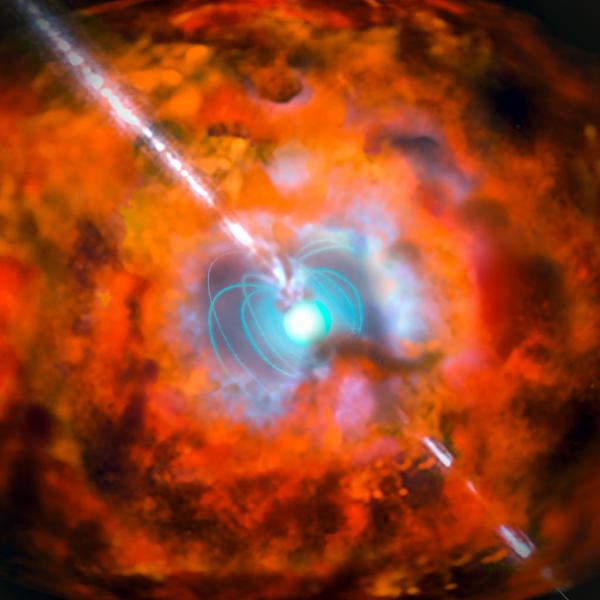
For decades, scientists have been studying two distinct types of stars: Pulsars and magnetars. As far as anyone knew, they were right — these two types of stars had very different behaviors, though there has been some evidence that perhaps they were linked. A new transition state may prove further connections between these two types of stars. Continue reading → -
The Alien Magnetic Avalanche
While astronomers and astrophysicists continue to explore the infinite expanses of outer space, making discovery after discovery, the truth is we have only uncovered the smallest fraction of our universe. There are still plenty of mysteries left out there, some that puzzle scientists to no end. Continue reading → -
The Great Magnetic Timeline
The end of the year is always a time for nostalgia—looking back on the past 365 days and taking stock of everything that’s happened. At Apex, we’re no different. Continue reading → -
Top 10 Magnet Posts of 2016
Magnet lovers sure are a curious bunch! How do we know? We took a look at our most popular blog posts in 2016 and discovered that many of them answer big important questions about magnets and magnetism. This top ten covers magnetic DIY projects, experiments, facts about magnets, and more! Continue reading → -
2016 Magnet News Round-Up
2016 has certainly been a newsworthy year, and magnetism didn’t miss out. It seemed like every time we turned around, magnets were popping up somewhere in the world (or galaxy). So as the year draws to an end, we thought we’d take a look back on some of the most exciting and interesting pieces of magnetic news. Continue reading → -
The Magnetic North Pole
As the holidays approach, the North Pole gets a lot more attention. This might have something to do with the bearded guy in the red suit allegedly living up there and making toys. Santa Claus aside, there are many fascinating facts about the North Pole you may not know. And guess what—many of them involve magnetism! Here’s a look at just a few of the ways magnets and magnetism feature in the great white north. Continue reading → -
The Phenomenon of Magnetic Reconnection
Our sun’s surface is a volatile place, to say the least. A mass of incandescent gas, a gigantic, nuclear furnace that churns out extremely hot plasma. All of this superheated matter gives off energy as well as creates powerful magnetic fields. Magnetic reconnection helps drive solar flares: stored magnetic energy is released when field lines in the solar plasma break and rejoin. Continue reading →