Magnet Science, Research & History
-
Can Magnetic Barriers Save Sharks and Swimmers?
 We’re excited about the recent research into the relationship between sharks and magnets, especially with Discovery Channel’s Shark Week coming up in August 2014 (when this post was first published)! If you aren’t yet familiar with Shark Week, it is a legendary week full of programming dedicated to the underwater predators and has been broadcast since 1987. Sharks are no doubt amazing creatures, which is partially why we found the concept of magnetic shark barriers an interesting one. Continue reading →
-
What the Weakening of Earth’s Magnetic Fields Actually Means
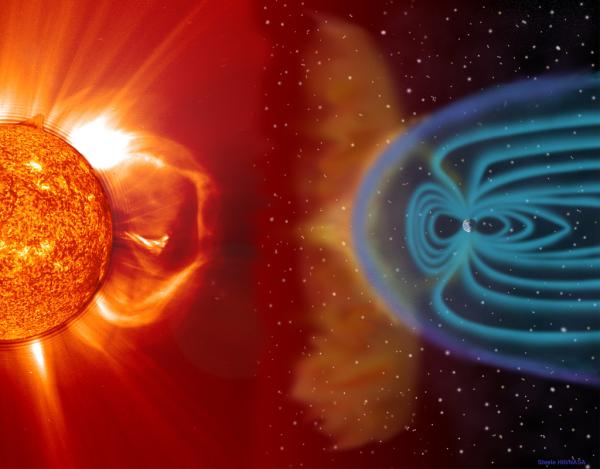 Scientists have known that the Earth’s magnetic poles are going to flip for a while. In fact, the poles have shifted many times before, but this time it is happening more rapidly. New data magnetic maps from Swarm, a trio of satellites controlled by the European Space Agency (ESA) reveals that, as of 2014, the field was weakening at about 5 percent per decade, which press reports described as 10 times faster than first thought (NASA notes the field has weakened about 9 percent over the past 200 years). The thought of the planet’s poles flipping sounds pretty scary, but what does it actually mean? Continue reading →
-
Mystery Tourist Attraction: Magnetic Hill Explained
 In New Brunswick, Canada there is a hill that seems to defy gravity-rivers run uphill and cars drift backwards as if pulled by a mysterious magnetic force. This mysterious place is appropriately named, Magnetic Hill. The folklore of the area states the spot became a tourist attraction as far back as the early 1930s. A group of newspaper reporters drove out to investigate several reports of cars rolling uphill and subsequently, published a story on the natural phenomenon. Continue reading →
-
May the Fourth be with You: The “Force” of Magnets
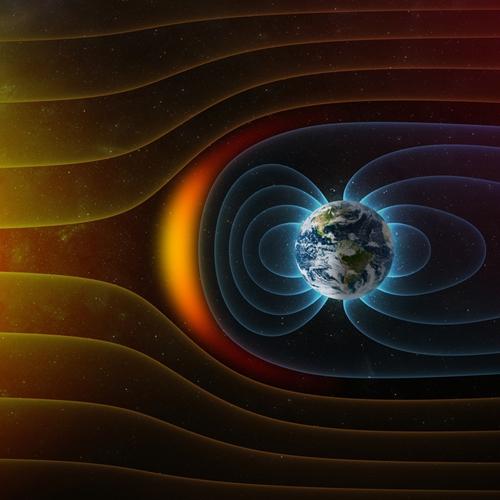
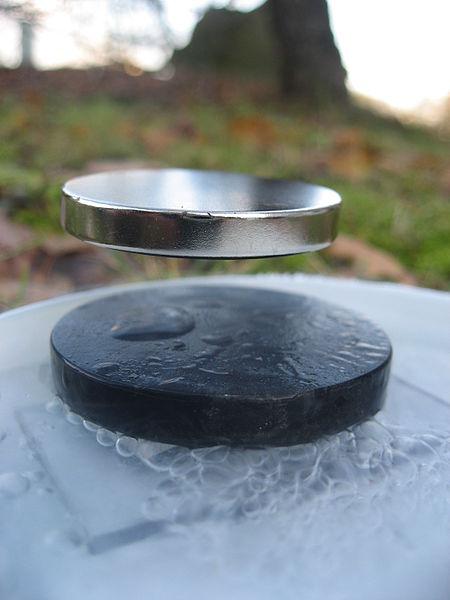 Every geek, science lover, movie enthusiast, and anyone not living under a rock knows that Star Wars Day is May the Fourth! Even if you don’t believe in Lucas’ mystical ‘force’, there is a very real invisible force that we encounter everyday-Earth’s magnetic force. Like the power of the Jedi and Sith, magnetic fields are invisible and magnets possess an invisible but nevertheless powerful force. Magnetism is so powerful that it protects us by deflecting charged particles from the solar wind and cosmic rays before they reach the Earth’s surface. It is also responsible for many cool scientific phenomenons. In honor of May the Fourth, we have compiled four of our favorite examples of the magnetic force in action. Continue reading →
-
How A Compass Works
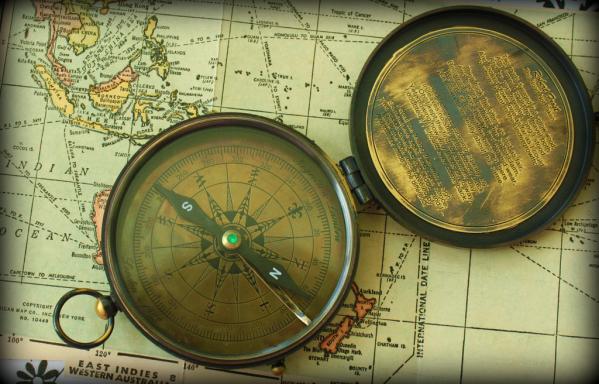 The compass is one of the oldest navigation tools. It is so old that it’s unclear who is responsible for inventing it, but many believe it originated in China, where lodestone direction-pointers may date back about 2,000 years and written descriptions of compass-like devices appear by the 11th century. Today’s advanced technologies like GPS may make compasses seem pointless or obsolete. However, compasses have a major advantage over most of today’s fancy technologies. Because they use natural properties of magnetism to navigate and don’t require electricity or batteries, you don’t have to worry about them losing power, although nearby steel, strong magnets and electrical currents can throw off a compass needle. A compass is one of the most essential survival tools. However, they do have a few limitations like magnetic declination, the difference between magnetic north and true north. Continue reading →
-
Magnetic Earth Day Facts
 The first Earth Day started on April 22, 1970, with over 20 million people across the United States rallying for increased environmental awareness and protection. Photos from the first Earth Day show some advocates wearing gas masks and others sitting outside city parks, buildings, and other facilities to spread their message. Today, Earth Day is an annual observance that has been celebrated for more than 50 years. Earth Day may happen once a year but there are many reasons why we should appreciate and protect the Earth all year round. Continue reading →
-
Scientist Wins Millenium Technology Prize for Data Storage Magnetic Innovation
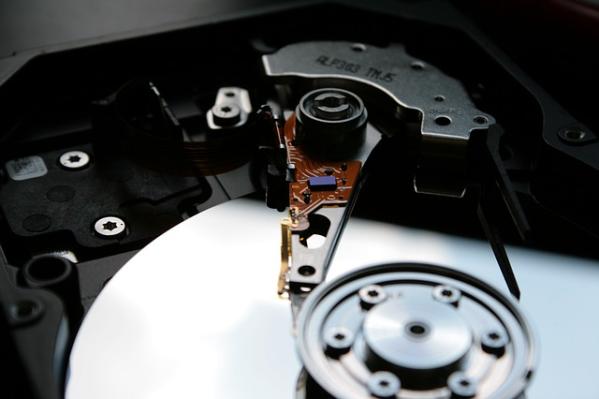
You may not be familiar with Professor Stuart Parkin, but you are probably very familiar with the technologies and online services that he made possible with his magnetic innovations. Professor Parkin is credited with expanding the data storage capabilities of magnetic disk drives and devices and setting the foundation for many technologies we use today. Spintronics, the physics field in which Prof. Parkin is a leading innovator, uses the magnetic spin of electrons, alongside their charge, to store and process data. Continue reading → -
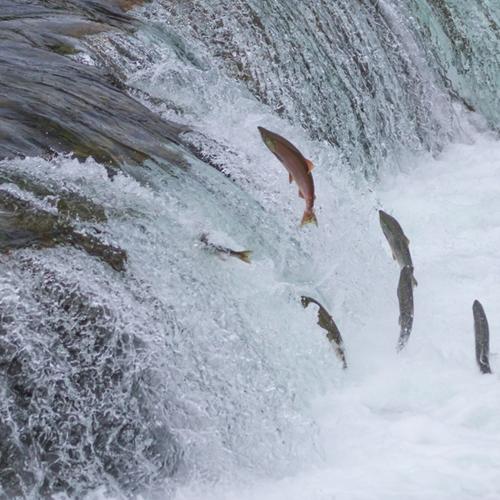
Salmon Migration May Depend On The Magnetic Field
It's no secret that strong magnets are capable of some pretty awe-inspiring things. -
Interesting Facts About Neodymium Magnets
You may be familiar with neodymium magnets - and you might even be making use of them in your everyday life. -
Experiments Prove The Possibility Of The Magnetic Monopole
You may already know that strong magnets have two poles, north and south. -
Researchers Point To The Possibility Of Our Planet's Magnetic Flip
Strong magnets feature the properties of the complex magnetic fields found in nature. -
Researchers Look for Ways to Deal With the Rarity of Magnets
You may not realize just how significant a role strong magnets play in modern living. -
Advances in Magnet Research Encourage Development of Nanotechnologies
As more consumer-facing technologies become smaller because of advances in nanotechnologies, researchers utilizing magnetic particles are discovering new ways to manipulate magnetic fields at a subatomic level. -
Magnetic Fields Assist Cancer Research
As medical advances come closer to discovering a cure for cancer, researchers in this field are discovering new ways to incorporate alternative methods in the development of treatments. -
Magnetic Fields Discovered in Graphene
Despite the strength and conductivity of graphene, its magnetic properties have long eluded researchers. -
Magnets Help Fuel the Birth of Stars
A high-velocity, magnetically charged streamer of hydrogen is careening toward the Milky Way Galaxy. However, rather than forecasting danger on Earth, astronomers are excited about the opportunity this celestial phenomenon provides to help astronomers better understand how stars are born. -
What is Gauss?
What is Gauss? Gauss is a unit of measurement that is used to describe the strength of a magnetic field. It is the CGS unit; the SI unit is the tesla (1 tesla = 10,000 gauss). Gauss is named after Carl Friedrich Gauss, a German physicist and mathematician who developed a way to measure the strength of a magnet in... -
Geomagnetic Solar Storm of '03 Was Neither a Trick nor a Treat
Carved pumpkins and spooky costumes are the visual aids that remind us Halloween is here, but few people probably remember the chilling electromagnetic disruptions caused by a green aurora that lit up the skies 10 years ago. -
How Ghost Hunters Use Electromagnetic Fields
It's that time of year where all things spooky are on the minds of many. -
ESA Mission To Collect Magnetic Field Data
Despite the length of time people have lived on Earth, there's still much to learn about the planet's magnetic field. -
Researchers Successfully Generate Magnetism Using Heat
Electricity is known to play a role in the creation of different forms of magnetism. -
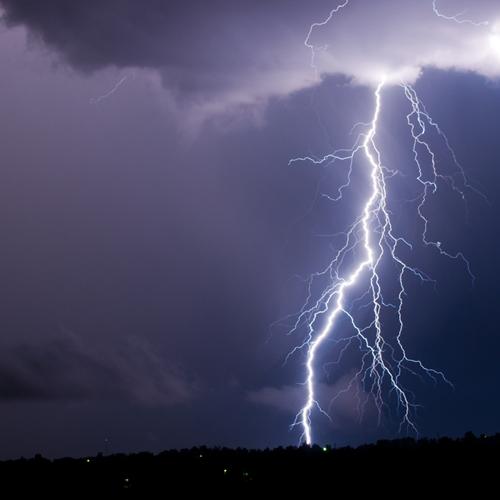
Magnetism Helps Prove Lightning's Role In Shaping Mountains
The Earth births mountains in several different ways, but they are typically formed when the planet's plates come together, according to the BBC. -
Scientists Get To The Bottom Of Shifts In The Earth's Magnetic Field
If the Earth didn't have a magnetic field around it, you probably wouldn't be reading this right now. -
Researchers Extract Stem Cells from Rat Brains Using Magnetism
Not only does extracting stem cells from a brain using a magnet sound painful, but impossible as well.