Apex Magnets Blog
-
Creative Uses for Hook Magnets This Summer
 Magnets can come in handy in many tough situations. One benefit of hook magnets is they can hold and secure heavy objects, and they can be easily removed without damaging the surface. When it comes to outdoor usage, hook magnets can be used in a number of different scenarios. Below we have gathered a few creative DIY uses for magnets! Continue reading →
-
Magnet Innovation: Magnetic Street Art
 When you think of magnets, art may not be the first thing that comes to mind. However, there is an urban art niche forming through the magnetic work of street artists like Hego. Magnetic street art is created using strong magnets attached to ferrous outdoor places usually within an urban area. Because the street art is hung with magnets, it doesn’t damage the outdoor fixtures it is attached to and it is mobile. The mobility of the art is part of the idea behind Hego’s Magnetic Street Art project. Others can take his work with them and then hang it up somewhere else, creating a perpetually traveling art piece. Continue reading →
-
Magnet Experiments: Make Magnetic Silly Putty
 You may remember playing with the stretchy and colorful goo-like globs called silly putty when you were a kid. Putty was actually invented by accident during World War II by James Wright, an engineer trying to come up with a cost-effective alternative to rubber for the U.S. military. He accidentally poured boric acid into silicone oil, creating the main ingredients of the elastic toy we know today. However, the putty we know today wasn’t marketed as a fun pastime until Peter Hodgson saw its potential as a toy and bought the production rights after it was rendered useless as the military’s rubber alternative. One substance that is even more fun to experiment with than putty is magnetic putty. Magnetic putty has the same squishy texture as silly putty but reacts with magnets in eye-catching ways. You can make your own magnetic putty with this simple and quick tutorial. Because this experiment uses iron oxide powder it is meant for adult use only and should not be done with small children. Continue reading →
-
Make Jewelry Easy to Wear with Magnetic Clasps
 A magnetic jewelry clasp is often easier to use than other jewelry closure methods. Because it opens and closes with magnets, the jewelry is secure but can also be easily removed by pulling apart the magnetic closures. This is extremely convenient for individuals with arthritis or limited dexterity. There are several different types of magnetic clasps that you can choose from to construct your pieces but it is important to know what type to use. Before starting you must decide what type of magnetic clasp is best for your piece of jewelry. Here are a few tips to help you determine what type of magnetic jewelry clasp is best: Continue reading →
-
Magnetic Mother’s Day Gifts
 Showing your mother that you love her doesn't have to come with an expensive price tag. Some of the most heartfelt gifts are the ones we make ourselves. This is why we think this year do it yourself gifts are a great way to show mom you appreciate all the hard work she’s done. If you still haven’t picked a gift for your mom, here are a few creative DIY gift ideas. Continue reading →
-
Magnetic Tape Could Make a Comeback
 Cassette tapes may have the stigma of small outdated music collections, but a magnetic innovation announced in 2014 hinted at a comeback for tape in data storage. Update: tape is still widely used for archiving, and current LTO-10 cartridges hold up to 40 TB native (100 TB compressed). The relationship between magnets and cassette tapes may not be immediately apparent, but it is actually magnetic tape that serves as the foundation for its data storage. Continue reading →
-
May the Fourth be with You: The “Force” of Magnets
Every geek, science lover, movie enthusiast, and anyone not living under a rock knows that Star Wars Day is May the Fourth! Even if you don’t believe in Lucas’ mystical ‘force’, there is a very real invisible force that we encounter everyday-Earth’s magnetic force. Like the power of the Jedi and Sith, magnetic fields are invisible and magnets possess an invisible but nevertheless powerful force. Magnetism is so powerful that it protects us by deflecting charged particles from the solar wind and cosmic rays before they reach the Earth’s surface. It is also responsible for many cool scientific phenomenons. In honor of May the Fourth, we have compiled four of our favorite examples of the magnetic force in action. Continue reading → -
The Technology Behind the Magnetic Levitation Train
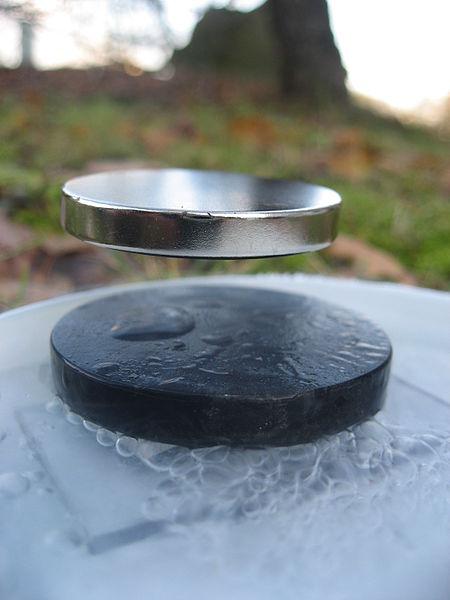
You may have heard of Japan’s Maglev Train-also known as the fastest floating train in the world, with a test-run record of 375 miles per hour (603 km/h) set in 2015 and a planned passenger speed of about 310 miles per hour. So far, maglev trains carry passengers in only a few countries, including China and Japan (where the high-speed Chuo Shinkansen line is still under construction and has not opened), but 2014 reports suggested that the impressive floating train technology could make its way to the U.S. Continue reading → -
Mini Magnetic Robots May Revolutionize Manufacturing
These microrobots could be mistaken for tiny insects because they are so small, but don’t let their size fool you. The research organization SRI International has been working on their magnetic mini-robot technology called Diamagnetic Micro Manipulation for DARPA’s Open Manufacturing Program. According to Wired, Darpa’s vision is to use the bots to "lower the cost and speed the delivery of high-quality manufactured goods". Continue reading → -
How A Compass Works
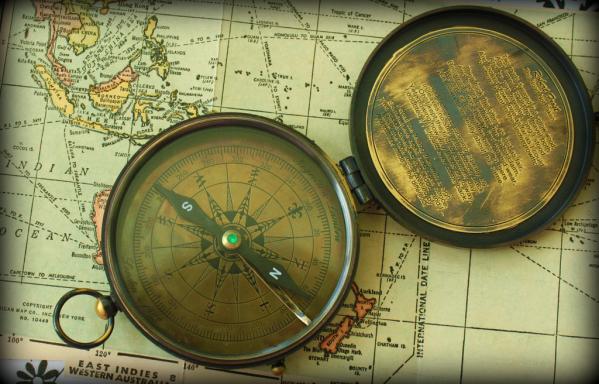
The compass is one of the oldest navigation tools. It is so old that it’s unclear who is responsible for inventing it, but many believe it originated in China, where lodestone direction-pointers may date back about 2,000 years and written descriptions of compass-like devices appear by the 11th century. Today’s advanced technologies like GPS may make compasses seem pointless or obsolete. However, compasses have a major advantage over most of today’s fancy technologies. Because they use natural properties of magnetism to navigate and don’t require electricity or batteries, you don’t have to worry about them losing power, although nearby steel, strong magnets and electrical currents can throw off a compass needle. A compass is one of the most essential survival tools. However, they do have a few limitations like magnetic declination, the difference between magnetic north and true north. Continue reading →