Magnet Science, Research & History
-
Magnets Could Unlock Plentiful Power
 What would happen if we could harness the reactionary power used by the sun and stars here on Earth? Well, we might know the answer soon as researchers at Tokamak Energy, a UK-based company, are working to turn that idea into a reality with their fusion technology. Continue reading →
-
Space Sustainability: Using Magnets to Clean Up Dead Satellites
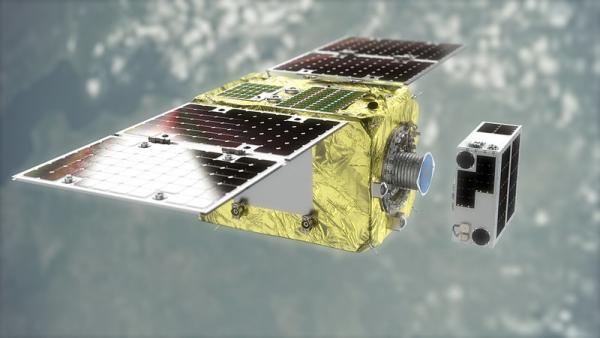 We’re all pretty familiar with the importance of sustainability. Picking up trash, recycling, reusing when possible, and decreasing our carbon footprint are all important ways to keep Earth’s environment balanced and healthy. What about beyond Earth’s surface though? Well, scientists have been developing a new form of environmentalism —space sustainability, and magnets are leading the new technology designed to clean up debris and dead satellites in space. Learn how magnets can keep our outer environment as sustainable as our interior one. Continue reading →
-
Magnets Can Improve the Efficiency of AI
 Did you know that magnets might help make artificial intelligence (AI) hardware more energy-efficient and better at mimicking human brain-like behavior? According to a 2019 study by Purdue University, nanomagnets can be used to emulate brain-like networks in computing hardware. As AI, as well as other machine learning systems, are becoming increasingly prevalent in many industries, the introduction of magnets into these machines could be revolutionary. Continue reading →
-
Manipulating Magnets at an Atomic Level
 We already know that magnets are found all around us from the obvious fridge magnets to being in many day-to-day appliances and in cloud storage data, such as Google or Amazon! Previously, a team of researchers created a way to examine electronic spins within magnets at almost the atomic level — you can read all about it here — showing promising potential in small-level magnetism. Recently, another team of researchers was able to not only measure but manipulate magnets at an atomic level. Continue reading →
-
Magnetic “Skin” Is Helping Robots to Feel
 After researching subtle changes in surrounding magnetic fields, a team of researchers from the City University of Hong Kong (CityU), the University of Hong Kong, the Southern University of Science and Technology in Shenzhen, and Carnegie Mellon University (CMU) of Pittsburgh has developed a new technology for robotic fingers. The fingertips have a soft tactile sensor with skin-comparable characteristics. This discovery is believed to be a stepping stone into making ultra-sensitive prosthetic hands, as well as other applications in the robotics field. One of the most interesting findings is that by having this sensor at robots’ fingertips, they will accomplish “human” tasks that are challenging, such as gripping fragile objects, threading a needle, and more. Continue reading →
-
Two More Things You May Not Know About Earth’s Magnetic Field
 In our last blog post, we talked about how the Earth’s magnetic field is dented — remember, we’re safe from any effects this dent has on the ground! — and how the magnetic field has reversed… hundreds of times! Again, the magnetic field reversing may seem alarming — many ‘doomsday’ theories come from the fear of pole reversal — but, rest assured, it doesn’t signify the end of the world. Now, we have two more magnetic phenomena to share — geodynamo paradox and geomagnetic jerks! Continue reading →
-
Magnetic Personalities: Andre-Marie Ampere
You may already be familiar with our latest magnetic personality feature as his last name, ampere — better known as just “amp”— is still used to describe the unit for measuring an electric current. Andre-Marie Ampere achieved great things during his lifetime in the field of magnetism, even founding and naming electrodynamics, a core part of what we know today as electromagnetism. The more we learn about the pioneers of magnetism and related sciences, the more we can appreciate and understand it in our everyday lives. Continue reading → -
Urban Mining-The Recycling of Rare Earth Elements
Did you know that very few rare earth elements (REE) are recycled? Despite REEs being integral to many modern-day technologies, only 1% are recycled from end products. This process of recovering rare earth elements is called urban mining. We’ll tell you all you need to know about urban mining, how REEs are recycled, and the potential for this market. Continue reading → -
The Production of Rare Earth Minerals Throughout the Years
Did you know that some rare earth minerals, such as neodymium, are actually not rare? Rare earth minerals are called “rare” because they are rarely found in concentrated, economically minable deposits and are difficult to separate from one another. They are more widespread in the Earth's crust than many people expect, and deposits exist all over the world. Because of their abundance, rare earth minerals have played, and will continue to play, an integral role in multiple industries, such as high-tech and renewable energy companies. From early use, till now, and to the future, the production of rare earth minerals are key in multiple transformative products. Continue reading → -
Upcoming Industries That Will Use Rare Earth Minerals
The rare earth minerals industry is growing tremendously as more and more upcoming industries are using rare earth minerals. According to Global Market Insights, rare earth minerals will be used in many upcoming industries due to the “growing product demand across Asia-Pacific, increasing adoption of magnets, and global shift towards clean energy.” Because of this, demand for rare earth minerals is expected to keep growing. Here are some examples of industries that will promote the growth of the rare earth minerals industry: Continue reading → -
Geomagnetic Jerks
At Apex, we cover all types of magnetic news and discoveries from the Moon’s magnetism to aquatic robots activated by magnets. But there’s one phenomenon we haven't been able to fully understand and talk about—until now — geomagnetic jerks. In a recent blog, we discussed how there’s a “dent” in Earth’s magnetic field, called the South Atlantic Anomaly, which is essentially a weak spot in the magnetic field. The radiation caused by this anomaly poses a threat to our satellites and their onboard computers while moving through this spot —but, it’s not the only strange occurrence resulting from the magnetic field. Enter the jerks— geomagnetic jerks, that is. These are abrupt changes in the rate of change of Earth's magnetic field, resulting in pulses that, like the anomaly, can compromise our satellites. Continue reading → -
Magnetic Personalities: Joseph Henry
Joseph Henry had a huge impact within the magnetic world during the 19th century. His accolades include his research that contributed to early electromagnetic motors and the construction of strong, practical electromagnets. But, let’s not get ahead of ourselves. In order to understand how he got there, we first need to learn about the man behind the magnets. Continue reading → -
Magnet Myths: Questions About Magnets With the Real Answers
People are constantly publishing and consuming information online, so it’s no wonder that you may hear differing opinions on the same topic. While we can’t dispel all misinformation, we’re doing another round of “magnet myths'' to set some things straight! You can read the first part in this blog post and then scroll below to see if you know if these magnetic statements are fact or myth. Continue reading → -
Two Things You May Not Know About Earth’s Magnetic Field
If you didn’t know already, the Earth is a giant magnet. Its magnetic field is generated by the movement of molten iron alloy in its outer core, which surrounds a solid inner core. This magnetic field acts like a protective shield around the planet, trapping and repelling charged particles from the Sun. There’s a lot to learn about Earth’s magnetic field, with new discoveries being made almost yearly! In this blog post we’re covering two things — the “dent” in the magnetic field, and how the field flips. Continue reading → -
Inside A Bird’s Mysterious Magnetic Sense
You might think that being able to see the world through an aerial view would be the only navigation tool birds need. However, a bird’s internal navigational system has something more complicated and fascinating going on. For years, scientists have theorized that migratory birds experience an innate phenomenon that allows them to ‘see’ the Earth’s magnetic field. In January 2021, scientists at the University of Tokyo reported what they described as the first direct observation of a magnetic field affecting the autofluorescence of flavins in living cells, strong support for this hypothesis. Continue reading → -
The Long Relationship Between the Moon and Magnetism
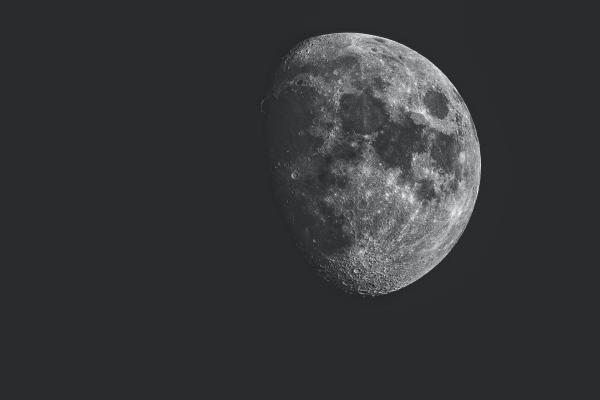
While the moon doesn’t have its own magnetic field—anymore—the moon and magnetism do go hand in hand. From meteors, plasmas, and the moon being part of Earth once, there have been a lot of discoveries in terms of the moon and magnetism! Here, we’re rounding up the articles we’ve written on the topic. Continue reading → -
Aquatic Robot Activated by Magnets
In an article published in the journal Science Robotics, the world was introduced to a new type of robot, one that can move underwater. Researchers at Northwestern University demonstrated how they used magnetic and light fields to make a robot not only walk underwater, but break dance as well. Continue reading → -
What’s Going on In Space: Magnetism Edition
What do a cat’s paw, a whirlpool, and a cigar have to do with each other? We’re glad you asked. Just as cloud-watching will show you figures and outlines of people, animals, and objects, outer space is no exception. In fact, a cat’s paw, a whirlpool, and a cigar are just the latest shapes of nebulas and galaxies that are currently being studied by astronomers for their magnetic fields. Read on to hear more about the latest interesting shapes that are forming in space. Continue reading → -
Scientists Could Now Control Magnetism Thanks to Metamaterials
Scientists have long been trying to control magnetism — something that would do wonders for advancements in technology. The issue can best be explained by Earnshaw’s Theorem, which states that it's not possible to create a spot of maximum magnetic field strength in an empty space and that, in general, a magnet's field weakens with distance from the magnet. Continue reading → -
Magnetic Personality: Wilhelm Weber
Do you know how to measure magnetic flux? The unit of measurement to describe magnetic flux is a “weber.” You may not have known, but this unit is a tribute to Wilhelm Weber, a truly magnetic personality from the early 1800s who had a hand in some of the most significant breakthroughs within magnetism and electricity. Continue reading → -
Magnetic Personalities: Heinrich Hertz
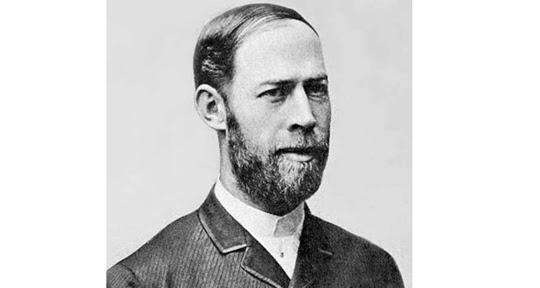
Anyone who’s taken a science class has heard of “Hertz.” To refresh your memory, Hertz is the unit of frequency, with a cycle per second equally 1 hertz. The man behind the name is Heinrich Rudolf Hertz — a German physicist who discovered radio waves that had a tremendous impact on the world in the 20th century. Continue reading → -
2020 Magnet News Round-Up
From using magnets to help social distancing to breakthroughs in magnetic field research— 2020 was an eventful year in the world of magnetic discoveries. In order to celebrate the end of the year, let’s take a look back at some of our favorite magnetic news stories! Continue reading → -
Jellyfish Galaxies and Their Magnetic Fields
While we know that the magnetic fields in galaxies can contribute to star formation, one type of galaxy has left scientists questioning this fact. So called “jellyfish galaxies' ' fall into the center of a galaxy cluster, which get their name from their jellyfish-like tails. It’s been theorized that the rarified gas of jellyfish tails can also form stars, but research hasn’t been able to confirm this as these galaxies are difficult to study due to their low brightness. That is until now. Continue reading → -
Megatesla Magnetic Field
Most magnetic fields on Earth, even man-made ones, are actually not that strong. For years, experts have been researching strong magnetic fields created in laboratories. However, the magnetic strength of this research has been weak (relatively speaking). For instance — the geomagnetic field that affects compass needles is between 0.3 and 0.5 gauss while MRI technology used in hospitals generally produces fields of around 1.5 to 3 tesla, or 15,000 to 30,000 gauss. The strongest controlled indoor laboratory field on record is 1,200 tesla, set in 2018 at the University of Tokyo, or just over 1 kilotesla. That is, until now-- Continue reading →