Magnet Science, Research & History
-
New Study Suggests The End of the Lunar Dynamo Happened 1B Years Ago
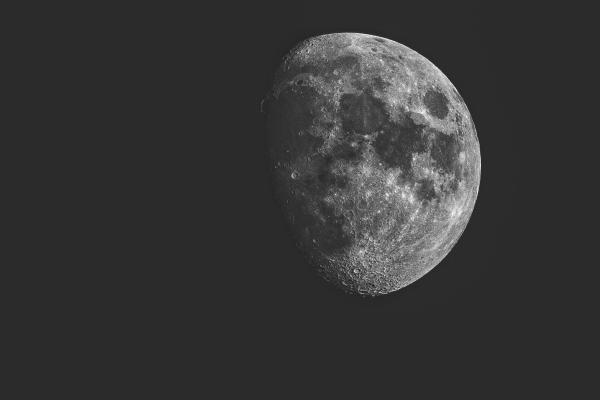 The moon is known to have likely lost its magnetic field after an internal dynamo stopped firing, the question has remained, however, of when. A team led by Saied Mighani from MIT’s Department of Earth, Atmospheric, and Planetary Sciences, and Huapei Wang from the China University of Geosciences, have been studying the moon’s magnetic field for several years, and think they found an answer. Continue reading →
-
Magnetic Field May Improve Frozen Avocado Puree Properties
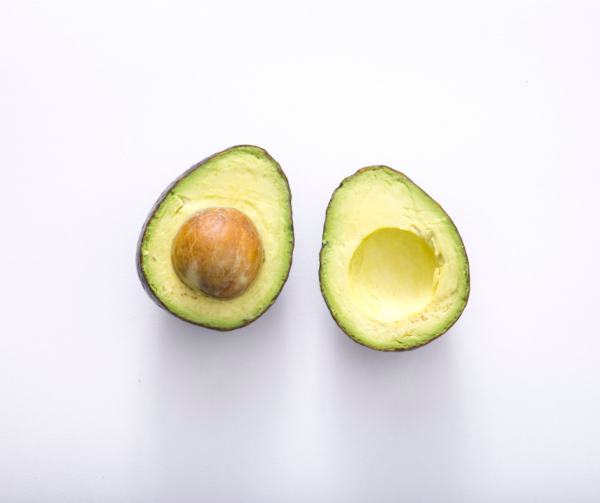 Does anyone really know the lifespan of an avocado? It feels like one minute it’s hard as a rock and then the next it’s mushy and too ripe. If you’re a fan of avocados and haven’t nailed down the ripeness timing, freezing them can be a great way to extend the shelf-life of food, but, the quality post-thawing is sometimes inferior. Scientists Yamei Jin and Zhengjun Xie from Jiangnan University in China may have found an answer: adding a magnetic field in the freezing process. Continue reading →
-
Dr. Sheldon Breiner & His Magnetic Exploration Techniques
 In October 2019, world-renowned geophysicist Dr. Sheldon Breiner passed away at the age of 82. Breiner was a magnetic pioneer. In the 1960s, he used magnetometers to help the government locate sunken submarines and other underwater objects by detecting the way they disturbed the magnetic field around them. His company, Geometrics, developed magnetometers that measured magnetic fields, and his expertise helped archaeological research expeditions around the world. Continue reading →
-
Drew Barrymore Credits Electromagnetic Therapy for Post-pregnancy Weight Loss
 You’re probably quite familiar with Golden Globe-winning actress Drew Barrymore from her lead roles in movies like Charlie’s Angels, 50 First Dates, Never Been Kissed and – as a six-year old – E.T. the Extra Terrestrial. Barrymore, critically acclaimed as one of the most talented actresses of her generation, has charmed the hearts of audiences throughout her entire career. Barrymore’s meteoric rise from a childhood star to one of Hollywood’s best has now brought the 44 year-old into motherhood. Continue reading →
-
How Magnetism Has Been Misinterpreted in Pop Culture
 While we at Apex Magnets love to learn about how magnetism and rare earth magnets are being used for various real-world applications, we’re also intrigued when magnetism has been worked into popular culture. From movies and shows like Stranger Things to supervillains’ and superheroes’ powers, it’s exciting when magnetism is the thread that connects these memorable storylines and characters. Though...
-
Recovering Rare Earth Elements from Consumer Waste with Microbes
 As we’ve discussed in previous blog posts, recycling and repurposing rare earth magnets is important. Rare earth elements used for certain types of energy, advanced vehicles, and electronics while existing in high concentrations around the world, they are not found in deposits that are easily exploitable due to their geochemical properties and the current geopolitical state. Because of this, researchers have studied various ways to recycle permanent magnet materials over the years. Most recently, a team from the Critical Materials Institute working with Lawrence Livermore National Laboratory, which reported a lab-scale method to help increase the nation’s supply of rare earth materials: microbe beads. Continue reading →
-
A Brief History of Magnets: Degaussing Ships During World War II
If you’ve been following along with our blog for a while, you probably know that we enjoy reporting on magnet hacks, magnet experiments, magnets in the news, and even magnetic DIY projects. However, we’re also a team interested in the history of magnetism and the uses of magnets throughout the years! In this blog, let’s travel back in time to World War II. Continue reading → -
Why Magnetism in Certain Materials is Different in Atomically Thin Layers and Their Bulk Forms
A group of researchers led by MIT Department of Physics Professor Pablo Jarillo-Herrero have built on prior research to present us with new findings. Previous research led by researchers at MIT showed that rotating layers of hexagonally-structured graphene at a particular “magic angle” could change the material’s electronic properties from an insulating state to a superconducting state. This time, Jarillo-Herro’s group went deep into 2-D magnets to find if magnetism in certain materials is different in atomically thin layers than in their bulk forms. Continue reading → -
Four Uses of Magnets and Magnetism in Movies
Whether you’re a dedicated film buff or a casual movie-watcher, you’ve likely experienced the tropes of magnetism in film. In fact, magnetism has been a recurring concept shown in pop culture, from superheroes and supervillains to Netflix originals. While some uses are a stretch or don’t quite add up in real life, it’s still fun to see the different ways that filmmakers have incorporated the thing we’re most passionate about! Here, you’ll find our roundup of four ways magnets and magnetism were used in movies. Continue reading → -
Here’s What Happens When You Heat Paramagnets
Magnetic materials may play a role in collecting energy from heat. Heat applied across a magnetic material can drive a flow of magnetic spin, which can generate an electrical voltage. Once paramagnets are heated up, though, nothing happens. That is until an international team of researchers and scientists found a way to capture heat and transform it into electricity using paramagnets, something that wasn’t thought to be possible. Continue reading → -
Magnetars are the Strongest Magnet in the Universe. Here’s Why.
In 1947, the idea that some massive stars could have large-scale magnetic fields near their surface was established, but the origin of these fields has since remained a mystery. Today, it’s known that the strongest magnetic fields ever detected in the Universe come from magnetars, but we still aren’t sure where these magnetars come from or how they get their strong magnetic fields. Though, astrophysicists Sebastian Ohlmann from the Max Planck Society in Germany and Friedrich Röpke from the Heidelberg Institute for Theoretical Studies in Germany may have found out how magnetars form. Continue reading → -
Sea Turtles Find Their Birthplace with Magnetic Fields
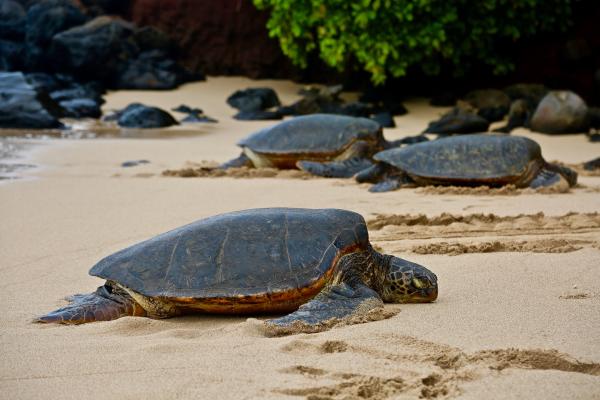
Previous studies have shown that sea turtles use Earth’s magnetic field to help guide them at sea, similar to how sailors use latitude and longitude. Loggerhead turtles, in particular, have been known to swim thousands of miles to lay their eggs on Florida’s Gulf, as well as Atlantic coasts. What’s interesting is that a 2018 study has found that these nesting places are actually within about 40-50 miles of where the turtles were born decades earlier. Continue reading → -
St. Jude Receives World's Largest Superconducting Magnet for Research
On September 5th, St. Jude Children’s Research Hospital, located in Memphis, TN, received the most powerful nuclear magnetic resonance (NMR) magnet in the world. You may be asking, ”what would a hospital need a 10-ton magnet that’s hundreds of thousands of times stronger than the earth’s magnetic field for?” Below, you’ll find your answer. Continue reading → -
Laser Light Turns Metals into Magnets
Normally, it’s possible for light to transform the properties of a material; however, these properties must exist to be manipulated. Physicists now believe they have found a way to use lasers to transform the properties of a material, creating new properties. Specifically, their theoretical work suggests a way to make non-magnetic materials magnetic. Continue reading → -
Explaining Magnet Usage in the Netflix Original Stranger Things
Spoilers ahead if you haven’t finished watching Season 3 of Stranger Things! When a television show makes science references, they can either go over our heads or have us thinking “is that really true?” We wrote a previous article about magnetic properties being discussed in the show: when the characters noticed things were going wrong, something “strange” was happening with their compass -- the needle was no longer pointing to magnetic North (which is where it should point). In this particular episode, they did an experiment and found that all of the compasses were deviating from pointing north, showing a very strong magnetic interference going on. We decided, for the most part, this event could be “real.” Continue reading → -
Scientists Just Accidentally Created a Permanent Magnetic Liquid
Scientists at Berkeley Lab have created liquid droplets that stay magnetized after the magnetizing field is removed, which researcher Thomas Russell describes as the first observation of ferromagnetism in a liquid. While ferrofluids —liquids containing magnetic nanoparticles—exist already, this discovery is different. A ferrofluid becomes magnetized when it’s close to magnetic objects, but it only remains magnetized when in the... -
Building a New Superconducting Magnet
After the discovery of electromagnets in the 1800s, the world’s understanding and use of magnets started to evolve. However, the next big game changer didn’t occur until 1911 when Kamerlingh Onnes discovered superconductivity. This refers to the zero electrical resistance and expulsion of magnetic fields in some materials (superconductors) at very low absolute temperatures. Superconductors conduct electricity with “perfect” efficiency... -
What is the Hall Effect and How Does it Relate to Magnets?
American physicist Edwin H. Hall discovered the Hall Effect in 1879 – almost 20 years before we discovered the electron. He was clearly a man before his time because it took several decades for people to catch up to his discovery and fully grasp or understand its importance. Now the concept is used to operate computers, cell phones, cars, and... -
Magnetic Podcast Episodes
Are you an avid podcast listener? We’ve rounded up some of the most interesting episodes on magnetism. These episodes from a variety of podcasts dive deep into magnetism, from explaining how magnetic fields work to why magnets even exist. Throw one of these on during your commute and let us know what you think! The Science of Everything Podcast This... -
The University of Iowa Wins a Record Grant to Study Magnetic Fields
There have been exciting things happening in magnetism. NASA recently awarded the University of Iowa (UI) a significant grant—$115 million—to study the interactions between the Earth and Sun’s magnetic fields. The TRACERS (Tandem Reconnection and Cusp Electrodynamics Reconnaissance Satellites) project, the largest research project in the university’s history, will be part of NASA’s Explorers Program. Why Study the Magnetic Fields... -
Magnets May Be The Key To Increased Hydrogen Production in Water Splitting
With rising pollution from burning fossil fuels and the need for energy steadily increasing, scientists and researchers are always looking for greener energy alternatives. A known “cleaner” alternative is hydrogen, though it still has its problems, from low-cost efficiency to releasing carbon dioxide. A study led by José Ramón Galán-Mascarós at the Institute of Chemical Research of Catalonia (ICIQ) may... -
Tate Features Pioneering Greek Sculptor’s Magnetic Work
Greek sculptor Takis -- born Panagiotis Vassilakis -- was a nonagenarian (a person who is between 90 to 99 years old!) when an exhibition of his work opened at Tate Modern in London on July 3, 2019. He died on August 9, 2019, aged 93. Why are we sharing this? His work is about magnetism! About Takis Works Takis was... -
This Superconducting Magnet Just Broke The Strongest Magnetic Field Record
A new superconducting magnet, created by National High Magnetic Field Laboratory (MagLab) at Florida State University, has briefly sustained a record-breaking 45.5-tesla magnetic field intensity. MagLab also produced the world’s previous strongest continuous field intensity, which held the top spot at 45-tesla since 1999. To put this into perspective, the magnetic field intensity of a standard fridge magnet is about... -
The Mystery of Magnetic Mesoamerican Sculptures
We’re fascinated by the creative endeavors of those before us, especially when their art involves magnetism. New research, published in the Journal of Archaeological Science, suggests that ancient sculptors intentionally chose magnetized rocks when creating their masterpieces. Over 2,000 years ago, sculptors in modern-day Guatemala carved “potbelly sculptures” out of boulders. These sculptures depicted figures of obese humans that can stand more than six and a half feet tall and weigh 22 thousand pounds or more. There’s more to these sculptures than what meets the eye, though. Continue reading →