Magnet Science, Research & History
-
What Is Magnetic Field Architecture?
 In the future, not only could you be zooming around on a hoverboard, but your house may also float and your robot assistant at work could levitate to avoid obstacles and maintain a sterile space. This may seem too far-fetched to be happening anytime soon, but a company called Arx Pax is working to change that with magnetic field architecture (MFA). Continue reading →
-
What Is A Magnetic ‘Tractor Beam’?
 In the news recently, you may have seen a few companies debut their versions of magnetic hoverboards such as Lexus and Arx Pax. While the hoverboards aren’t quite ready for public consumption, they did pique the interests of NASA scientists. NASA partnered with Arx Pax to use their Hendo Hoverboard engine technology to develop a magnetic ‘tractor beam’. So, what is a ‘tractor beam’ and what does it have to do with the Hendo Hoverboard? Continue reading →
-
Magnetic Fields and Your Brain
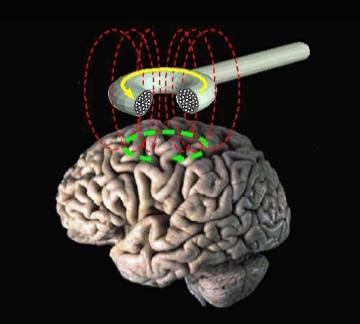 Mind reading may not be possible (yet) but researchers found a way to manipulate your brain using magnetism. Electromagnetic fields are produced by electrically charged particles and are, like gravity, one of the fundamental forces of nature. Because of their electrical charge, electromagnetic fields can affect other charged objects nearby, such as neurons in your brain. Continue reading →
-
Magnetism and Superheroes
 Superheroes frequently defy science with their abilities and daring feats. And some of the concepts behind their super powers, however unlikely, involve magnetism. Some superheroes use magnetism more than others - I’m sure you’ve heard of Magneto. So, here are a few other plotlines with lesser known magnetic properties. Continue reading →
-
Magnetic Liquid Body Armor
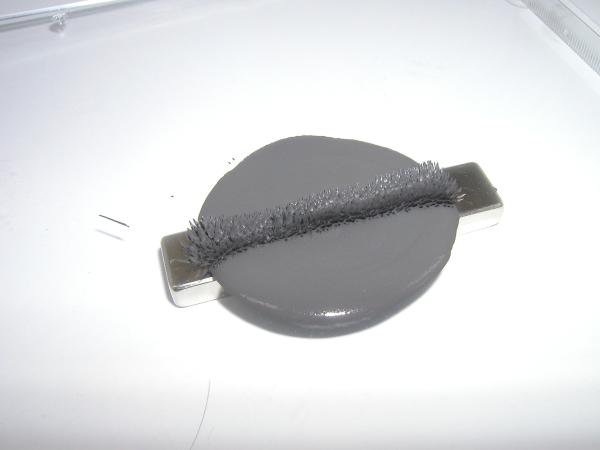 The popular Iron Man movie franchise and comic features a suit of body armor that could make any engineer green with envy. The Iron Man suit, a work of science fiction, seems to be a feat of futuristic engineering not yet possible today. Or is it? Researchers have explored body armor made of iron particles and a carrier liquid, and the U.S. military's TALOS "Iron Man suit" effort looked into liquid armor before it was shut down in 2019 without a fielded suit. This liquid body armor is a concept built around magnetorheological (MR) fluids, but it has not been developed into armor that is actually in use. Continue reading →
-
Where Does The Phrase 'Animal Magnetism' Originate?
 Some would say cute puppies and kittens have animal magnetism. Others might say their significant others or favorite celebrities have animal magnetism. No matter who you think has qualities of magnetism, the origins of the phrase and recent research into the theory might surprise you. Continue reading →
-
Dead Stars and Magnetic Fields
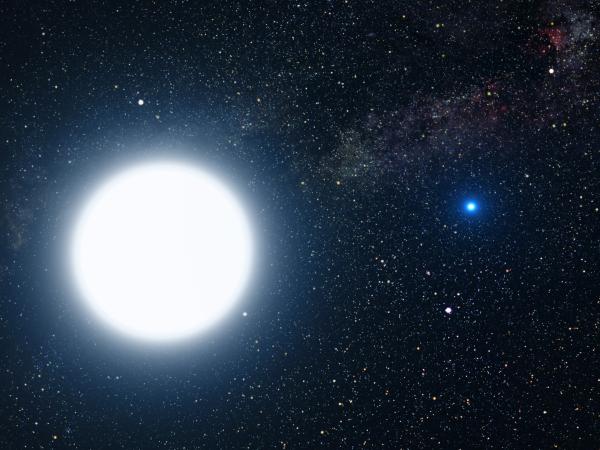
When you look up at a night sky, how many of the stars you see are dead? The answer might surprise you but don’t let the thought depress you - dead stars are fascinating! A star’s death may progress in one of several ways such as becoming a neutron star or even a magnetar, one of the most powerful magnets in the universe. A more common death for a star, however, results in a white dwarf. White dwarf is believed to be the last stage in a star’s life-cycle and even in this final stage, white dwarf stars can have curiously strong magnetic fields. Continue reading → -
The Magnetic Sensor of a Tiny Worm
Many animals navigate using the Earth’s magnetic field as though they have their own personal compasses. Birds, for example, can use the Earth’s magnetic field to navigate during migration. Even monarch butterflies are able to use magnetic field lines although it’s more of a secondary navigation method for them. While scientists have already observed the symptoms of an internal compass in some animals, they have never pinpointed the exact part providing these navigation abilities until now. Continue reading → -
Galactic Magnetic Fields
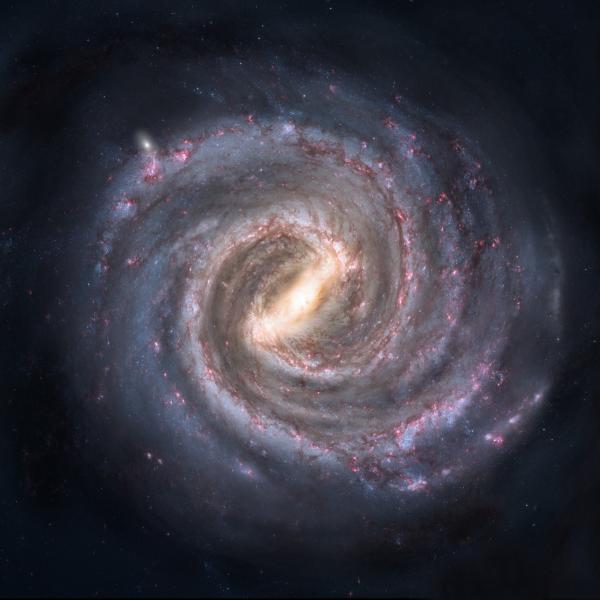
Galaxies have naturally occurring magnetic fields like Earth. But the magnetic field of a galaxy is usually weak in comparison. For example, the Milky Way galaxy has a magnetic field that is 100,000 times weaker than Earth’s magnetic field. A galaxy can have two different types of magnetic field structures. One type is a large-scale imitation of the overall structure of the galaxy. And the other is small-scale and random. These patterns prevent a compass from working as effectively in space as it does on Earth. If you’re lost in the interstellar space of a galaxy, you would need several measurements of magnetism to help determine your location. Even then, however, you’d need to understand the overall structure of the galaxy to interpret your data. Continue reading → -
Space Plasma and Magnetic Reconnection
Plasma is the fourth state of matter after solid, liquid, and gas. Essentially, plasma is a gas that’s so hot the atoms are separated into electrons and ions. Because the parts of the atoms can move independently of each other, plasma is electrically conductive and responds to electromagnetic fields and forces. As a result of its magnetization, plasma interacts with the magnetic fields of space in interesting ways. For example, the process of magnetic reconnection explains changes in how the magnetic field lines of plasma are connected and arranged. Continue reading → -
The Magnetic Field of the Sun
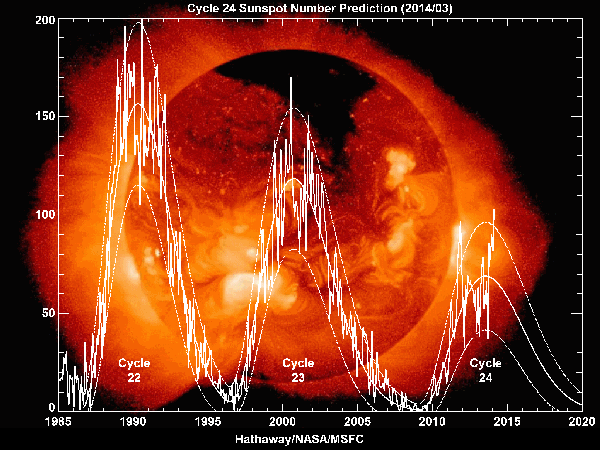
The magnetic field of the sun plays a huge role in our galaxy. The sun’s surface is more than 12,000 times larger than Earth’s, and its magnetic field extends even beyond Pluto. It has two poles like a bar magnet, and like most stars, the convection of plasma generates its magnetic field. Compared to the magnetic fields of the other planets in our solar system, however, the sun’s magnetic activity is more extensive including solar flares, sunspots, space weather, and pole reversal. Continue reading → -
Are Lightning Strikes Magnetic?
Lightning isn’t drawn to metal by magnetism. Tall, pointed objects are the most likely to be struck, and metal simply carries the current well. Lightning is magnetic in its own right, though: electrical currents cause magnetic fields to form around them. Lightning strikes are rapidly moving electric currents and the movement of electric charges produces a magnetic field. This is called electromagnetism. The electromagnetic properties of lightning are apparent in several ways. The two most apparent magnetic properties of lightning, however, are remanent magnetization and electromagnetic pulses. Continue reading → -
What Is Paleomagnetism?
Scientists can study the history of Earth’s magnetic field by using Earth’s rocks as records. Paleomagnetism is the study of magnetic rocks and sediments to record the history of the magnetic field. Some rocks and materials contain minerals that respond to the magnetic field. So, when rocks form, the minerals align with the magnetic field preserving its position. The magnetization a rock acquires as it forms is called remanent magnetism, and rock magnetism is the field that studies it. The magnetic signature of the rocks allows paleomagnetists to date the rocks and map the position of the field at the time of their formation. Continue reading → -
What Is A Geomagnetic Storm?
In June 2015, a geomagnetic storm caused some unusual aurora sightings on Earth. The storm is a result of solar eruptions strong enough to disturb Earth’s magnetosphere. The magnetosphere usually protects us from solarwinds so what made this disturbance different? Continue reading → -
Can Magnets Protect Against Cosmic Radiation?
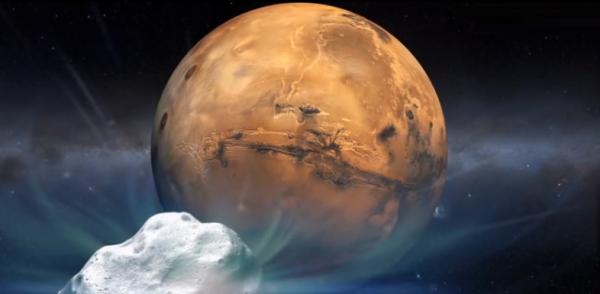
Many people claim the first person to walk on the surface of Mars has already been born. But there are still several things to consider before we send an astronaut to Mars. The reality of prolonged space travel includes various dangers and challenges we have to overcome, not the least of which is cosmic radiation. Continue reading → -
The Future of Magnets in Space
Magnets already play a major role in space exploration, as discussed in an earlier blog post. But further developments in magnet technology have the potential to make space travel and study even easier. Already a promising material in the field of energy conservation, magnets may also improve spacecraft launch, help spaceships fly in formation, and get humans to Mars faster than we thought possible. Continue reading → -
3 Ways We Use Magnets For Space Exploration
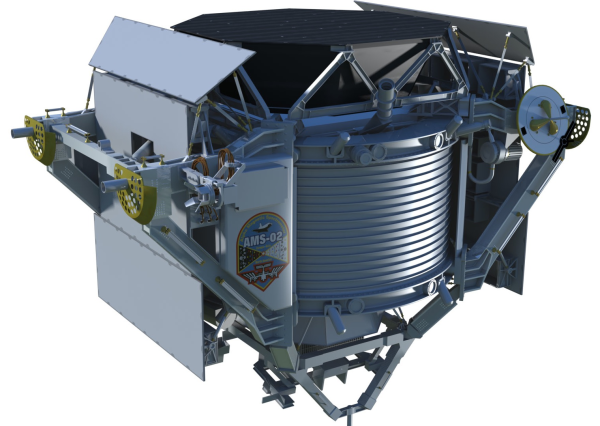
We use magnets in a variety of ways when it comes to studying and traveling in space.. From satellites to landing on the moon, magnets play a key role in the equipment used for space exploration. Here are three different examples of how we use magnets to learn more about outer space. Continue reading → -
Common Ways Magnets Have Been Used Throughout History
Magnets are ancient. They’re so old the actual discovery of magnetism is somewhat of a legend. It is said that a shepherd named Magnes was out herding his sheep when his metal staff and the nails in his shoes stuck to a black rock. That black rock was magnetite, and the naturally magnetized form of magnetite is called lodestone. Since then, our use of magnets has evolved in hundreds of different ways. In this blog, we are going over some of the most common ways magnets have been used throughout time. Continue reading → -
New Type of Magnet Has Potential to Transform Electronics
Researchers at the University of Maryland and Temple discovered a new class of swelling magnets, which are magnets that expand when they contact a magnetic field. When these cool magnets encounter a magnetic field, they not only expand. They release very little heat. Continue reading → -
The Magnetic Fields of Our Solar System
Magnetic fields protect planets and atmospheres from solar particles. The particles from the sun are charged, which means they respond to the magnetic field and move around it. Magnetic fields are generated by the movement of electrically conducting fluid inside the planet, usually in or around the core. Earth’s magnetic field is generated by liquid metal at the core and Earth’s rotation of 24 hours, combined with heat-driven convection of the liquid, produces the movement that sustains a magnetic field. The other planets in our solar system, except for Venus and Mars, all have magnetic fields or traces of magnetism that differ from Earth’s in various ways. So, how are other planetary magnetic fields generated? Continue reading → -
Electromagnetic Induction and Tesla Coils: How It Works
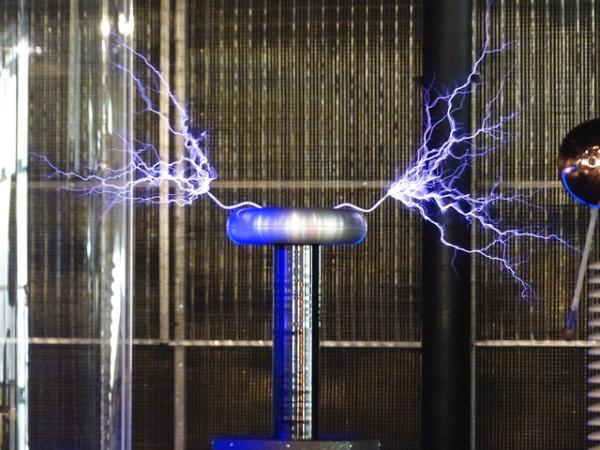
Nikola Tesla is known as one of the greatest minds in science. His experiments helped to further the fields of electricity and magnetism, making many of the gadgets and luxuries we enjoy today possible. One of Tesla’s most well-known inventions is the Tesla coil, a resonant air-core transformer that Tesla used to produce very high voltages and to experiment with wireless transmission of power and signals. The coil was created in 1891. Continue reading → -
How Magnetic Levitation Could Help Astronauts Reach Mars
Levitating frogs and flies might seem like something out of a Harry Potter movie, but researchers believe that they can use magnetic levitation on flies to study the long term effects of weightlessness on humans. Continue reading → -
Could A New Discovery Change How Rare Earth Magnets Are Made?
Cerium seemed the least likely element to solve the problem of creating cheap rare earth magnets, because it tarnishes easily, reacts with water, and burns when heated. Scientists at the U.S. Department of Energy’s Ames Laboratory, however, found a way to use cerium instead of dysprosium in high-performance magnets. They added small amounts of cerium and cobalt together to create an alloy with performance comparable to the dysprosium-containing alloy commonly used for high-performance permanent magnets, and with higher resistance to demagnetization at high temperatures. Continue reading → -
Could A Helium Shortage Affect Magnets?
Did you know that many experts say that there is a shortage of helium? The U.S. has been the biggest supplier of helium for some time and the National Helium Reserve, a federal stockpile near Amarillo, Texas, once supplied a large share of U.S. helium. The Bureau of Land Management sold it to the private company Messer in June 2024. As the abundance of helium depletes though, some scientists are worried about how the growing demand and limited supply will affect us. According to a 2015 Laboratory Equipment article, demand for helium was expected to increase 2 to 3 percent as industries like electronics and healthcare increase their usage of it. Continue reading →