Home, Shop & Industry Uses
-
How Magnets Are Helping People with Disabilities
 According to the CDC, in the United States, more than 1 in 4 adults (28.7 percent) live with a disability and 3.6 percent of U.S. adults have a self-care disability with difficulty dressing or bathing. Many companies are selling adaptive clothing that help people with disabilities get dressed more easily. In adaptive clothing, magnets replace buttons, zippers, and laces. From adaptive clothing, shoes, and accessories, magnets have transformed the way people with disabilities dress and express themselves— without limitation. To see how adaptive clothing has empowered people with disabilities, click here. Continue reading →
-
Spring Cleaning Magnetic Hacks for the Bedroom, Bathroom, and Kitchen
 This past year we’ve spent a lot of time in our houses — we could all use a spring refresh! There are so many cleaning guides and hacks out there, so we wanted to give our Apex spin on this topic... with magnet hacks and DIYs to not only make this spring cleaning easier, but to make future cleanings in your kitchen, bathroom, bedroom, and living room easier as well! Continue reading →
-
Apex's Most Common Magnet Categories and Their Top Uses
 The shape of magnets are often overlooked in purchasing, with people focusing on sizes and price points, but the shape of a magnet can tell you a lot more than size! While both of these are important in your purchase decision, we believe the first step in choosing the right magnet for your project is to figure out the use and shape that you need. We’ve written about each shape and their common uses before so here’s a guide for quick viewing with tips for use! Continue reading →
-
Magnets in the Airline Industry
 From preventing punctured tires to sorting cutlery, industrial magnets play an important role in the airline industry. Magnets are used in ways that you wouldn’t expect! Without magnets, there could be more problems and overspent budgets. Let’s look closely at the specifics! Continue reading →
-
The Coolest Things People Have Found While Magnet Fishing
 Similar to metal detecting, magnet fishing is a way to discover hidden objects around us. The biggest difference? Magnet fishing happens underwater. It’s actually pretty simple, take a strong retrieval magnet, or for a cheaper alternative— an eyebolt neodymium magnet—tied with some rope over to a body of water near you. Then, cast the rope into the water just like normal fishing. You never know what you might find! Continue reading →
-
Magnets in Bladesmithing
 Originally on the History Channel, Forged in Fire, is known for its cutthroat competition between bladesmiths. Each episode has the bladesmiths recreate historical edged weapons — from Roman Gladius, Viking battle axes, Napoleon’s saber, and more. What caught our attention here at Apex is their use of magnets during their heat treating so we're diving into the why, how, and “does it actually work,” below! Continue reading →
-
Magnetic Food Processing Round-up
Magnetic separation practices are widely used in the food processing industry, and not only for food and beverages that humans consume. Properly implemented, magnets can save people and animals from ingesting scrap metal or metal dust, which can lead to painful, potentially deadly situations. Naturally, they also keep operational costs down for owners, too. Not only does it cost money to treat a sick animal (let alone a human), but it costs money to fix broken machinery impacted by metal scrap, and not to mention lawsuits. Continue reading → -
Magnets in Warehouses: Labeling and Security
In the past, warehouses were typically considered a kind of dead space — a hypothetical purgatory. Today, they have become a crucial part of the journey between production and delivery. In fact, warehouses are some of the most important and technologically advanced workspaces thanks to computer programs used to classify and run inventory, barcodes and readers that allow for instant product location, and rare earth magnets. Not only are magnets used in the process of labeling and inventory, but they also play a pivotal role in warehouse security. Continue reading → -
Military Removal of Landmines with Magnetic Rakes
What exactly is a land mine? Well, this refers to a dangerous explosive device that is generally concealed underground, often just a few inches below the surface or covered by a thin layer of dirt, sand, or vegetation. The military, in this country and many others, has historically used these weapons to disable or destroy enemy vehicles and to hinder troop movements, including against personnel. They might be detonated by way of pressure, movement, sound, magnetism, or vibration. Either way, the blast effect can be devastating. Continue reading → -
Hanging Holiday Lights with Magnets
From the eggnog and gift-giving to the snow days and jingle bells — it’s easy getting into the holiday spirit this time of year. Though the holidays are meant to take your stress away, we’re sure you can think of a few things that do just that make you jaded and not jolly. One of those stressors is usually decorating — specifically, putting up the lights. If you can relate, we’ve got you covered with this magnetic hack — using magnets instead of traditional fasteners for a quick, low-damage light installation. Continue reading → -
5 Minute Magnet Hacks
We’re always on the lookout for life hacks. You know—those methods that make life easier with just a simple adjustment. Magnets make for the perfect life hacking tool as all you need is 5 minutes and some materials you probably already have in your home. Let’s get to hacking! Continue reading → -
Making Digital Technology Faster and More Efficient
There’s technology around us that wouldn’t be possible without magnets and their forces. One of the most common examples — memory. Thanks to magnetism, and the alignment of electron spins in one direction or the other, most of the information in the world can be encoded in hard disks or stored in memory drives. Continue reading → -
How Magnets Could be Affecting Your Watch
With technology all around us, almost everything has a magnet in it nowadays. It’s more than things you’d find at home like fridge magnets, computer speakers, and even your jewelry, though. At the hospital, you’ll find MRI machines filled with magnets and at the airport, there are security scanners and metal detectors. There are more magnets in our daily lives than ever before. You may wonder then, how do these magnetic fields interact with each other? Specifically, we’re going to look into if/how magnetization around us can pose a threat to something a lot of people can’t leave home without — a watch. Continue reading → -
Magnetically Coupled Pumps vs. Mechanical Seals and Canned Motors
If you work in chemical process industries (CPI), specifically with pumped media that has a moderate to high hazard potential, you’ll likely use one of the following sealing systems: Double mechanical seals (liquid-sealed or gas-sealed) Canned motors Magnetic coupling Mechanical seals that are liquid-sealed are used fairly frequently, despite disadvantages, including a highly complex sealing system that can result in high maintenance costs. Gas-sealed mechanical seals are good for simple gas, particularly in vertical pumps, and tend to have lower operating/maintenance costs. However, when you consider operation, maintenance, and safety, canned motors and magnetic couplings are really the only efficient choices — here’s why: Continue reading → -
Field Crews Use Magnets to Encourage Social Distancing
During the COVID-19 pandemic, many people had to think about social distancing when they went to work, both from their co-workers and clients or customers. If you are in a profession such as an electrician, postal service worker, or waste collector, social distancing is even more important as you can come into contact with people and objects that are high traffic. To protect yourself, you can use magnets on your vehicle to remind passersby and clientele to stay a safe distance away at all times. Continue reading → -
MagSafe is Being Revived in Apple’s iPhone 12
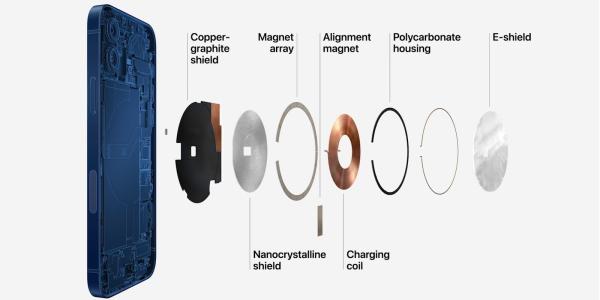
With Apple’s October 2020 iPhone 12 launch, most people are talking about the 5G capabilities and camera quality. What stuck out to us though is their use of magnets! Now, this isn’t new — we’ve written about Apple’s use of magnets over the years, which you can check out in this blog post here. We also know Apple has harnessed the power of magnets before when it comes to revolutionizing electronics — in 2018, Apple’s iPad Pro reportedly had a whopping 102 magnets in it! We got nerdy about that one in this blog post. What’s interesting about this MagSafe technology is that it’s not entirely new — Apple had used it in their Macbooks until 2016. So, why switch back and in the iPhone rather than Macbooks? Continue reading → -
Magnets in the Fishing Industry
If you work in the fishing industry and regularly find yourself on a boat at sea, magnets can make your job easier, safer, and more secure, even on the choppiest waves. Nowadays, many mid and large-sized commercial boats are made of steel, making them a good mount for magnets in all shapes and sizes. Below, we’ll cover several ways you might consider using magnets on your fishing boat. Continue reading → -
Police Officers: How to Use Magnets to Holster a Weapon and More
As a police officer, you may find yourself in a dangerous situation. You’re responsible for your own life, the lives of your fellow officers, and the lives of the public, so the pressure is on, and any convenience or safety-related tool could help. Here’s how magnets can help — Continue reading → -
Magnetic Chute Separators Used in Animal Feeding
If you work in agriculture or livestock, then you’re probably familiar with an animal feed chute. For those not in the field, a feed chute is what you would use to push high volumes of dry animal feed product into an enclosure or holding pen. The food would be fed (no pun intended) directly into the chute to flow down vertically due to gravity. Sounds simple, right? Dry feed plus gravity equals happy animals? Not so fast. You wouldn’t want to forget about magnets! Continue reading → -
Magnetic Sweepers and Parking Lot Maintenance
Many business owners have to maintain a parking lot — it’s a responsibility that is often forgotten amidst the long list of other tasks and to-dos. This task shouldn’t be taken lightly though — as long as you own your lot, it’s your job to make sure it’s clean and accessible, whether you do the cleanup yourself or hire workers to come in and do it for you. Continue reading → -
Bar Essentials using Magnets
Elevate your current bar or start fresh with these magnetic DIYs. Continue reading → -
More on Magnetic Poles and Industry Standards
Truthfully, most of us know the bare minimum about magnetic poles. We know there are two of them — North and South poles — and that opposites attract. Some of us may even know that this is referred to as magnetic dipole (di meaning two). But what are magnetic poles really? Simply put, magnetics poles are the surfaces from which invisible magnetic field lines of magnetic flux emit and connect -- leaving the North end of a magnet to enter the South end. If you’re going to be using magnets regularly, especially as an effort to streamline, organize, or otherwise improve your business, continue reading to understand more about poles. Continue reading → -
Use Magnets to Reduce Risk in Construction Zones
Construction zones are places of planning, craftsmanship, and if we’re being real, quite a bit of potential danger. There are plenty of opportunities for something to fall on your head, trip you up, or crumble beneath your weight. Because of all this risk, construction workers need fixed, reliable blueprints and solid working tools and materials to reduce as much risk as possible. As you might have suspected if you’ve read our blog before — magnets are the answer! Continue reading → -
Permanent Magnets Used as Tools for Welding
Welding is the process of joining or fusing materials –– primarily metal –– through controlled heat, melting the workpieces together and then letting them cool into place. It’s used in an assortment of major industries including aerospace, automobiles, construction and infrastructure, manufacturing, railroads, and shipping. So...how do magnets fit into this equation? Continue reading →