We talk about magnetism and electricity a lot as the two are linked together in many ways — from power lines generating a magnetic field to how magnets are used to generate electricity (refresh your memory here). Even though it’s a common occurrence for these two to be linked, it’s not uncomplicated as electrical and magnetic properties of certain materials are also coupled with each other. Meaning, the electrical properties can be influenced by a magnetic field and vice versa. Continue reading →
Magnetic information-storage devices, such as floppy disks, credit card stripes, and hard-disk drives, have been getting smaller as the years go on. This size-reduction has been necessary as it allowed for more bits of data to be integrated into smaller devices. As technologists keep pushing the boundaries of just how much they can increase the storage density of these devices while keeping the devices themselves smaller and smaller, the limitations of this practice are being discovered. Continue reading →
Your furry best friend may have a sixth sense you don’t know about. That’s right, a recent study led by zoologist Hynek Burda, discovered that dogs can sense the Earth’s magnetic field and may orient their bodies to it. Whether this helps them navigate was not tested in this study. When doing their business, dogs seem to be aligning themselves facing North or South along the magnetic fields, meaning, the way they mark their territory may not be random at all and it may help them find their way. Continue reading →
All of the planets in the solar system are encased in a magnetic bubble. For years, scientists tried to figure out what this bubble looked like, but it’s been hard to measure because the closest point is more than ten billion miles from Earth. By using a model developed with data from NASA missions, scientists have developed a new prediction of the shape of the bubble surrounding our solar system — and you might be just as surprised as they were to find it looks a lot like a croissant. Continue reading →
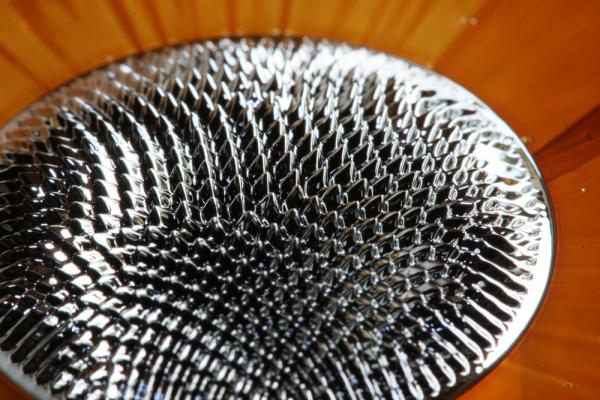
When thinking of magnetic applications, your mind may go to experiments and scientific discoveries. But what about art? Since 2011, Dutch designer Jólan van der Wiel has been using the power of magnets to create art, architecture, and fashion, showing the world that the uses of magnets are truly endless. Read about Jólan van der Wiel and his magnetic work below! Continue reading →
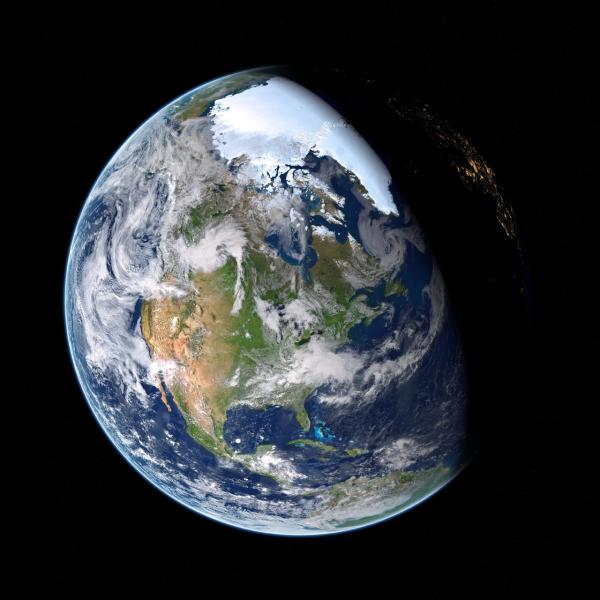
A dent is evolving within Earth’s Magnetic Field, and it has scientists watching closely. This isn’t necessarily new news though. Scientists have known about this weak spot for decades now, but it’s of importance right now due to one crucial factor-- it’s apparent growth.
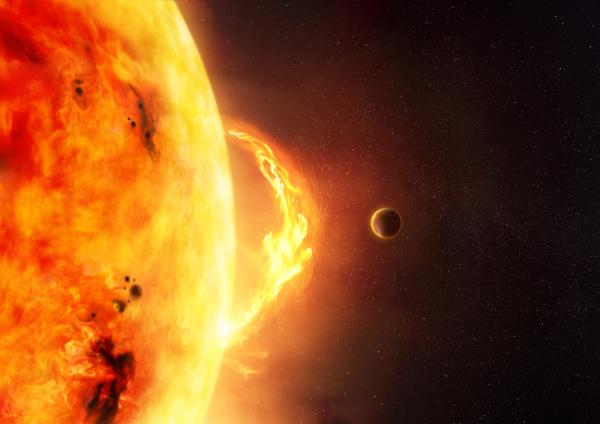
This weak spot phenomenon is called The South Atlantic Anomaly (SAA) and it stretches across the Atlantic Ocean from South Africa into Brazil. In this area, the magnetic field is weaker than normal, resulting in a “dent.” The Earth’s magnetic field, also known as the geomagnetic field, is important as it protects us against solar windー a flow of charged particles that are released from the outer atmosphere (corona) of the Sun.
Continue reading →
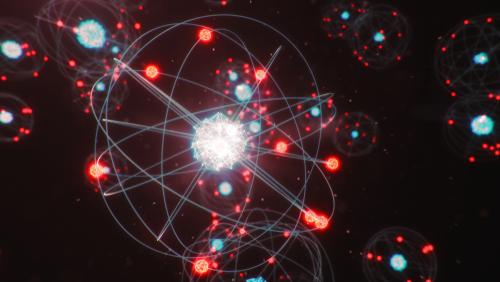
When it comes to magnetic materials, magnetic ordering — simply put, the characteristic by which spins of neighboring atoms order themselves to allow magnets to interact — is very important to understand.
Recently, a team of researchers created a way to examine electronic spins within magnets at almost the atomic level, showing promising potential in small-level magnetism, like within data storage devices. Continue reading →
Researcher Suzanne McEnroe is the epitome of a magnetic personality-- you don’t have to just take our word for it though as she received the William Gilbert Award in 2019 for “outstanding and unselfish work in magnetism of Earth materials and of the Earth and planets.” Her leadership in research has been integral in understanding mineral magnetism, paleomagnetic field records, and geomagnetic field anomalies, to name a few. Continue reading →
Recently, we had a jingle made especially for Apex. Wanting to include everyone in on the fun-- we created a contest on our Facebook to see who could guess the writer/singer of our new jingle. The winner would be awarded $100 in Apex dollars! And, each week we revealed hints as to who the correct answer could be. The answer...
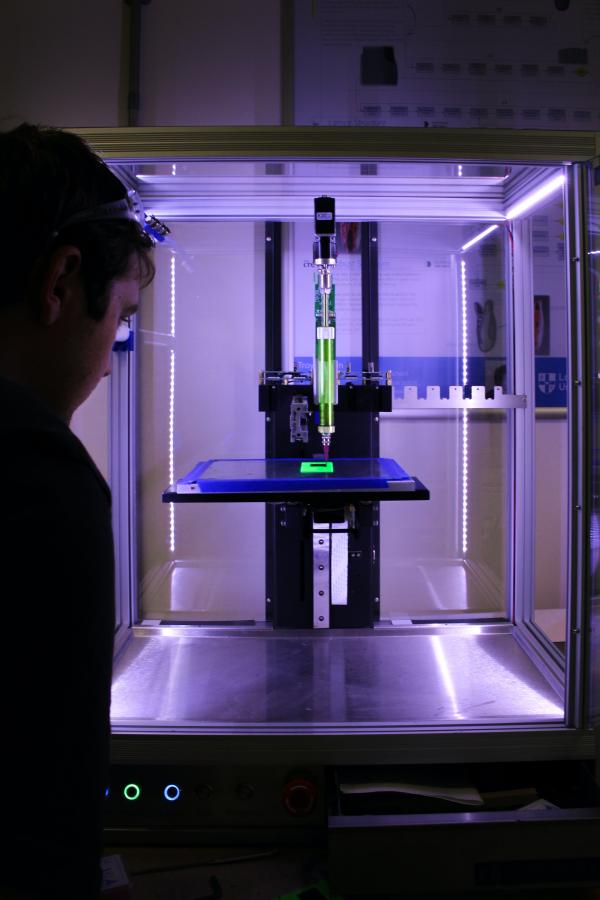
In what may appear to be no big deal -- but is in fact, a big deal -- 3D printed magnets have been created by using laser beams and metal powder. Empa team, led by Ariyan Arabi-Hashemi and Christian Leinenbach, used a special type of stainless steel to precisely 3D print magnets, with a final result looking like a metal chess board. The board is four millimeters long on each side with alternating darker and lighter spots in the shape of squares. Eight of these squares are magnetic and the other eight have non-magnetic properties. Continue reading →
Felix Bloch was a Swiss-American physicist and Nobel Prize winner who developed a technique for observing magnetism in nuclear particles. This would later be referred to as nuclear magnetic resonance (NMR,) and would lay a foundation for diagnostic medicine, like magnetic resonance imaging (MRI.) Below, we're exploring the late Bloch’s contributions to NMR and MRI and their relation to magnetism. Continue reading →
Being cooped up at home all day isn’t fun for anyone. Why not try to make the best of things, and find educational value while doing so? Together, we’ll explore two museums that are featuring magnetic exhibits for you to virtually visit, as well as even offering virtual and online resources to fill your time. Continue reading →
A team of researchers working at the Advanced Photon Source (APS), a U.S Department of Energy facility Argonne National Laboratory, has been able to show that, by applying slow and steady pressure, some magnetic materials can be pushed into a state similar to a liquid. Continue reading →
When it comes to magnets and magnetism, most people have a general sense of what the two are. However, many don’t know or are just really intrigued by the overall process needed to create these items. Whether you know nothing about magnet creation or you want to know as much as possible (we like you) we’re exploring how magnets are...
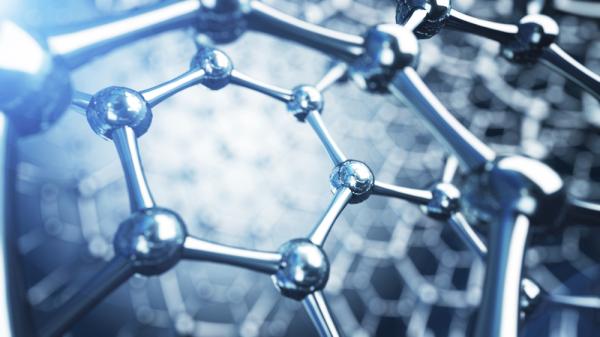
While graphene has mechanical, electronic, and optical properties it hasn’t been good for magnetic purposes. Empa researchers and international partners have succeeded in synthesizing nanographene which shows that carbon in very specific forms can have magnetic properties. What We’ve Known Graphene is usually described as a semimetal rather than a true metal, thanks to its 2-D structure made of carbon...
Magnets are a common item that many of us take for granted. Below, we’re highlighting a few common ways magnets are utilized and sharing what it would look like if these magnetic fields and inventions were to disappear. Hint: It’s not a world we want to live in! Continue reading →
Birds, amphibians & reptiles, and marine animals navigate by sensing changes in Earth’s magnetic field. We already know life on Earth is dependent on its magnetic field thanks to the powerful electrical currents that generate it, and scientists have proven that some animals use magnetic sense, but we wanted to dig deeper into the why and how magnetic fields are so important to keep animals going where they need to go. Continue reading →
In addition to being a brilliant mathematician, astronomer, and physicist, Carl Friedrich Gauss was also a pioneer in the fields of magnetism and electricity. His contributions over his lifetime of knowledge have even led him to be honored as one of the most influential mathematicians to this day. Below, we’ll cover a few of his accomplishments in relation to magnetism (as we can’t cover all his accomplishments in one blog post!): Continue reading →
The topic of solar wind has been discussed since it was first detected in 1959, but, there’s still a lot that we don’t know about it. One of solar winds’ mysteries surrounds the fact that when it reaches the Earth, satellite measurements are recording electron temperatures that are higher than simple models of the wind’s cooling would predict. Physicists from the University of Wisconsin - Madison may now know the reason why this is with their study that was published April 14 in the Proceedings of the National Academy of Sciences. Continue reading →
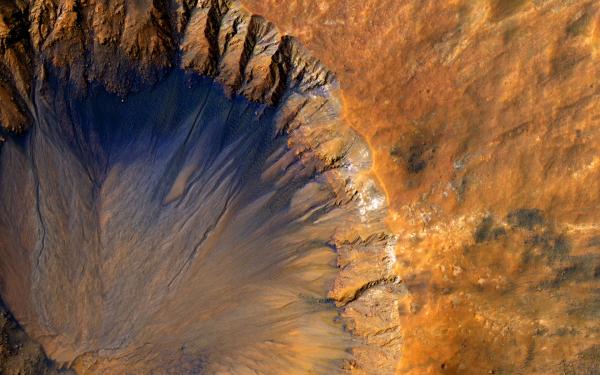
Space exploration may still seem like science fiction to some, but rest assured, it is very real, and humanity is learning more each year. Our scientists are actually starting to get down to the nitty-gritty of space, meaning Martian rocks and dust. This magnetic material is collected by exploratory rovers so that we can study and reveal any secrets it might hold about Mars’ past, specifically in relation to geologic history. Continue reading →
Learning more about Mars has been one of NASA’s top priorities over the last several years. One of their newest discoveries, thanks to NASA’s InSight Lander, indicates that Mars’ magnetism is much stronger than previously anticipated. Continue reading →
A team of researchers from Purdue have measured torque in a vacuum for the first time in history. By making what was, at the time, the fastest spinning object ever with a laser-like 150-nanometer dumbbell-shaped silica nanoparticle, this team showed how a tiny ball of silicon dioxide that rotates 300 billion times per minute (about 5 billion times per second) has been able to detect torque, for the first time ever. Continue reading →
We are constantly learning about new findings of magnetism in space. From space migrations and magnetic levitation to helping astronauts reach faraway planets, magnetism plays a key role in our studies of the galaxy beyond Earth’s atmosphere. Read more about what magnetic knowledge we gained in 2019 relating to space. Continue reading →

 We talk about magnetism and electricity a lot as the two are linked together in many ways — from power lines generating a magnetic field to how magnets are used to generate electricity (refresh your memory here). Even though it’s a common occurrence for these two to be linked, it’s not uncomplicated as electrical and magnetic properties of certain materials are also coupled with each other. Meaning, the electrical properties can be influenced by a magnetic field and vice versa. Continue reading →
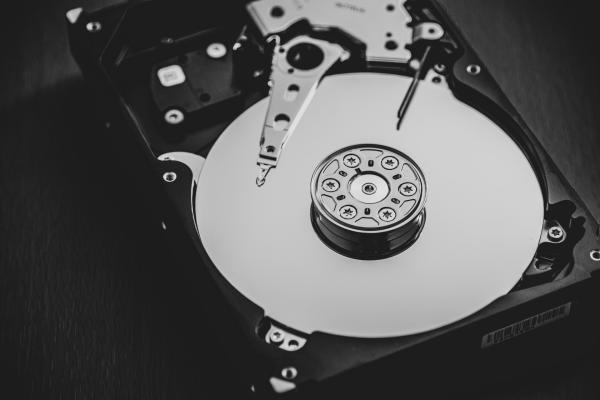 Magnetic information-storage devices, such as floppy disks, credit card stripes, and hard-disk drives, have been getting smaller as the years go on. This size-reduction has been necessary as it allowed for more bits of data to be integrated into smaller devices. As technologists keep pushing the boundaries of just how much they can increase the storage density of these devices while keeping the devices themselves smaller and smaller, the limitations of this practice are being discovered. Continue reading →
 Your furry best friend may have a sixth sense you don’t know about. That’s right, a recent study led by zoologist Hynek Burda, discovered that dogs can sense the Earth’s magnetic field and may orient their bodies to it. Whether this helps them navigate was not tested in this study. When doing their business, dogs seem to be aligning themselves facing North or South along the magnetic fields, meaning, the way they mark their territory may not be random at all and it may help them find their way. Continue reading →
 All of the planets in the solar system are encased in a magnetic bubble. For years, scientists tried to figure out what this bubble looked like, but it’s been hard to measure because the closest point is more than ten billion miles from Earth. By using a model developed with data from NASA missions, scientists have developed a new prediction of the shape of the bubble surrounding our solar system — and you might be just as surprised as they were to find it looks a lot like a croissant. Continue reading →
 When thinking of magnetic applications, your mind may go to experiments and scientific discoveries. But what about art? Since 2011, Dutch designer Jólan van der Wiel has been using the power of magnets to create art, architecture, and fashion, showing the world that the uses of magnets are truly endless. Read about Jólan van der Wiel and his magnetic work below! Continue reading →
 Ever wonder where the word “magnet” comes from or what the story is behind it? It’s not as simple as you may think. Continue reading →